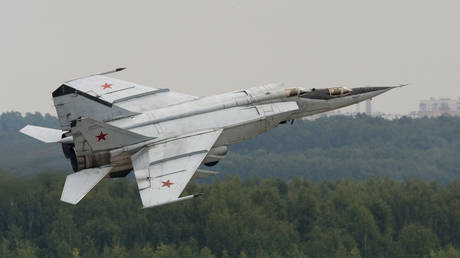
The declassified intelligence reports look like the ultimate sci-fi thriller. Cold War fighter jets scrambling over Siberia. Mach-speed chases tracking metallic spheres. Soviet pilots engaging in high-stakes dogfights with unidentified flying objects, sometimes with fatal consequences.
When these files surface, the media runs the same predictable playbook. Outlets breathlessly copy and paste the translated reports, implying that either aliens were monitoring the Soviet nuclear arsenal, or the Kremlin possessed terrifying, physics-defying technology.
Both conclusions are completely wrong.
The lazy consensus treats these archival releases as proof of the supernatural or the extraterrestrial. In reality, these documents are a masterclass in psychological warfare, bureaucratic panic, and the limitations of mid-century radar tech. If you are looking at these files and seeing little green men, you are falling for a distraction that defense agencies have used for seventy years.
The Cold War Radar Illusion
To understand why Soviet pilots were chasing ghosts, you have to understand the fragile state of early aerospace technology.
During the Cold War, the airspace over the USSR was a pressure cooker. Both the US and the Soviet Union were constantly testing the boundaries of each other's air defense networks.
When a pilot reports an object moving at impossible speeds, or making right-angle turns that would crush a human skeleton under gravitational force, civilian analysts immediately scream "alien spacecraft." Aerospace engineers look at the exact same data and see a combination of three highly terrestrial factors.
1. Thermal Inversions and Mirage Effects
Atmospheric conditions frequently tricked both human eyes and early radar systems. Temperature inversions—layers of warm air trapping cold air underneath—can bend radar waves and light. This creates "radar mirages," showing an object exactly where nothing exists, or duplicating the signature of a distant conventional aircraft and projecting it miles away.
2. Airborne Electronic Warfare chaff
The US military spent millions perfecting the art of fooling Soviet radar. By dropping specialized metallic strips (chaff) or using early electronic jamming pods, Western forces deliberately generated erratic, phantom signatures on Soviet screens. The goal was simple: force the Soviets to scramble expensive interceptors, burn fuel, and expose the frequencies of their tracking systems.
3. Balloon Reconnaissance Programs
Project Mogul, Project Genetrix, and a dozen other classified Western initiatives launched thousands of high-altitude balloons over communist territory. These metallic, oddly shaped instruments floated at altitudes civilian pilots had never seen. When viewed from a climbing MiG-21, a drifting balloon appears to be moving at incredible speed relative to the jet.
A Lesson from Aerospace History
Imagine flying a fighter jet at night with zero peripheral vision, staring at a flickering vacuum-tube radar screen, while your commanding officer screams that an American nuclear bomber might be penetrating your sector. In that environment, every anomalous radar glint becomes a hostile threat.
Declassification is a Weapon, Not a Confession
Why would the US government declassify these files now? The public assumes it is part of a slow-rolling "disclosure" movement—a benevolent shift toward transparency.
That is naive. Governments do not release intelligence files out of the goodness of their hearts. They release them because the utility of the secret has expired, or because the narrative serves a current geopolitical purpose.
By flooding the public record with historical UFO reports, defense agencies achieve a massive strategic advantage: obfuscation.
If a foreign adversary develops a highly advanced stealth drone or a hypersonic cruise missile today, sightings of that craft will inevitably leak to the public. If the media and civilian hobbyists categorize those sightings as "UAPs" or "aliens," the military gets free operational security. The public actively ridicules the witnesses, and the true nature of the experimental hardware remains hidden in plain sight.
I have watched defense contractors and intelligence agencies manage public perception for decades. The easiest way to hide a multi-billion-dollar black project is to let people believe it came from another galaxy.
Dismantling the "People Also Ask" Myths
The mainstream discourse surrounding these Soviet files rests on a few deeply flawed premises. Let's dismantle them one by one.
"If it was just a glitch, why did Soviet pilots die chasing them?"
Pilots did not die because they collided with flying saucers. They died because of spatial disorientation and tactical overexertion.
Chasing an atmospheric anomaly or a high-altitude balloon at night forces a pilot to rely entirely on instruments. If those instruments are malfunctioning or being jammed, the pilot suffers from vertigo. Cold War records show dozens of instances where pilots, driven by aggressive commanders to intercept a target at all costs, flew directly into the ground or ran out of fuel over the freezing tundra. Labeling these tragedies as "UFO casualties" insults the memory of the airmen and ignores the brutal reality of military pressure.
"Why would the US track Soviet UFO encounters if they weren't real?"
The US military tracked everything the Soviets did. If a Soviet air defense sector went into a state of panic, scrambled twelve jets, and started firing missiles into empty air, that was vital intelligence.
It told the CIA exactly how fast the Soviets could react, which radar installations were operational, and how easily their command structure could be destabilized by false alarms. The US did not care about the "UFO"; they cared about the Soviet response mechanism.
The True Cost of the Alien Obsession
The downside of our cultural obsession with these files is that it makes us blind to real, modern threats.
While the internet debates thirty-year-old transcripts of Soviet pilots chasing radar ghosts, modern airspace is being flooded with cheap, low-observable quadcopters and electronic warfare spoofers. Consumer drones can now bypass billions of dollars of air defense infrastructure because those systems were designed to track massive, high-speed metallic objects, not plastic toys hovering over critical infrastructure.
Stop looking at the sky for ancient mysteries. The real danger is much closer to the ground, entirely man-made, and completely indifferent to your theories about the universe.
The next time you see a headline about secret government files detailing mysterious aerial pursuits, ignore the sensationalism. The files do not reveal the existence of visitors from the stars. They reveal how easily human beings can be fooled by cold air, metallic foil, and their own paranoia.
Turn off the sci-fi documentaries. Look at the logistics, the hardware, and the geopolitical incentives. The truth isn't out there—it's right here on the payroll of the military-industrial complex.