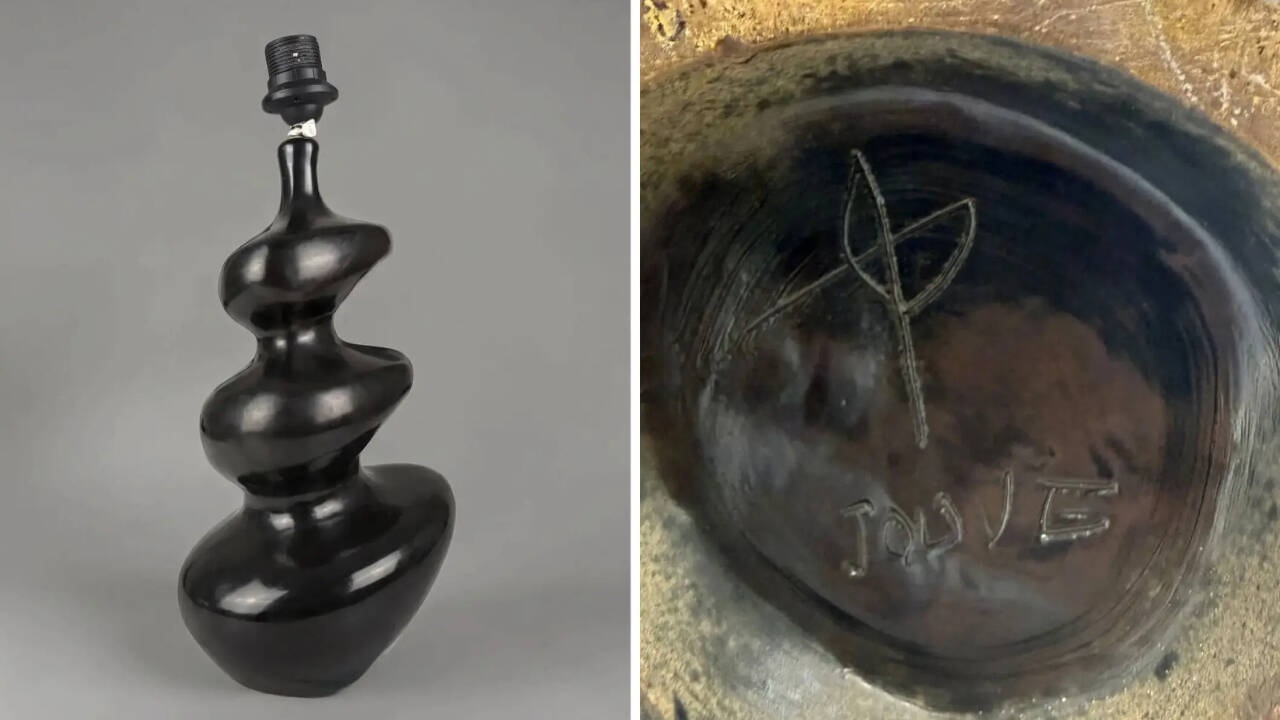
You probably walk past small fortunes every single weekend without noticing. Most people treat flea markets like dusty graveyards for broken toasters and outdated paperbacks, missing the quiet signals that separate mass-produced junk from museum-grade design. When a €20 flea-market lamp sells for €251,000 after a hidden signature turns up, the internet treats it like a lottery ticket.
It wasn't luck. It was physics, craftsmanship, and knowing where to look.
The story sounds simple on the surface. Someone spots an unassuming table lamp at a local market, hands over twenty euros, and later discovers a maker's mark tucked away out of sight. Suddenly, international collectors are bidding hundreds of thousands of euros for a piece of lighting that used to sit next to mismatched mugs. Honestly, that's the exact narrative viral news sites love because it makes treasure hunting look passive. You show up, you get lucky, you retire.
Real vintage collecting doesn't work like that at all. If you want to understand how a €20 flea-market lamp jumps in value by more than twelve thousand times, you have to look at why master designers hid their signatures in the first place—and why most casual shoppers never bother checking.
Why €20 Flea-Market Lamps Hide Their True Identity
Walk into any antique market in Paris, Brussels, or Milan, and you'll see dozens of mid-century and Art Deco lamps lined up on folding tables. To the untrained eye, they all blur together into brass stems, tarnished sockets, and yellowed shades. Sellers routinely price them based on quick visual guesses rather than actual provenance. If a lamp looks heavy and old, maybe it gets a €50 tag. If it looks plain, minimalist, or slightly battered, it drops straight into the €20 bin.
That minimalism is the exact trap that fools amateur sellers.
During the mid-twentieth century, legendary European lighting designers like Gino Sarfatti, Serge Mouille, Jean Royère, and Angelo Lelli stripped away ornate decoration in favor of pure industrial geometry. They didn't slap giant gold logos across the front of a lampshade. They treated lamps like architectural instruments. When an object relies on clean lines and raw industrial metals—spun aluminum, enameled steel, solid brass—a casual seller sees something utilitarian, almost like a workshop fixture or a cheap hardware store import.
Then there's the signature placement. Unlike oil paintings, where the artist signs the bottom right corner in bold brushwork, lighting designers stamped or engraved their marks in spots meant only for technicians and serious buyers:
- Inside the weighted cast-iron base, often covered by decades of degraded felt
- Along the rim of the brass socket housing where heat tarnishes the metal
- Stamped lightly into the underside of the shade's central collar
- Engraved directly onto the metal counterweight or swivel joint
A rushed flea-market vendor unloading an estate cleanout rarely flips a lamp upside down to scrape away dried adhesive or polish a tarnished brass ring. They glance at the shade, test the switch, and slap a €20 sticker on it.
The Real Reason Collectors Pay €251,000 for Early Lighting
People hear €251,000 and assume the lamp must be made of solid gold or encrusted with rare gems. Usually, it's made of painted aluminum and brass. You're not paying for raw materials; you're paying for historical scarcity and documented authorship.
In the high-end design market, major auction houses like Sotheby's, Christie's, and Artcurial have spent the last two decades elevating twentieth-century functional design to the same financial tier as fine art. An early production model from a master workshop isn't just a household appliance anymore. It's a sculpture that happens to hold a lightbulb.
Consider how early lighting workshops operated in Italy and France between the 1930s and 1960s. Many iconic pieces weren't churned out by the tens of thousands in automated factories. They were hand-assembled in small ateliers in Milan or Paris, sometimes in runs of fewer than fifty units. Small variations in the welding, the exact curve of a brass arm, or the thickness of the enamel paint prove a piece came from the original workshop rather than a later licensed reproduction.
When a hidden signature surfaces on one of those early pieces, it instantly unlocks an entire chain of market demand:
- Verified Provenance: A stamped mark or workshop serial number links the object directly to archival catalogs and exhibition records.
- Museum-Grade Rarity: Private collectors and design foundations compete aggressively for untouched examples with original patina.
- Cross-Market Appeal: Unlike traditional antiques, mid-century and Art Deco lighting fits seamlessly into modern minimalist architecture, pulling in tech founders and contemporary art buyers who drive auction prices into six figures.
Once two determined bidders decide they need that specific documented model for their collection, rational pricing evaporates. €20 becomes €251,000 in less than four minutes on the auction floor.
How to Spot a High-Value Lamp Before Anyone Else Does
I've spent enough early mornings digging through crates at European brocantes to know that ninety-nine percent of what you pick up is mass-produced clutter. You learn fast to stop shopping with your eyes and start shopping with your hands. Weight, balance, and hardware tell the truth long before you ever find a signature.
If you want to catch the next undervalued piece sitting on a folding table, stop looking at the lampshade. Shades get replaced, torn, or thrown out every twenty years. Focus entirely on the skeleton of the lamp.
Check the Weight and Balance First
Pick the lamp up. Cheap reproductions feel top-heavy because manufacturers cut costs by using thin, hollow bases stamped out of sheet metal. High-end mid-century and Art Deco lamps feel unexpectedly dense at the bottom. Designers used heavy cast iron or thick solid brass counterweights so delicate, articulated arms wouldn't tip over when adjusted. If a small table lamp feels like it's bolted to the table when you try to lift it, slow down and inspect every millimeter.
Inspect the Hardware and Screws
Mass-market lamps use standardized, cheap fasteners—Phillips-head screws, plastic strain reliefs where the cord enters the base, and lightweight stamped-brass sockets. Master workshops obsessed over mechanical joints. Look for slotted flathead screws machined flush with the metal surface, custom-turned brass thumbscrews, and heavy porcelain or Bakelite sockets. If the cord looks original—especially cloth-wrapped wiring—don't plug it in at the market, and definitely don't rewire it yourself before getting it appraised. Collectors value untouched original components, even when the wiring is frayed.
Bring a Flashlight and a Jeweler's Loupe
You can't spot a faint engraved signature under the fluorescent lights of a warehouse or the dappled shade of an outdoor market tent. Carry a small, bright LED pocket flashlight and a 10x jeweler's loupe. Shine the light across the metal at a sharp, low angle—what appraisers call raking light. Shadows will immediately reveal faint stampings, serial numbers, or workshop initials that look completely invisible head-on.
The Biggest Mistakes Finders Make After Discovering a Signature
Finding the mark is only half the battle. I've watched people ruin five-figure discoveries in a single afternoon because they got excited and tried to "fix" the item before calling an expert.
Never polish an old lamp. That dark, uneven oxidation on brass or copper—the patina—is physical proof of age. Taking Brasso or a harsh chemical cleaner to a vintage surface strips away decades of history and can slash an auction estimate by thirty to fifty percent overnight. Wipe off loose surface dust with a dry microfiber cloth and leave the metal completely alone.
Don't rush to replace broken parts either. Even if the switch doesn't click or the cord is cut at the base, keep every single original screw, washer, and socket intact. Auction specialists and restorers prefer to handle conservation using period-correct materials rather than undoing an amateur hardware-store repair.
Finally, skip local pawn shops and general secondhand dealers when seeking a valuation. They're built to flip everyday items quickly, not research obscure European lighting archives. Take clear, well-lit photos of the entire lamp, the base, the joints, and a macro shot of the hidden signature, then submit them directly to the decorative arts or twentieth-century design department at an established auction house. Most major houses offer free online auction estimates, and their specialists know immediately whether you're holding a €20 flea-market lamp or a €251,000 masterpiece.
Next time you walk past a crowded flea-market table, ignore the shiny trinkets up front. Reach toward the back, lift the heaviest, plainest metal lamp you see, and turn it upside down.