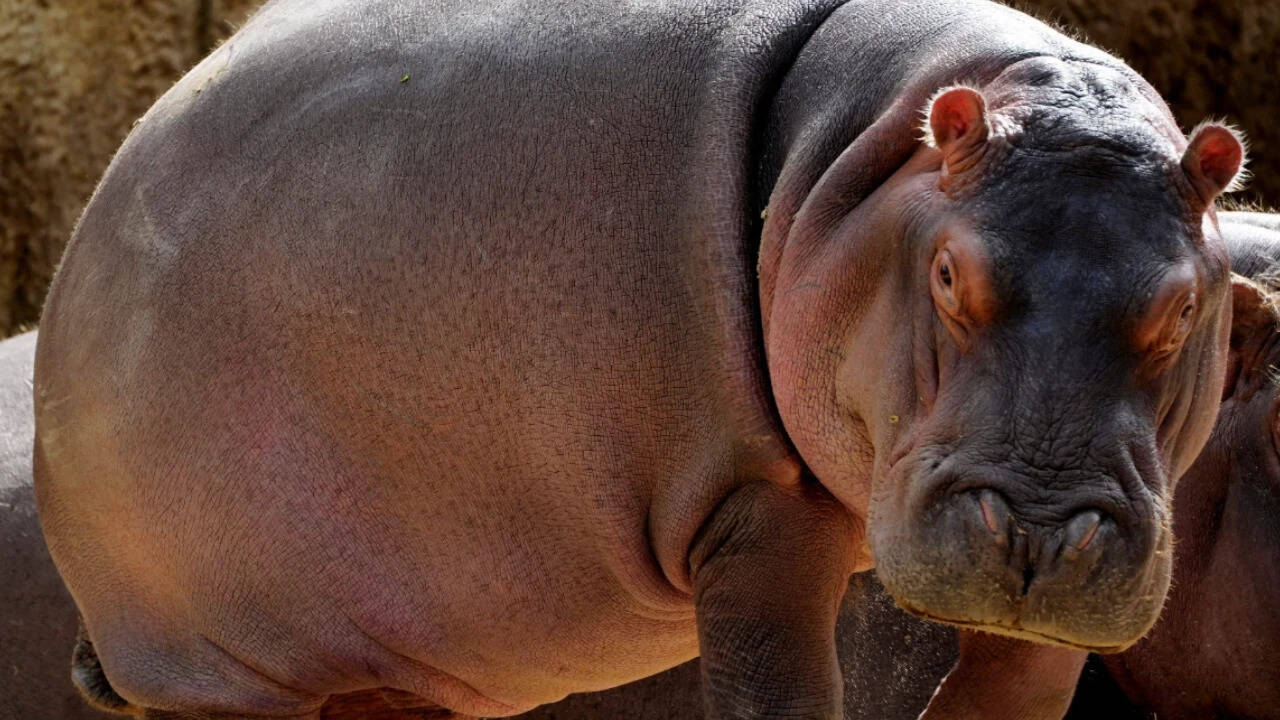
A freak bounce off a ceiling fan cost the world its most famous hippopotamus.
On November 19, 2026, the Cincinnati Zoo & Botanical Garden announced that Fiona—the premature Nile hippo who captivated millions since 2017—died at nine years old. She couldn't survive complications from swallowing a visitor's knit hat roughly 11 days earlier. For a more detailed analysis into this area, we suggest: this related article.
If you've spent five minutes online since the news broke, you've seen the outrage. People want blood. They're demanding criminal charges against a child's mother and accusing zoo veterinarians of failing to perform a simple operation.
They're dead wrong on both counts. To get more information on this topic, comprehensive analysis can be read at The Guardian.
When you look past the internet pitchforks and examine the actual veterinary anatomy, zoo physics, and behavioral reality behind what happened, a very different picture emerges. Fiona's death wasn't caused by malice or medical laziness. It was a collision of bad luck, massive anatomy, and the unforgiving limits of exotic animal medicine.
How a Knit Hat Actually Ended Up in Fiona's Enclosure
Let's clear up the biggest rumor first. Nobody intentionally threw garbage at Fiona.
According to Cincinnati Zoo spokesperson Michelle Curley, a visitor—believed to be a young child—tossed a knit hat up into the air inside the viewing area. That's normal kid behavior. The problem was timing and trajectory. An overhead ceiling fan caught the airborne hat and deflected it cleanly through a roughly one-foot opening above the glass viewing windows.
It was a one-in-a-million shot.
Hippos are curious, oral-driven grazers that explore their environment with their mouths. Before keepers could intercept it, Fiona swallowed the hat whole.
For the first few days, she showed zero symptoms. Zoo staff monitored her closely, hoping the fabric would travel naturally through her gastrointestinal tract. That happens more often than you'd think in captive wildlife facilities. Sometimes an animal passes a foreign object without a hitch.
Then her appetite dropped. Once a large herbivore stops eating, the clock starts ticking fast.
Why Veterinarians Couldn't Just Operate on Fiona
Every time a beloved zoo animal swallows something dangerous, the comment sections fill up with armchair surgeons asking the same question. Why didn't they just cut it out?
If Fiona were a 60-pound Labrador retriever, an emergency laparotomy would have taken forty-five minutes. Fiona wasn't a dog. She was a full-grown adult Nile hippopotamus weighing thousands of pounds, and operating on an adult hippo is widely considered a death sentence in veterinary medicine.
Mike Wenninger, the Cincinnati Zoo's director of animal health, confirmed after Friday's post-mortem exam that the knit hat had lodged right in the middle of Fiona's small intestine. Specifically, the necropsy showed the obstruction sat 25 feet beyond her final stomach compartment and 50 feet away from the far end of her intestinal tract.
Even if surgeons had known that exact coordinate beforehand, getting there wasn't viable. Here's why exotic animal specialists ruled out surgery immediately:
- Anesthesia risks are massive. Sedating a multi-ton semi-aquatic mammal carries extreme cardiopulmonary risks. Hippos have a dive reflex that can trigger fatal drops in heart rate and respiration under general anesthesia.
- Two inches of armor. Hippopotamus skin measures over two inches thick in places. Cutting through that dense dermis and heavy abdominal muscle requires massive incisions that struggle to hold sutures under the sheer weight of the animal's internal organs.
- The water paradox. Post-operative incisions must stay dry for days to prevent catastrophic infection. Yet hippos rely on water to regulate body temperature, support their joints, and keep their skin from cracking. Taking an adult hippo out of water for a week creates secondary organ failure.
- Diagnostic blind spots. Standard X-rays and CT scanners can't penetrate an adult hippo's midsection. As North Carolina State University veterinarian Jan Hawkins noted, you simply can't use normal imaging techniques on an animal that massive.
Veterinarians didn't sit on their hands. They sedated Fiona twice to run targeted diagnostics, used ultrasound imaging that revealed intestinal bunching, and even fed a nine-foot scope into her lower tract during a colonoscopy—which couldn't reach deep enough to spot the blockage. Keepers tried enemas, hydration therapy, dietary adjustments, and even placed Fiona on a specialized vibration plate to physically coax her bowels into moving the fabric along.
On Wednesday, November 18, she even perked up when staff offered her a whiff of coffee, one of her favorite scents. Everyone hoped she had turned a corner. By Thursday, her body gave out.
The Internet Scapegoat Cycle and the Harambe Echo
Cincinnati Zoo can't catch a break when public tragedy hits. Ten years ago—almost to the season—the facility became ground zero for global outrage after keepers had to shoot 17-year-old western lowland gorilla Harambe when a three-year-old boy climbed into his moat.
Back in 2016, online mobs demanded the child's mother be jailed. Now, in November 2026, the exact same script is playing out over a knit hat.
Viral posts with thousands of shares are calling for the boy's mother to be tracked down, publicly shamed, and prosecuted. Honestly, that reaction misses the point entirely. When a toddler tosses a beanie in the air and a ceiling fan acts like a catapult, you're looking at terrible luck, not criminal negligence.
Blaming a parent feels satisfying because it gives grief a target. It's way harder to accept that public zoos operate on an inherent compromise—balancing unobstructed guest views with animal safety—and sometimes freak physics slip through the cracks.
Why Foreign Objects Are a Silent Killer Across Zoos
Fiona's death feels uniquely personal because millions watched her fight for life since January 24, 2017. Born six weeks premature at just 29 pounds, she couldn't even stand on her own. With help from neonatal specialists at Cincinnati Children's Hospital, she survived against staggering odds, boosted zoo attendance by 20% in her first year, and became the undisputed mascot of southwest Ohio.
Her passing hits hard. Still, veterinary records show she's far from the first zoo resident killed by everyday visitor items.
- In 2024, a rare antelope at a Tennessee zoo choked to death after ingesting the plastic cap from a child's squeezable fruit pouch.
- In 2014, a polar bear at a German zoo died after swallowing a visitor's jacket that dropped into its habitat.
- Coins, hair ties, sunglasses, and plastic wrappers routinely trigger emergency interventions in aquariums and primate houses every single year.
Animals don't recognize synthetic fibers or plastics as inedible hazards. To a hippo with a four-chambered fermentation stomach built to crush tough river reeds, a soft wool or acrylic beanie feels no different from a clump of vegetation. Once swallowed, though, woven yarn doesn't break down in stomach acid. It tangles, absorbs digestive fluid, swells, and forms an immovable plug in the narrow loops of the small intestine.
What Zoos and Visitors Need to Change Immediately
Grief without adjustment just guarantees we'll read this same headline at another zoo next year. Whether you run an exhibit or simply take your kids through the gates on a Saturday morning, three practical shifts actually prevent these deaths:
- Audit overhead airflow near open-top barriers. If you manage public exhibits, check every ceiling fan, HVAC vent, and wind tunnel near viewing glass. A twelve-inch ventilation gap above a window seems harmless until an updraft turns lightweight winter gear into a projectile. Fine-mesh screening over upper gaps stops accidental deflection without blocking airflow.
- Switch to closed-loop storage before entering indoor houses. Parents and visitors shouldn't carry loose hats, gloves, pacifiers, or snack pouch caps in their hands near open habitats. Zip them inside a backpack before walking into viewing galleries, especially during winter festivals when bulky knitwear is everywhere.
- Report dropped items within seconds, not minutes. Most guests freeze out of embarrassment when something falls into an enclosure. Don't hesitate. Alerting a keeper immediately gives staff a narrow window to distract the animal with high-value food before the object gets swallowed.
Fiona spent nearly a decade proving how resilient a 29-pound premature calf could be. The best tribute visitors can offer her now isn't hunting down a grieving family on Facebook—it's keeping loose gear zipped away every time we step up to the glass.