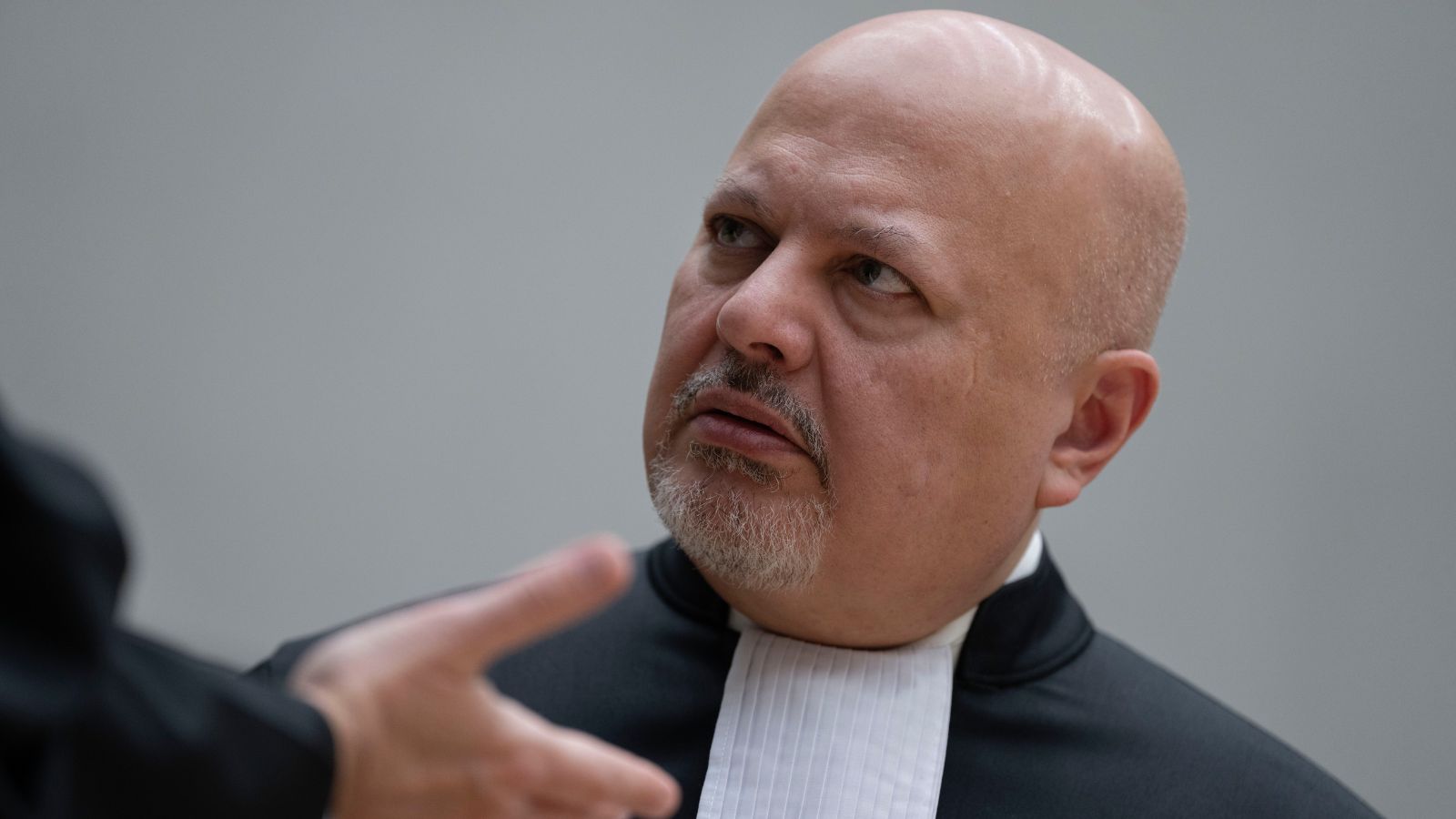
The downfall of Karim Khan didn't happen overnight, nor was it a simple case of legal administrative drama. When 82 member states of the International Criminal Court voted in New York to permanently remove their chief prosecutor, they closed the curtain on an unprecedented chapter in international law. Khan became the first chief prosecutor in the history of the Hague-based court to be ousted by its governing body.
Most headlines focus strictly on the drama of the vote itself. But if you want to understand what actually happened to the high-profile British barrister, you have to look at how internal workplace allegations collided with global geopolitical pressure. The story behind Karim Khan's removal is messier, more complicated, and far more consequential for global justice than a simple human resources scandal. Don't forget to check out our recent coverage on this related article.
Who is Karim Khan and How Did He Rise to Power
Before he became the headline-grabbing prosecutor seeking arrest warrants for world leaders, Karim Khan built a long career as a defense attorney and prosecutor in international tribunals. Born in Edinburgh in 1970 and educated at King's College London, he was called to the Bar of England and Wales in 1992.
For nearly three decades, Khan worked across multiple high-stakes international bodies. He served as a prosecutor at the International Criminal Tribunal for the former Yugoslavia and the International Criminal Tribunal for Rwanda. Later, he took on defense roles, representing figures like Charles Taylor, the former President of Liberia, and Saif al-Islam Gaddafi. To read more about the history here, TIME offers an excellent summary.
That mix of defense and prosecutorial work gave him a reputation as a pragmatic legal operator. In 2018, United Nations Secretary-General António Guterres appointed Khan to lead UNITAD, the UN team investigating crimes committed by Islamic State in Iraq. His work there elevated his global standing.
By February 2021, when the 123 member nations of the ICC met to elect a new chief prosecutor to replace Fatou Bensouda, Khan emerged as the choice after a competitive, multi-round voting process. He assumed office in June 2021 for what was supposed to be a nine-year term.
The High Stakes Prosecutions That Shook World Powers
Khan's tenure as chief prosecutor was defined by high-wire legal gambits. He did not play it safe. Almost immediately upon taking the helm in The Hague, he pushed the court into terrain that previous prosecutors had navigated with far more caution.
In March 2023, the ICC issued an arrest warrant for Russian President Vladimir Putin over allegations of illegal deportation of children from Ukraine. It was a bold move that put a sitting head of a UN Security Council permanent member state under formal international indictment.
Then came May 2024. Khan announced he was seeking arrest warrants for senior Israeli officials, including Prime Minister Benjamin Netanyahu and Defense Minister Yoav Gallant, alongside top leaders of Hamas.
That decision provoked intense geopolitical fury. It marked the first time the court had pursued arrest warrants against key leaders of a major Western ally. The backlash from Washington was immediate and severe. US officials launched sanctions against ICC staff and threatened further measures to dismantle the court's operational capacity.
Khan suddenly found himself banned from entering the United States, operating under punitive economic sanctions, and navigating a fierce diplomatic storm.
How the Sexual Misconduct Allegations Came to Light
While Khan was issuing headlines about high-profile arrest warrants, serious trouble was brewing quietly inside his own office.
In May 2024, around the exact time Khan announced his intention to seek arrest warrants for Israeli and Hamas leaders, an internal report was submitted to the ICC's Independent Oversight Mechanism (IOM). A female staffer, working as an aide to Khan, alleged that the prosecutor had engaged in coercive and non-consensual sexual behavior over an extended period.
The initial timeline of how the court handled these allegations was fraught with delays and procedural stumbles.
- May 2024: An initial complaint reached the court's internal watchdog via a third party. At the time, the affected staffer declined to confirm or deny the details, fearing it would derail high-profile international indictments. The IOM dropped the matter without a formal probe.
- October 2024: A whistleblower brought the details into the public eye. Questions mounted about why an independent external investigation hadn't been triggered immediately.
- May 2025: As pressure from staff members and civil rights groups grew untenable, Khan voluntarily stepped down from active duties pending an external inquiry. The ICC referred the matter to a specialized UN investigative agency.
- August 2025: A second woman came forward, alleging that Khan had acted inappropriately toward her years earlier while she worked for him as a legal intern.
- June 2026: The executive committee of the ICC's Assembly of States Parties reviewed the UN watchdog's findings and formally suspended Khan, concluding he had committed serious misconduct and a serious breach of duty.
- July 2026: In a historic closed-door vote in New York, 82 member states voted to remove Khan permanently from his position.
What Khan's Defense Team Argued
Throughout the process, Karim Khan steadfastly maintained his innocence. He categorically denied all allegations of harassment, coercion, or abuse.
His legal defense team, led by British lawyer Tayab Ali, argued that the disciplinary process was fundamentally flawed and politically compromised. They pointed out several key points in his defense.
First, Khan's lawyers claimed he was denied due process because he was barred from attending the crucial session in New York due to US sanctions. They argued that stripping a prosecutor of his position without allowing him to directly address the 125 member states was procedurally unfair.
Second, his defenders suggested that the timing of the allegations and the political environment meant that political motives were blended into the disciplinary machinery. Khan's supporters claimed that states hostile to his international investigations took advantage of the situation to push him out.
However, the ICC's governing body explicitly rejected claims that the complainant was acting on behalf of external intelligence agencies or political actors. A report by the oversight committee confirmed there was no evidence suggesting third-party state manipulation behind the staffer's claims. Human rights advocates praised the complainant for showing extraordinary courage in coming forward under intense scrutiny.
The Operational Fallout inside The Hague
Khan's removal leaves the International Criminal Court in a fragile position. The tribunal was already struggling under intense political hostility from non-member nations like the United States and Russia. Now, it must rebuild its internal leadership while dealing with deep divisions among its own staff.
What happens to the high-profile cases Khan initiated?
Legally, the arrest warrants issued during Khan's tenure remain fully valid. Under the Rome Statute, arrest warrants are approved and issued by independent panels of ICC judges, not the prosecutor alone. The warrants for Vladimir Putin, Benjamin Netanyahu, Yoav Gallant, and others stand entirely unchanged by Khan's dismissal.
However, running the day-to-day operations of the Office of the Prosecutor falls to his deputy prosecutors, who have managed the office since Khan's leave began. The Assembly of States Parties now faces the task of organizing a new election to choose a permanent successor to complete the remaining years of the mandate.
How to Understand the Broader Impact of the Ouster
If you are following international news, don't confuse the removal of an individual prosecutor with the collapse of the court's legal cases. The two operate on distinct legal tracks.
Here is how you can evaluate what comes next for the ICC and its cases.
- Watch the upcoming prosecutorial election: The member states must elect a successor who can regain the trust of internal staff while standing up to intense external pressure from major powers.
- Track the legal warrants separately: Remember that judges decide cases, not prosecutors. Warrants already issued require state cooperation for enforcement, which remains the court's biggest practical bottleneck regardless of who leads the prosecution team.
- Monitor staff governance reforms: Expect the Assembly of States Parties to institute far stricter internal oversight and independent reporting mechanisms for workplace misconduct to prevent leadership figures from blocking internal inquiries in the future.
The removal of Karim Khan proves that no single figure inside international institutions is immune to accountability. While the political storm around The Hague shows no sign of clearing, the court's 125 member nations have sent a definitive message about workplace conduct at the highest levels of global law.