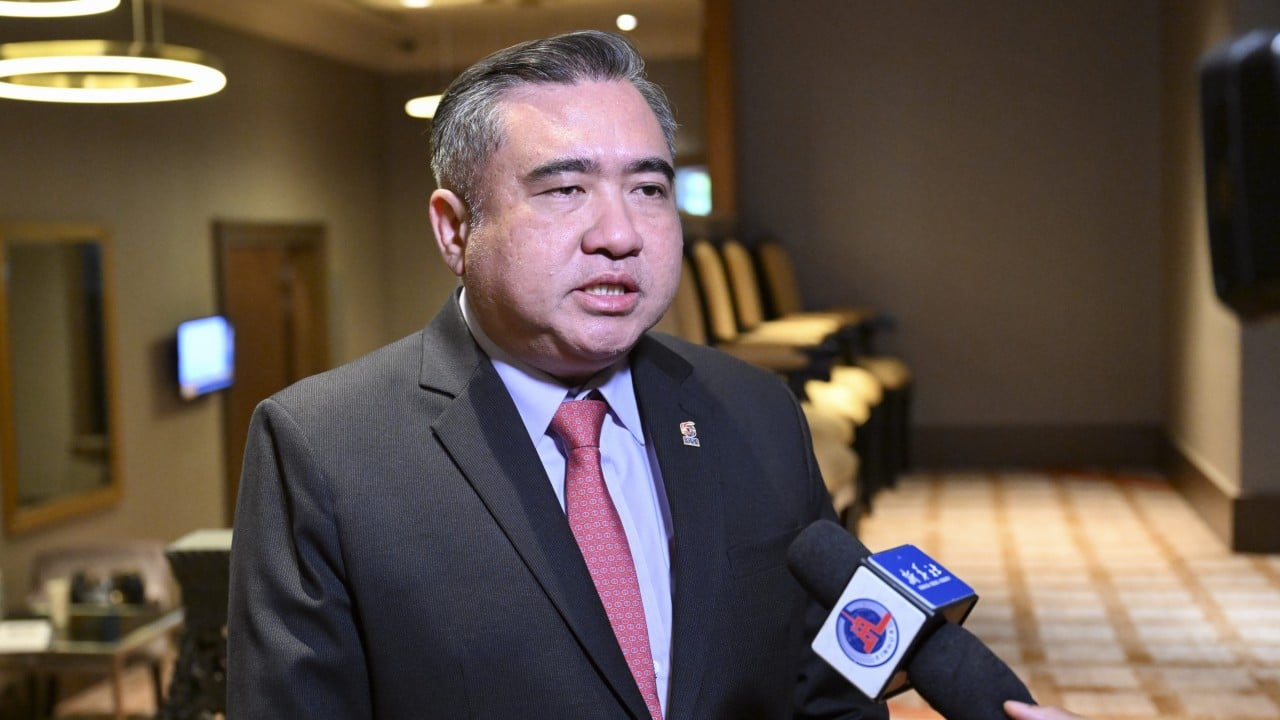
Political outrage in Malaysia rarely needs much fuel, yet the controversy surrounding alcohol at school fundraising dinners proves just how quickly a decades-old community tradition can get weaponized for partisan points. When Transport Minister and DAP Secretary-General Anthony Loke pushed back against claims regarding alcohol at a Chinese vernacular school charity event, he wasn't just defending a single dinner. He was confronting a recurring political playbook that deliberately blurs the lines between adult community fundraising and classroom education.
If you've followed Malaysian politics for any length of time, this pattern feels painfully familiar. A photo surfaces from an evening banquet held inside a school hall. Beer logos appear on banners or bottles sit on tables occupied by adult donors. Within hours, opposition figures frame the event as a moral crisis, accusing school boards and the unity government of promoting drinking among schoolchildren.
Loke's response cut straight to the heart of the distortion. He labeled the uproar a calculated political attack aimed at eroding non-Malay support and painting the government as insensitive to local norms. Honestly, looking at how vernacular schools actually survive financially in Malaysia, the outrage misses the entire point of why these dinners exist in the first place.
How Malaysian School Fundraising Actually Works
To understand why Anthony Loke called out his critics so forcefully, you have to look at the mechanics of vernacular school funding. Government-aided Chinese primary schools (SJKC) and mission schools rely heavily on private donations from parents, alumni, and local business owners to build halls, upgrade computer labs, and repair aging roofs. State allocations cover basic operational costs and teacher salaries, leaving massive gaps for infrastructure.
To bridge that gap, school boards and Parent-Teacher Associations (PIBG) partner with major beverage companies—most notably brewery-backed charity roadshows—to host evening fundraising dinners. These events happen after school hours, typically on weekends, and are attended exclusively by adult donors, community leaders, and local politicians who buy tables to support the school.
Students aren't sitting at those tables. They aren't being served drinks. In most cases, the only involvement from pupils is a brief cultural performance on stage early in the evening before they head home with their parents.
Yet critics routinely strip away that context. By treating a Saturday night charity banquet for 50-year-old donors as if it were a Tuesday morning canteen violation, political opportunists manufacture a scandal out of thin air. Loke pointed out that this exact fundraising model has operated across Malaysia for more than thirty years, spanning multiple administrations—including periods when the very parties now attacking the practice sat in federal government.
Why Anthony Loke Framed This as a Political Attack
Politicians rarely pick a fight over school hall rentals unless there's electoral math behind it. Loke's sharp rebuttal wasn't just damage control; it was a strategic refusal to let opposition narratives go unchallenged in the run-up to regional polls and by-elections.
When opposition leaders attack brewery-sponsored charity events at vernacular schools, they're playing a two-pronged game. First, they rally conservative rural voters by portraying the government as permissive toward alcohol in educational spaces. Second, they force parties like DAP into an uncomfortable defensive crouch—either defend the traditional fundraising lifeline of Chinese schools and risk backlash from conservative allies, or restrict the sponsors and alienate the Chinese community base.
Loke refused to take the bait. Instead of apologizing or promising sudden bans that would cripple school fundraising, he exposed the hypocrisy of the critics. He noted that previous governments never interfered with adult charity dinners held outside school hours, and he accused his rivals of weaponizing sensitive religious and cultural issues to distract from economic and governance debates.
It's a classic political wedge. When a party lacks a compelling economic alternative, cultural policing becomes the easiest way to dominate headlines.
The Ministry of Education Guidelines and Where the Confusion Lies
Part of why this controversy keeps flaring up comes down to how Ministry of Education (MOE) circulars are read—and misread—by the public. Official guidelines strictly prohibit the sale, promotion, or consumption of alcohol on school premises during school activities. Nobody disputes that rule. You won't find a single school board arguing that beer should be sold at a sports day or a student assembly.
The gray area emerges when a school hall is rented out or used after hours for a community charity dinner. School halls in smaller Malaysian towns often serve as the only venue large enough to host a 100-table banquet. For decades, authorities operated on a pragmatic understanding: as long as the event took place outside instructional hours, involved no students in the serving or consumption of alcohol, and served purely as a community fundraiser, the MOE looked the other way.
When controversies flare up, ministry officials often issue broad statements reaffirming existing guidelines against alcohol in schools. Critics immediately seize on those statements as proof that the school broke the law, even when the event followed every long-standing norm regarding adult-only charity functions.
Loke's intervention highlighted the danger of letting literalist interpretations of administrative circulars override common sense. If schools are barred from partnering with corporate sponsors that have been raising millions of ringgit for classrooms since the 1980s, who's going to write the checks to replace those funds? Certainly not the politicians firing off angry press statements.
The Real Cost of Politicizing Vernacular School Halls
Every time a school fundraising dinner turns into a national political football, the people who pay the price aren't the ministers or the opposition MPs. It's the volunteer school board members and local business owners who spend months organizing events just to get their kids a functioning library or a covered walkway.
Think about what happens on the ground when these controversies blow up:
- Corporate sponsors get cold feet. Companies that pour millions into educational charity drives start questioning whether the brand exposure is worth becoming the target of boycotts and parliamentary attacks.
- School boards face administrative paralysis. Headmasters and PIBG chairs waste weeks answering inquiries and scrubbing social media photos instead of focusing on student welfare.
- Community trust erodes. Parents who simply wanted to donate RM500 for a dinner table suddenly find their community's goodwill twisted into a national debate over morality.
Malaysia's vernacular schools have survived and thrived precisely because communities stepped up where state budgets fell short. Turning those community lifelines into partisan ammunition doesn't protect students—it starves schools of resources while scoring cheap political points.
How to Read the Next Malaysian School Controversy Without Falling for the Spin
This won't be the last time a photo from a school hall sparks an uproar on social media. Before sharing the next viral post claiming a school is promoting alcohol or violating ministry rules, run through a quick reality check:
- Check the timing and guest list. Was the event held during school hours with students present, or was it a ticketed evening charity dinner attended by adult donors?
- Look at who is amplifying the outrage. Notice whether the loudest voices are parents from that specific school or politicians from constituencies hundreds of kilometers away gearing up for an election.
- Follow the funding trail. Ask whether the critics attacking the sponsor are offering any realistic alternative to fund the school's infrastructure needs.
Anthony Loke's pushback matters because it draws a clear line between genuine educational policy and cynical political theater. Until Malaysia establishes a funding model that fully covers infrastructure for every public and government-aided school, community charity dinners will remain essential—and recognizing political spin for what it is remains the best way to keep classrooms out of the crossfire.