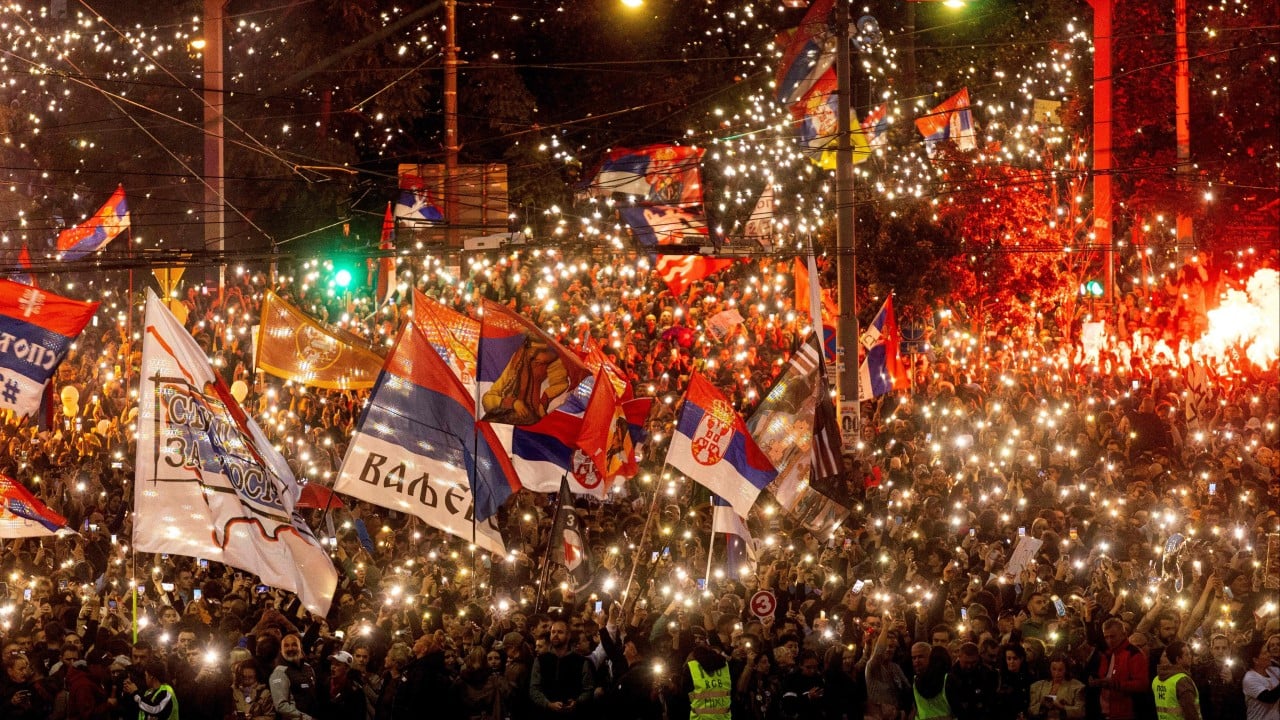
Two years ago, a concrete canopy collapsed at a newly renovated railway station in Novi Sad, killing 16 people. On October 25, 2026, the political shockwaves from that tragedy finally toppled Aleksandar Vučić and his Serbian Progressive Party (SNS) after 14 years in power.
When Serbia went to the polls, foreign commentators framed the race as a David-versus-Goliath clash between angry college kids and a seasoned political machine. That reading misses the entire point. The Student List—officially running as Student List – Students Are Winning—didn't just protest their way into parliament. They out-organized a dominant-party state, captured 53.01 percent of the valid vote, and walked away with 140 of the 250 seats in the National Assembly.
Turnout hit 68.9 percent, the highest Serbia has seen since the breakup of Yugoslavia in 1992. More than 4.4 million people showed up. And if you want to understand how a leaderless protest movement dismantled one of Europe's most entrenched political networks without firing a shot, you have to look past the surface headlines.
Why the Novi Sad Tragedy Broke 14 Years of Political Inertia
Every political monopoly has a breaking point. For Vučić's SNS, which had controlled the Serbian government since 2012, that breaking point arrived at 11:52 a.m. on November 1, 2024.
The Novi Sad railway station had undergone a high-profile renovation between 2021 and mid-2024 as part of a broader railway modernization backed by Chinese financing under the Belt and Road Initiative. When the exterior concrete canopy gave way, 14 people died on the spot, and two more succumbed to their injuries over the following months.
At first, the government responded with its standard playbook. Construction Minister Goran Vesić resigned within days. Prime Minister Miloš Vučević followed in January 2025 after street violence escalated. Vučić promised accountability, blamed bureaucratic oversights, and waited for public anger to burn itself out—just like it had after previous protest waves in 2019 and 2023.
It didn't burn out. Why? Because the canopy collapse wasn't an abstract constitutional crisis or a dispute over media ownership. It was physical proof that secret infrastructure contracts, skipped safety checks, and party-run state enterprises could kill ordinary commuters waiting for a train.
An independent commission of engineering and legal experts later concluded in October 2025 that state graft had directly compromised construction standards. Meanwhile, prosecutors indicted 13 people—including Vesić—but procedural delays meant no trial had even started by the time voters went to the polls two years later. Voters didn't need an opposition speech to connect the dots. They saw a system protecting its own.
The Structural Genius Behind the Student List
Here is the biggest misconception outside the Balkans: people assume the "Student List" meant 20-year-old undergraduates were putting themselves on the ballot to run ministries.
They weren't. In fact, active students barred themselves from running as candidates on the national slate.
Instead, university plenums across Serbia spent over a year vetting and selecting 250 respected professionals, academics, doctors, and non-partisan experts. Cardiologist and professor Ilija Srdanović took the top spot on the ballot. Former central bank governor Dejan Šoškić joined the slate. University of Arts Rector Mirjana Nikolić stood alongside environmental ecologists like Iva Marković.
That single structural decision neutralized every weapon Vučić's media apparatus had perfected over a decade:
- No single leader to smear: Serbian state-aligned tabloids thrive on character assassination. Because the movement operated through horizontal student plenums without a party president, pro-government outlets had no individual figurehead to target.
- Credibility over careerism: Voters had grown deeply cynical toward traditional opposition politicians, many of whom had spent years squabbling over ego and coalition math. By fielding doctors, professors, and economists instead of career politicians, the list felt like a civic rescue mission rather than another partisan power grab.
- Direct grassroots reach: While state broadcasters marginalized protest coverage, students walked, cycled, and ran relays between towns across Serbia. They talked face-to-face with retirees and rural voters who rarely saw anything outside national television.
Even established opposition parties realized the math had changed. Ahead of the September 2026 snap election call, major parliamentary groups—including the Democratic Party, the Green–Left Front, and the Movement of Free Citizens—stepped aside and withdrew their own slates so they wouldn't split the anti-corruption vote.
Breaking Down the October 25 Election Numbers
When Vučić resigned from the presidency in late September 2026 to lead the SNS-backed United Serbia coalition into the snap parliamentary race, he gambled that his personal popularity and state machinery would carry the day one more time.
The gamble failed badly. According to final certified results from the Republic Electoral Commission (REC) released on November 5, 2026, following repeat voting at 53 polling stations, the electoral map shifted dramatically:
- Student List – Students Are Winning: Won 2,354,417 votes (53.01 percent), translating to 140 parliamentary seats—well clear of the 126 seats needed to govern alone.
- Aleksandar Vučić – United Serbia: Captured 1,731,323 votes (38.98 percent) and 103 seats.
- National Minority Lists: Five minority lists secured the remaining seven seats under Serbia's lower minority threshold, led by the Alliance of Vojvodina Hungarians with two seats.
Notice what happened to everyone else. Longtime kingmaker Ivica Dačić and his Socialist Party of Serbia pulled just 2.13 percent, falling below the 3 percent parliamentary threshold for the first time in modern Serbian political history. Right-wing nationalist slates and smaller centrist holdouts were completely wiped out of the legislature.
Geographically, the wave wasn't confined to Belgrade's urban core. While the Student List crushed the ruling coalition by roughly 31 percentage points in the capital, it also led across Vojvodina and Western Serbia, where turnout topped 70 percent. Only in parts of southern Serbia did SNS hold onto a modest lead.
External conditions played a quiet role, too. Earlier in 2026, Hungarian Prime Minister Viktor Orbán—one of Vučić's closest regional allies—lost power in Budapest. Watchdogs like CRTA had spent years documenting how state resources and media bias tilted Serbian elections, yet when turnout surges past 68 percent, clientelist vote-mobilization networks simply run out of math.
What the 11-Point Student Plan Actually Changes
Winning 140 seats is the easy part. Dismantling a 14-year patronage state from the inside is where most reform movements stall.
Unlike vague campaign manifestos, the Student List campaigned on a specific, 11-point blueprint drafted jointly by university plenums and policy specialists. It targets the exact mechanisms that kept state capture intact:
1. A Special Prosecutorial Police
Serbia already had anti-corruption laws on paper. The problem was enforcement: prosecutors lacked an independent investigative arm free from Ministry of the Interior interference. Point one of the platform creates a vetted Special Prosecutorial Police reporting directly to prosecutors, paired with a full review of police officials linked to organized crime or protest crackdowns.
2. Asset Confiscation and Lustration
The plan strengthens the Tax Administration to audit the wealth of public officials, confiscate unexplained assets back into the state budget, and bar officials who abused constitutional rights from holding public office.
3. Opening Secret Infrastructure Contracts
Every tender, public procurement deal, and lex specialis exemption—the special legislative fast-tracks often used to bypass standard bidding rules on major projects—is slated for public release and independent audit. That directly hits the culture of opaque mega-projects that defined the Novi Sad renovation and controversial Belgrade real estate deals.
4. Overhauling State Media and Public Hiring
The platform calls for depoliticizing the Regulatory Authority for Electronic Media (REM), freeing public broadcaster RTS from partisan editorial control, and ending party-card hiring across state-owned enterprises through mandatory public competitions. Alongside institutional cleanup, it folds in concrete economic relief: free school textbooks, shortened 12-month limits on temporary job contracts, affordable housing for young families and healthcare workers, and breaking up import monopolies driving up food prices.
Why Brussels and Moscow Are Watching Nervously
If you're expecting Serbia's new parliament to overnight become a textbook Western foreign-policy alignment story, slow down.
Yes, European Parliament President Roberta Metsola welcomed the record turnout and pledged support for Serbia's democratic reforms. Yes, the European People's Party even moved to review and suspend SNS's associate status over rule-of-law concerns and ties to Moscow. Data from June 2026 showed roughly 75 percent of Student List supporters favor closer ties with the European Union.
At the same time, the student movement deliberately refused to turn the election into a geopolitical referendum on Russia, China, or NATO. They rejected calls to impose sanctions on Russia during the campaign, keeping their focus locked on domestic courts, corruption, and living standards. That pragmatism kept conservative and nationalist-leaning voters from bolting back to Vučić at the last minute.
For Brussels, this creates a genuine test. For years, European leaders tolerated democratic backsliding in Belgrade in exchange for regional stability, lithium mining agreements, and geopolitical balancing. Now they have a government with a clear democratic mandate to fix the rule of law—even if it won't automatically rubber-stamp every foreign policy demand from Western capitals.
The Real Tests Ahead for Serbia's New Majority
The transition is already underway. On November 19, 2026, parliament elected Aleksandar Čupić—an assistant professor at the University of Belgrade's Faculty of Transport and Traffic Engineering—as Speaker of the National Assembly with 140 votes.
Still, huge risks sit right in front of this incoming government:
- Cohesion without party discipline: The 140 new MPs were selected by student assemblies, not bound by traditional party whips. Once the students step back from day-to-day parliamentary voting, keeping a broad big-tent coalition united on tough judicial and economic bills will test their discipline.
- An entrenched opposition: With 103 seats, Vučić and SNS remain a massive parliamentary bloc. They still have deep financial networks, loyalists embedded across local municipalities and intelligence agencies, and tabloid outlets ready to amplify every governing stumble.
- Delivering swift justice: Two years after Novi Sad, families of the 16 victims are still waiting for a verdict. Voters gave the Student List an absolute majority to clean house quickly. If court reforms bog down in procedural gridlock, public patience could evaporate fast.
If you're tracking what happens next in Belgrade, skip the daily partisan noise and watch three concrete benchmarks over the next 90 days: whether parliament passes the Special Prosecutorial Police law before winter recess, how quickly the REM media regulator board is reconstituted, and whether prosecutors finally bring the Novi Sad canopy indictments to open trial. Those three moves will tell you whether Serbia's historic vote actually dismantled the machine—or merely changed the drivers.



