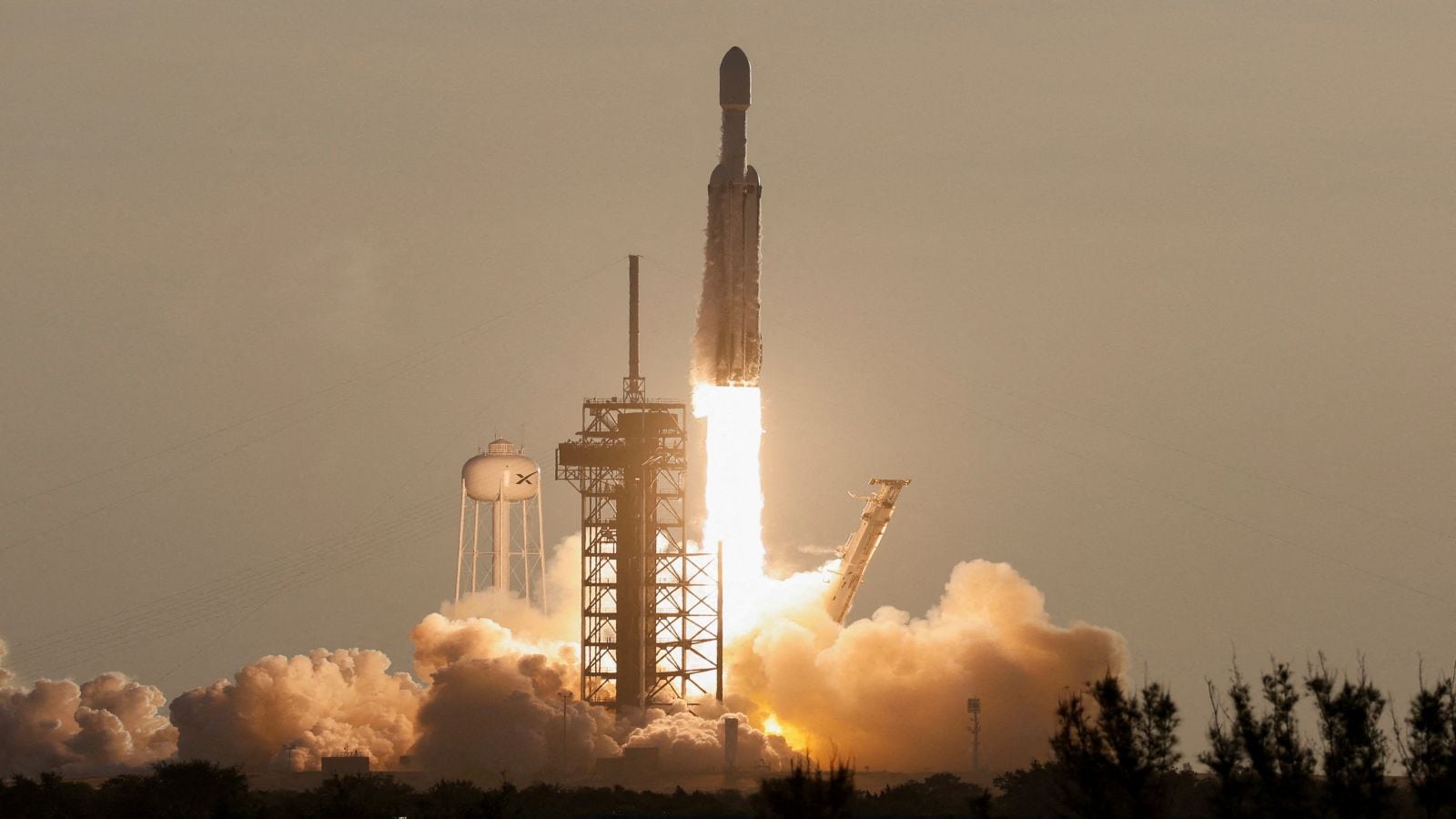
SpaceX just walked right up to the edge of space history, paused, and decided to wait a day. If you tuned in to watch the highly anticipated 12th integrated flight test (IFT-12) from Starbase, Texas, you saw a spectacular countdown freeze at T-40 seconds. The massive, frost-covered booster sat fueled and ready, but a stubborn hydraulic pin holding the launch tower's mechanical arm refused to retract.
Elon Musk quickly hopped on X to clarify that if the team could fix the hardware glitch overnight, they would pivot immediately. The new launch window opens tonight, May 22, 2026, at 6:30 PM Eastern time.
But don't make the mistake of thinking this is just another routine Starship countdown. The real story isn't the delay. It's the fact that SpaceX is skipping straight to its radically redesigned Version 3 hardware while simultaneously tying its operational timeline to the biggest initial public offering in corporate history.
Why Version 3 Changes Everything
Most casual onlookers think Starship is a single, finished product that SpaceX keeps throwing into the atmosphere until it works. It's not. The vehicle standing on the pad right now is Starship V3, and almost every single component has been modified from the V2 models we saw launch last year.
For starters, this thing is massive. It stands roughly five feet taller than its predecessor, pushing the total height of the stacked vehicle well past 400 feet. The extra height isn't for show. It expands the propellant tanks and stretches the cargo bay to accommodate much heavier payloads.
The real magic is happening at the business end of the rocket. Both the Super Heavy booster and the upper-stage Ship are packed with Raptor 3 engines. I can't overstate how much of an engineering leap the Raptor 3 represents over earlier iterations. It eliminates external plumbing, improves thermal management, and cranks up the raw power.
The 33 Raptor 3 engines on the Super Heavy booster generate a mind-boggling 18 million pounds of combined thrust. To put that in perspective, that is double the power of NASA’s Space Launch System (SLS) and more than twice the muscle of the Saturn V that carried Apollo astronauts to the Moon.
The Engineering Shift from V2 to V3
- Height expansion: Five feet of extra hull space to maximize fuel volume.
- Raptor 3 architecture: Streamlined engine design with significantly less exposed plumbing.
- Avionics overhaul: New internal flight computers built for high-frequency reusability.
- Payload capacity: Upgraded to handle over 100 metric tonnes in a fully reusable configuration.
The High Stakes Wall Street Gamble
If you want to understand why there's so much tension in the air at Boca Chica right now, you have to look beyond the launchpad and focus on Wall Street. Just 24 hours before this scheduled launch attempt, SpaceX officially filed its long-awaited prospectus for a historic $1.75 trillion IPO.
Musk loves creating insane pressure cooker environments for his engineering teams, but linking the maiden flight of a completely redesigned megarocket to a trillion-dollar public offering is daring even for him. The financial documentation makes it explicitly clear to potential investors that the company's entire long-term valuation rests squarely on Starship’s shoulders.
The Falcon 9 is an incredible workhorse. It flew 165 times last year alone. But Falcon 9 is essentially maxed out. To scale the Starlink satellite broadband network, construct orbital AI data centers, and achieve the ultimate goal of Mars colonization, SpaceX needs Starship operational. The filing states that the company intends to commence commercial payload deliveries to orbit using Starship in the second half of this year. They are targeting thousands of flights per year to drive launch costs down to unprecedented lows.
What to Watch For During Tonight's Flight
Because V3 is a heavily modified vehicle, SpaceX is actually scaling back some of its recent, flashy retrieval methods. If you remember the jaw-dropping moment in late 2024 when the giant "Mechazilla" robotic arms caught a returning Super Heavy booster out of mid-air, you might be disappointed tonight.
SpaceX won't be trying that catch. Since this is the first flight test of a completely unproven vehicle architecture, they are playing it safe with the recovery profiles.
The Super Heavy booster will attempt a controlled splashdown at an offshore location in the Gulf of Mexico. This allows engineers to validate the flight dynamics of the Raptor 3 engines during a landing burn without risking a catastrophic collision with the multi-million-dollar launch tower.
Meanwhile, the upper-stage Ship will push toward near-orbital speeds, tracing a path across the globe before attempting to splash down in the Indian Ocean roughly an hour after liftoff.
Keep a close eye on the cargo doors during the coast phase. The Ship is carrying 20 Starlink satellite simulators alongside two fully modified, next-generation Starlink V3 test satellites. SpaceX will attempt to deploy these test satellites into space.
Even cooler, those two modified satellites are equipped with specialized imaging hardware designed specifically to turn around and scan Starship's own heat shield. The high-resolution data they capture will tell engineers exactly how well the thermal tiles are surviving the extreme friction of re-entry.
Navigating the Volatility of Rocket Science
It's easy to get frustrated by late-stage holds and successive scrubs. Last year, the program faced plenty of doubts when early test flights suffered severe structural failures, mid-air explosions, and regulatory groundings. But treating a scrub as a failure completely misses how modern aerospace development works.
When dealing with cryogenic propellants, massive aerodynamic forces, and unproven engine variations, a T-40 second hold is a win. It means the software did exactly what it was programmed to do: it caught an anomaly before it turned into a multi-million-dollar fireworks show. Musk noted that even if this debut flight encounters a major anomaly or explodes during ascent, it will only set their operational timeline back by a month or so.
If you want to watch the action unfold live, the official SpaceX broadcast starts around 5:58 PM Eastern time on their X channel. Watch the fuel lines, watch the frost build up on the booster, and look out for that hydraulic pin on the tower arm. If everything clears, we're about to see 18 million pounds of thrust light up the Texas sky.
To get a better visual sense of the sheer scale and power of these test flights, you can check out this SpaceX Starship Launch Stream which captures the intensity of the pre-launch countdown and the massive infrastructure required to support the world's largest rocket.