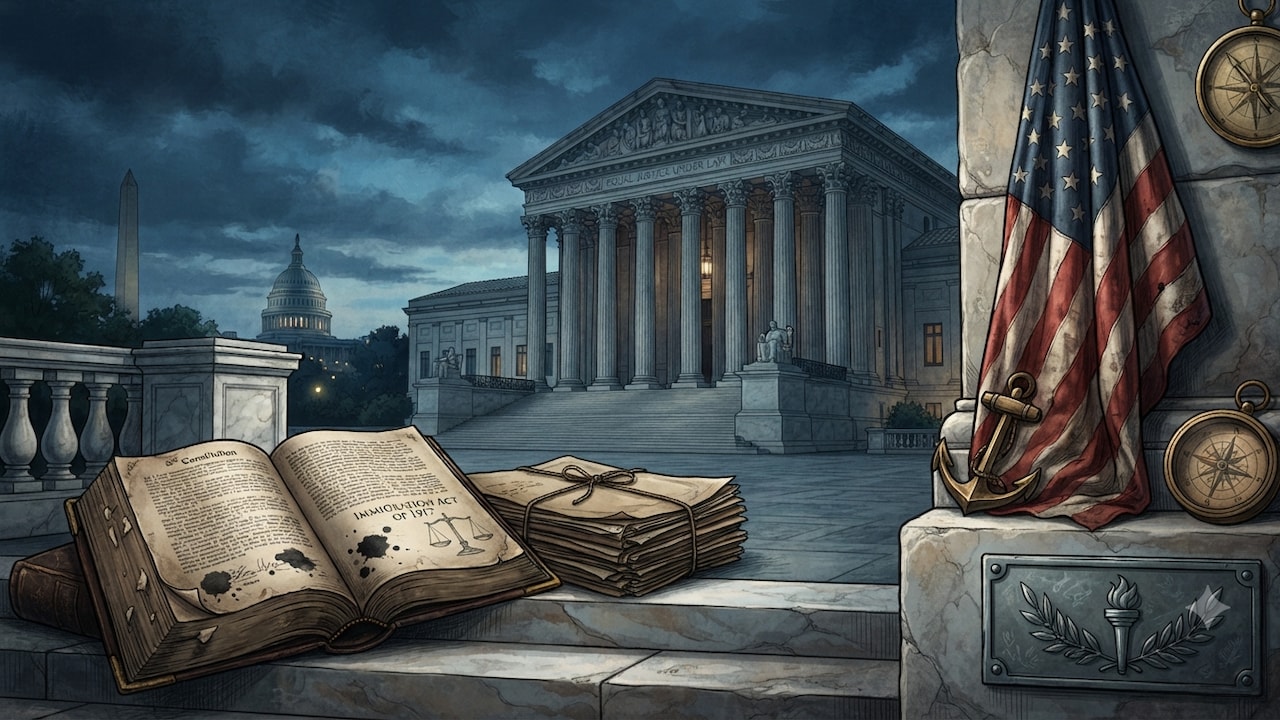
The headlines are shouting about a split decision, but they are missing the real story. Everyone is focusing on the scorecard. Who won? Who lost? It looks like a wash on paper. The Supreme Court gave Donald Trump a massive victory on executive power while completely dismantling his signature plan to end birthright citizenship.
If you think this is just a typical week of judicial compromise, you're wrong.
The high court just fundamentally reshaped how the federal government operates. They didn't do it by splitting the difference. They did it by drawing a hard line between constitutional authority and executive overreach. You have to look past the political theater to see what actually happened inside that courtroom.
The Massive Expansion of Executive Power
Let's start with the victory that will change Washington for decades. In Trump v. Slaughter, the conservative majority did something legal scholars have been predicting for years. They completely threw out a 91-year-old precedent called Humphrey’s Executor.
For nearly a century, Congress could protect members of independent regulatory agencies from being fired by the president without good cause. That protection is gone. Chief Justice John Roberts wrote the majority opinion. He made it clear that if a federal official exercises executive power, they must answer to the president. Period.
Think about the Federal Trade Commission or the Securities and Exchange Commission. These agencies used to operate with a high degree of independence. They made rules and enforced them without worrying about whether the White House approved of their political leanings. Now, a president can clean house whenever they want.
It's a complete restructuring of the administrative state. The conservative legal movement has long argued that the "unitary executive" theory is the only correct reading of the Constitution. They believe the president has total control over the entire executive branch. With this ruling, they finally got their wish. It strips Congress of its ability to insulate regulators from partisan politics.
Where the Court Drew the Line
But don't assume this means the conservative majority is a rubber stamp for every policy that comes out of the White House. The absolute biggest shockwave came when the court struck down Trump’s executive order targeting birthright citizenship.
In Trump v. Barbara, a six-justice majority ruled that the president cannot use an executive order to deny citizenship to children born on American soil, even if their parents are in the country unlawfully. This wasn't just the liberal bloc voting against the administration. Chief Justice Roberts and Justice Amy Coney Barrett joined the liberals to form the majority. Justice Brett Kavanaugh agreed too, though he focused on federal statutory law rather than the Constitution itself.
Roberts pointed straight to the 14th Amendment. The language is plain. It extends citizenship to every free-born person in this land. The administration argued that the amendment was never intended to cover the children of undocumented immigrants. The court didn't buy it. They kept the historic promise of automatic citizenship intact.
This tells us something crucial about the current bench. They are willing to grant the presidency massive structural authority over federal employees. But they will not let a president rewrite clear constitutional amendments by signing an executive order.
A Series of Quick Defeats
The birthright citizenship case wasn't the only loss for the administration during this dramatic stretch. The court quietly handed down several other rulings that checked the president's ambitions.
First, look at the Federal Reserve. The court rejected an attempt to immediately remove Federal Reserve Governor Lisa Cook. While Trump v. Slaughter expanded the power to fire independent agency heads, the court drew a sharp distinction when it came to the central bank. The financial markets can breathe a sigh of relief. The Fed's independence remains largely intact for now, even as other agencies face political restructuring.
Then came the voting rights decisions. The court upheld state laws that allow mail-in ballots to be counted if they arrive after Election Day, provided they are postmarked on time. The administration had fought hard against these rules, arguing they created opportunities for fraud. The justices disagreed, protecting the voting procedures used by more than two dozen states.
Finally, the court declined to hear an appeal regarding the five-million-dollar verdict in the E. Jean Carroll civil case. By refusing to take up the matter, the Supreme Court ended the legal road for this specific dispute. The president will have to pay the judgment. There's no judicial rescue coming from the highest court in the land.
Understanding the Legal Strategy
People are confused by these mixed signals. How can the same group of justices give a president the power to fire thousands of federal workers but stop him from changing immigration rules?
It comes down to originalism and constitutional text. The conservative majority genuinely believes that the text of Article II gives the president absolute control over executive officers. To them, cleaning up the bureaucracy is a matter of restoring the original design of the government.
When it comes to the 14th Amendment, the text is equally clear to them. You can't bypass the amendment process because a policy is politically popular with your base. The justices are showing that their loyalty is to a specific legal philosophy, not a political party.
Many critics are worried about the chaos this will cause in federal agencies. Justice Sonia Sotomayor warned in her dissent that striking down protections for independent agencies will lead to total instability every time the White House changes hands. Imagine an entirely new set of rules for corporate mergers, environmental standards, and labor laws every four years. That is the reality we are looking at now.
Taking Action on the New Reality
If you run a business or work in a regulated industry, you need to adjust your strategy immediately. The old rules of dealing with Washington are dead.
Stop relying on the stability of independent agencies. Their leadership can change overnight. A compliance strategy that works today might be completely obsolete after a political shift. You must build flexibility into your long-term planning.
Keep a close eye on the upcoming midterm elections. With restrictions on coordinated campaign spending struck down in the NRSC v. FEC decision, political parties can now spend unlimited amounts of money in direct coordination with candidates. Expect an unprecedented flood of cash to hit the airwaves.
Review your state's specific voting and election laws. Since the Supreme Court refused to strike down late-arriving mail ballots, the battleground states will continue to operate under their existing systems. Make sure your local operations understand the exact deadlines for your region. Stay informed, stay agile, and stop expecting the courts to protect the status quo.