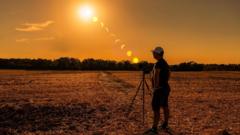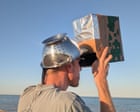
When the sky goes dark during a total solar eclipse, human nature takes over. Panic mixes with awe. Millions of people rush outdoors, grab whatever household object is closest, and attempt to look directly at the sun.
Recent crowd-sourced reports from major publications highlighted an absurd reality. People turned to kitchen colanders, straw hats, and slotted spoons to project the crescent sun onto the pavement. While a perforated pasta strainer successfully casts dozens of tiny, distinct solar crescents onto the ground through the ancient physics of the pinhole camera, relying on improvised kitchenware exposes a deeper systemic failure in public science communication.
We live in an era of unprecedented scientific data access. Yet, when a rare astronomical event occurs, the general public reverts to trial-and-error improvisation with culinary utensils.
The Physics Of Improvised Optics
To understand why a colander works, one must look past the novelty and examine the optics. Light traveling from the sun passes through small apertures. When these openings measure between one and a few millimeters across, they act as pinholes. They project an inverted image of the light source onto a distant surface without the need for glass lenses.
Each individual hole in a metal colander functions independently. As the moon slowly eclipses the solar disk, the light passing through each perforation narrows into a crescent shape. The pavement beneath the strainer transforms into a mosaic of miniature eclipses.
It is an elegant physics demonstration. It is also a dangerous diagnostic of how poorly prepared communities are for predictable celestial phenomena.
Street-level observers often use these makeshift tools because certified solar viewing glasses sell out weeks in advance. Supply chains buckle under the weight of sudden, hyper-localized demand. Price gouging runs rampant on secondary online marketplaces. Counterfeit ISO-certified glasses flood retail platforms, putting millions of eyes at risk of permanent solar retinopathy.
When the market fails to deliver safe, standardized viewing equipment at scale, people turn to their kitchen pantries out of desperation.
The Commercial Failure Of Safety Standards
The International Organization for Standardization established ISO 12312-2 as the benchmark for direct solar viewing filters. These filters must block nearly all visible light alongside almost all infrared and ultraviolet radiation.
Executing this standard requires specialized polymer or aluminized polyester materials. Manufacturing bottlenecks are inevitable. When a total eclipse sweeps across a densely populated continent, the required volume of certified viewers numbers in the tens of millions. The manufacturing sector rarely scales up adequately for single-day events.
Counterfeits exploit this scarcity. Rogue manufacturers print fake ISO logos onto cheap cardboard frames fitted with dark plastic film that reduces visible glare without filtering out invisible, destructive infrared rays. The human eye feels no pain when exposed to infrared radiation, meaning a viewer can sustain severe retinal burns while staring comfortably through a fraudulent filter.
Public health warnings rarely pierce the noise of viral social media trends. Influencers prioritize aesthetic photography over retinal safety. They encourage viewers to look at the partial phases of an eclipse through smartphone camera sensors, which can melt internal digital components without a specialized solar filter, while simultaneously endangering the photographer's eyes during the setup phase.
Moving Past The Colander Strategy
Relying on kitchen utensils during a major scientific event highlights a persistent gap in modern infrastructure. Communities treat eclipses like rare weather anomalies rather than predictable civic events requiring organized resource distribution.
Public libraries have occasionally stepped into this vacuum. Forward-thinking municipal libraries distribute millions of certified glasses funded by grants. This model proves that centralized distribution works. Where municipalities fail to appropriate funds, the vacuum is filled by confusion, misinformation, and household cookware.
Safe observation requires zero ambiguity. If an observer lacks certified glasses, indirect projection remains the only viable path. A simple cardboard box with a pinhole punched in one end and a white sheet of paper taped inside the base projects a sharper, safer image than a handheld colander shaking in the wind.
The kitchen colander will always remain a charming anecdote for morning talk shows and lifestyle columns. It proves human ingenuity persists in the face of resource scarcity. But treating a pasta strainer as a primary scientific instrument exposes the fragility of our public education and safety supply chains.
The next time the shadow of the moon races across the continent, the true test will not be whether people can find a clean sieve in the back of a kitchen drawer. The test will be whether society has finally built a distribution network reliable enough to keep everyone from going blind while looking up.