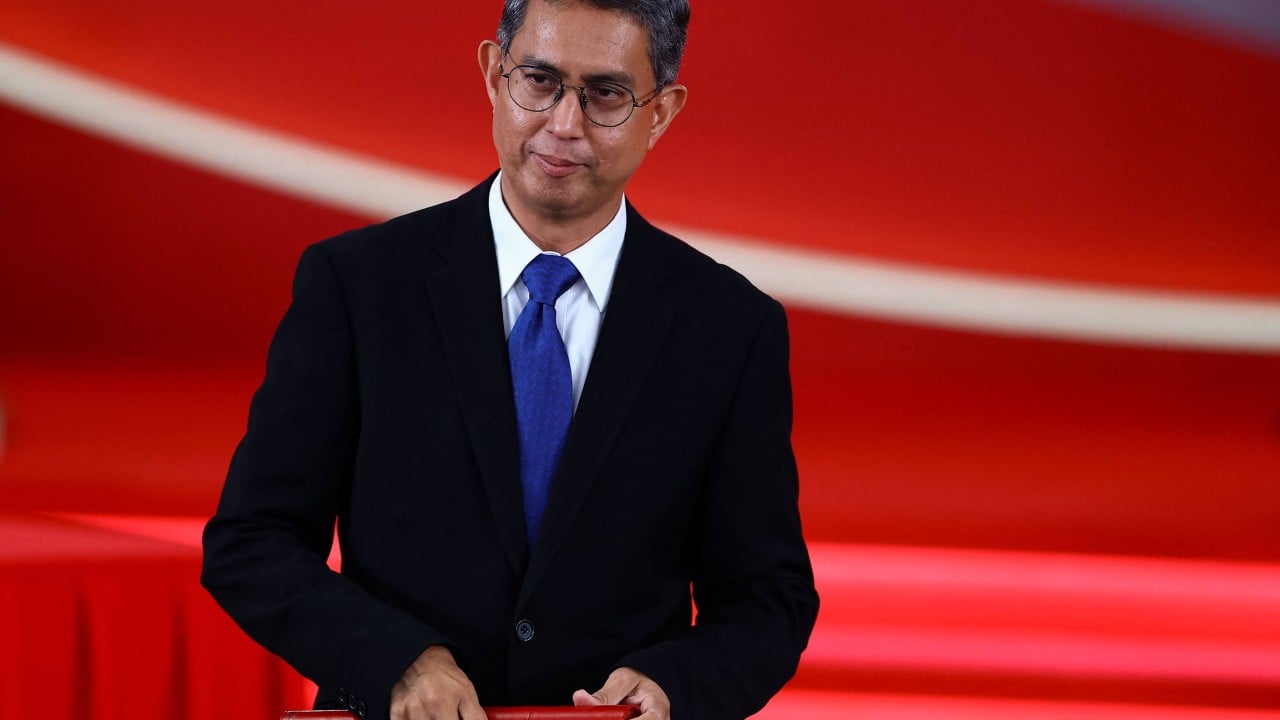
When Prime Minister Lawrence Wong first opened the detailed email containing screenshots of Associate Professor Muhammad Faishal Ibrahim's online exchanges with a female member of the public, he genuinely thought it was fake.
He wasn't trying to make excuses. It was pure disbelief.
The contents were so completely out of line with what anyone expected from a seasoned, 20-year political veteran that Wong’s knee-jerk reaction was to assume someone had fabricated the entire thing. But as the Prime Minister’s Office looked into the matter, spoke to both parties separately, and verified the digital receipts, the uncomfortable truth hit home: the messages were entirely real.
By July 20, 2026, Faishal—who served as Acting Minister-in-charge of Muslim Affairs and Senior Minister of State for Home Affairs—had resigned from the People's Action Party (PAP), his cabinet posts, and his seat in Parliament.
The whole situation highlights a brutal reality in modern governance: digital boundaries, once crossed, leave a trail that leaves no room for political cover-ups.
The Fine Line Between Polite Diplomacy and Poor Judgment
How does an experienced politician end up in a spiral like this?
According to Home Affairs Minister K. Shanmugam, Faishal’s online interactions with the woman started out non-confrontational. When the woman reached out and kept the conversation going, Faishal claimed he was worried she might react negatively or blow up if he abruptly cut her off.
So he kept responding.
That was his fatal miscalculation. Instead of de-escalating, his continued replies were interpreted by the woman as encouragement. She felt engaged. When Faishal eventually tried to pull back and draw a line, the situation soured completely. The woman grew angry and escalated the matter straight to the top, firing off an email packed with screenshots and message logs to the Prime Minister’s Office while alleging harassment.
Faishal countered by alleging that she was actually the one harassing him.
The matter went to the police, and after consulting with the Attorney-General's Chambers, authorities concluded that neither party had committed a criminal offense. But in political leadership, "not illegal" doesn't mean "acceptable."
Why the Private Matter Rule No Longer Applied
In Singapore’s political culture, there’s a distinct line between private indiscretions and public misconduct. As Shanmugam noted, if an issue remains strictly private and stops after internal counseling, it can stay private.
The moment the woman emailed the Prime Minister with evidence, the game changed.
It was no longer a private dispute over messaging etiquette. It became a formal complaint against a public office holder, forcing the government to step in and scrutinize the evidence objectively.
Faishal himself admitted that there was no physical relationship and that he never intended for things to turn romantic or physical. But intention takes a backseat to hard evidence. His failure to set unambiguous, professional boundaries right from the start turned what could have been a manageable interaction into a career-ending failure of judgment.
No Exceptions Even for Two Decades of Service
Losing Faishal wasn't an easy pill for the PAP or PM Wong to swallow.
Faishal spent two decades building deep connections, particularly within the Malay-Muslim community and his constituency in Marine Parade-Braddell Heights. Initiatives like his 100=50 program in Nee Soon Central made a tangible difference for low-income families. Community leaders openly voiced sadness over his sudden departure.
PM Wong openly acknowledged that he tried to see if there was any legitimate path for Faishal to stay on. But carving out an exception for a senior figure would have shattered public trust.
When standards are applied selectively based on tenure or popularity, institutional trust erodes overnight. Wong made it clear: bending the rules for Faishal would do far more long-term damage to Singapore’s political system than losing a capable minister.
What Professionals and Public Figures Must Take Away
This incident isn't just about Singaporean politics; it's a textbook case study on digital boundaries for anyone holding a position of authority.
- Set firm boundaries early: If an interaction online starts feeling overly personal, ambiguous, or uncomfortable, nip it in the bud instantly. Trying to "be nice" or manage a awkward person usually backfires.
- Understand the reality of digital records: Every text, direct message, photo, and voice note is permanent evidence. If you wouldn't want a message projected on a screen in front of your boss or the public, don't send it.
- Recognize that context shifts when complaints happen: Consensual or grey-area conversations lose all ambiguity the second one party files an official complaint. At that point, third parties will assess your words based on objective facts, not your internal intentions.
Faishal's step back from politics to focus on his family marks a quiet end to a long career in public service. For leaders everywhere, the lesson is straightforward: in an era of instant screenshots, maintaining strict personal discipline across all digital platforms isn't optional—it's essential for survival.


