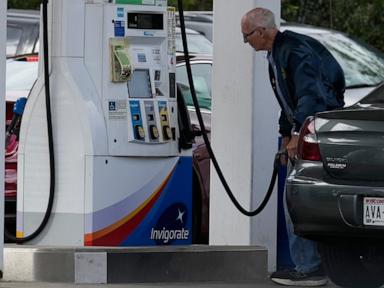
When nominal retail fuel prices breach political tolerance thresholds, legislative bodies routinely deploy two intervention mechanisms: statutory fuel tax holidays and temporary regulatory rollbacks. These interventions are typically framed as direct economic relief for constituents. However, an examination of public finance, supply chain elasticity, and electoral timing reveals a distinct structural reality. Such policies operate primarily as electoral signaling devices rather than corrective economic measures, often transferring deadweight loss from consumers to public infrastructure funds while failing to alter the underlying global supply constraints that dictate commodity pricing.
To understand why governments pivot toward tax waivers during high-pressure political cycles, one must evaluate the cost function of energy inflation. Energy is a non-discretionary input for median households and commercial logistics alike. When gasoline prices surge, the political cost accrues disproportionately to the incumbent party holding executive or legislative power. The legislative response—suspending state excise taxes or relaxing environmental fuel mandates—is designed to minimize electoral friction rather than resolve market imbalances. Meanwhile, you can explore related stories here: Thermal Vulnerability in Secure Facilities The Thermodynamics of Carceral Heat Exposure.
The mechanism of a fuel tax suspension relies on the assumption of tax incidence passing cleanly to the consumer. In a frictionless market, removing an excise tax of thirty cents per gallon should reduce pump prices by an identical margin. Yet, downstream fuel markets exhibit asymmetric price transmission. Refiners and distributors frequently absorb a portion of the tax delta into operating margins or adjust wholesale pricing structures dynamically based on localized demand inelasticity. Consequently, the consumer surplus captured through these legislative waivers is frequently lower than the nominal tax reduction enacted by the state.
Simultaneously, state transportation funds face immediate revenue compression. State highway trust funds rely heavily on per-gallon motor fuel excise taxes to finance deferred maintenance, capital improvements, and debt service on infrastructure bonds. When these revenues are artificially suppressed without a corresponding reduction in outlays, states must either draw down fiscal reserves, defer critical structural projects, or backfill the shortfall from general fund revenues. This creates a deferred fiscal liability, shifting the cost of short-term electoral relief onto long-term capital expenditure efficiency. To understand the complete picture, check out the recent analysis by The New York Times.
The second tier of intervention involves regulatory rollbacks, specifically the suspension of boutique fuel specifications or reformulated gasoline mandates designed to reduce seasonal smog. Refineries must transition production twice annually from winter-blend gasoline to stricter summer-blend requirements, a process that incurs both capital downtime and chemical input costs. Temporarily waiving these mandates or permitting out-of-season fuel blending is intended to expand available supply pools and reduce production bottlenecks.
The operational friction of regulatory rollbacks, however, introduces market uncertainty. Refineries operate on multi-quarter planning horizons. Capital allocation decisions regarding feedstock acquisition, catalytic cracking unit maintenance, and distribution logistics are optimized around predictable regulatory frameworks. When state or federal regulators introduce ad hoc exemptions in response to electoral pressures, price signals become distorted. Refiners face compliance ambiguity regarding inventory management when temporary waivers expire, occasionally leading to localized supply tightening rather than the intended liquidity expansion.
Furthermore, the intersection of tax suspensions and regulatory rollbacks exposes a fundamental policy contradiction. Environmental standards are engineered to internalize the negative externalities of fossil fuel consumption, including public health costs associated with particulate emissions and ozone formation. Waiving these standards during periods of high prices implicitly subsidizes carbon-intensive consumption at the exact historical juncture when market price signals should otherwise encourage conservation and demand rationing.
Evaluating the macroeconomic efficacy of these measures requires analyzing supply elasticity. Domestic fuel prices are a function of global crude extraction rates, geopolitical risk premiums, refining capacity utilization, and foreign exchange rates. Localized tax holidays and state-level regulatory reprieves account for only a fraction of the total retail price build-up. Because sub-national jurisdictions lack the capacity to influence international crude benchmarks or domestic refining throughput bottlenecks, their policy levers function largely as cosmetic adjustments.
The institutional incentive structure governing these interventions is clear. Elected officials operate under short time horizons bounded by election cycles. A sustained structural overhaul of energy infrastructure or public transit systems requires capital expenditure horizons spanning decades, yielding political dividends long after the incumbent has left office. Conversely, an executive order suspending a gas tax generates immediate, visible media coverage, aligning policy output with the psychological cadence of an active campaign cycle.
This dynamic establishes a recurring fiscal vulnerability. States that utilize tax holidays to navigate short-term electoral crises frequently find themselves structurally underfunded when economic volatility returns. The long-term trajectory demands a shift from reactive price suppression toward resilience planning, focusing on grid modernization, multi-modal transit redundancy, and fuel efficiency mandates that permanently decouple household utility costs from commodity price shocks. Until legislative bodies prioritize structural reform over short-term electoral insulation, fuel tax waivers will remain a recurring exercise in shifting fiscal burdens across time without altering the underlying economic reality.


