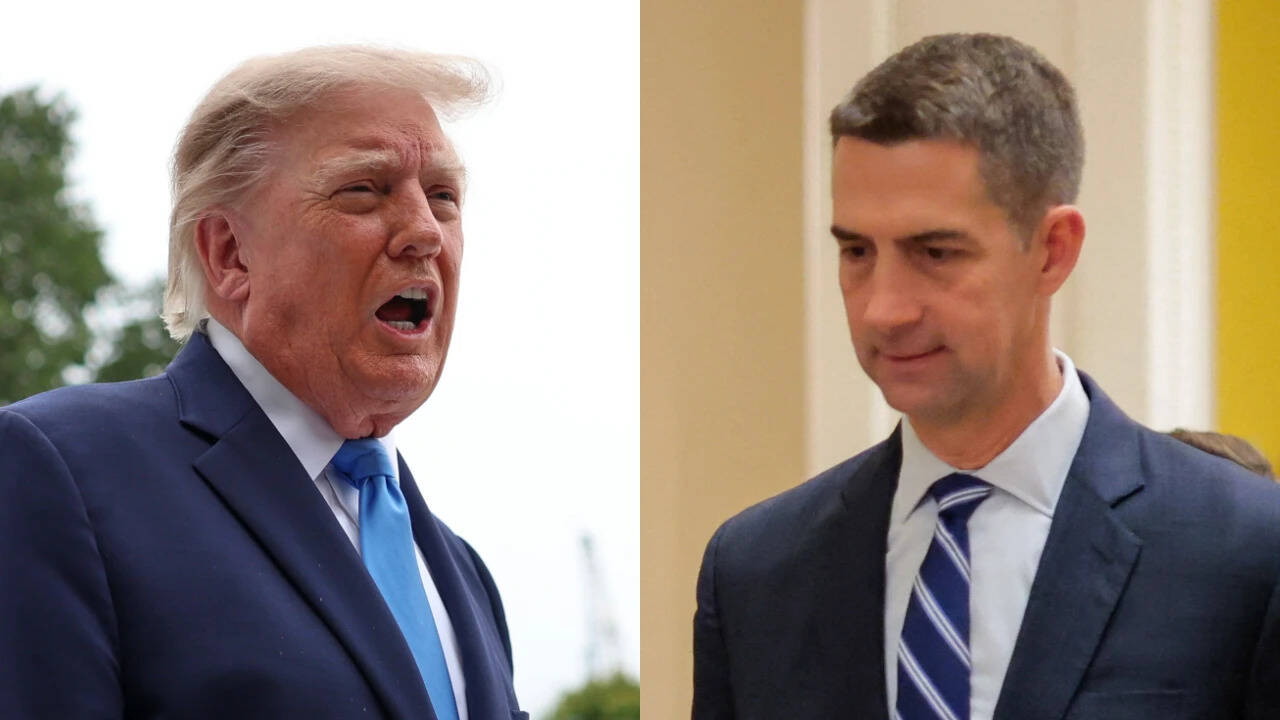
Legislative bottlenecks in modern American politics rarely hinge on abstract ideology alone; they frequently expose structural trade-offs between executive preference and congressional committee friction. The public dispute between the White House and Senator Tom Cotton regarding the Sunshine Protection Act illuminates the operational friction points of federal policymaking. By examining the core arguments, chronological hurdles, and direct political pressure tactics deployed in this conflict, analysts can map the exact anatomy of how administrative priorities collide with legislative caution.
The Economic and Physiological Arguments
The policy objective of the Sunshine Protection Act is simple in text: maintain Daylight Saving Time (DST) permanently, thereby eliminating the biannual clock shifts. Proponents point to several structural incentives.
- Productivity and Leisure Metrics: Advocates argue that extending evening daylight maximizes operational windows for commercial retail, outdoor recreation, and sports industries.
- Administrative Friction Reduction: The biannual time change creates systemic disruptions across transportation scheduling, medical shift planning, and digital system synchronizations. Eliminating this transition removes a recurring operational tax on infrastructure.
Conversely, legislative opposition is anchored in demographic and safety constraints. Senator Cotton’s core objection centers on the morning hours during winter months. If permanent DST is enacted, the sun would rise significantly later in northern and western regions of the United States—in some major cities, past 8:00 AM.
- Pedestrian Safety: Children commuting to school would navigate unlit streets during peak morning traffic hours.
- Circadian Alignment: Public health researchers have frequently noted that standard time aligns more closely with human circadian biology than permanent daylight saving time, raising concerns regarding long-term sleep metrics.
Direct Pressure Tactics and Legislative Stalling
The conflict escalated when executive leadership bypassed traditional lobbying channels to influence the legislative queue. Publishing a sitting senator’s private contact information on digital platforms is an aggressive mobilization strategy. The mechanism is designed to weaponize constituent volume, forcing a bottlenecked lawmaker to absorb high call volumes and re-evaluate their procedural stance.
This tactic has historical precedent. During the 2016 Republican presidential primary, a similar disclosure targeted Senator Lindsey Graham. In both instances, the operational intent was identical: external
The Political Mechanics of Executive Retaliation and Institutional Friction
news, business
Political communication in contemporary institutional ecosystems relies heavily on asymmetric leverage. When personal grievances intersect with legislative stalemates, public figures frequently bypass conventional negotiation channels to deploy direct audience-response mechanisms. The recent public exposure of a United States senator's personal telephone number by Donald Trump following a dispute over daylight saving time legislation exemplifies a recurring operational pattern in modern political friction. This analysis deconstructs the structural mechanics of such escalations, mapping out how petty procedural disagreements transform into high-visibility public confrontations.
The Legislative Catalyst and Institutional Inertia
The underlying dispute centered on legislative positioning regarding time-change regulation. In modern legislative bodies, minor or seemingly peripheral policy adjustments often become proxy battlegrounds for larger structural debates. The Sunshine Protection Act or similar legislative initiatives regarding permanent daylight saving time frequently encounter gridlock not because of ideological opposition to the time change itself, but due to downstream economic friction, jurisdictional disputes between committees, and competing regional priorities.
When a legislator blocks or stalls a high-profile legislative push, the action creates an operational bottleneck. In a political environment optimized for immediate narrative velocity, legislative inertia is interpreted by aggressive stakeholders as bad-faith obstruction. The standard institutional remedy involves committee bargaining, floor amendments, or strategic concessions. However, when traditional negotiation protocols fail to yield rapid compliance, external actors frequently resort to exogenous pressure campaigns designed to alter the political cost-benefit matrix of the opposing legislator.
Asymmetric Retaliation and the Cost Function of Personal Exposure
The deployment of personal contact details into the public sphere represents a calculated escalation from institutional lobbying to direct, distributed pressure. Politically, this tactic alters the baseline operating costs for the target official.
The Direct Cost Vectors
- Communication Infrastructure Saturation: A sudden influx of constituent and activist communications overwhelms office switchboards, email servers, and staff bandwidth, paralyzing routine legislative operations.
- Personal Security Reallocation: Public exposure of direct lines forces immediate security reviews, requiring the diversion of public resources to manage potential harassment or physical threats.
- Narrative Dominance: The dispute shifts immediately from a nuanced policy debate about clock changes to a sensationalized conflict over norms, privacy, and political bullying, drowning out the original legislative text.
By externalizing these costs directly onto the individual legislator, the actor initiating the exposure attempts to create a prohibitive deterrent against future legislative blocking maneuvers. The objective is to make obstruction more politically expensive than capitulation.
Information Warfare and the Attention Economy
This incident highlights a fundamental structural reality of modern governance: legislative utility is frequently subordinate to attention capture. Policy minutiae regarding time zones, transportation logistics, and commercial scheduling generate low public engagement. Conversely, personal conflict, institutional breaches, and direct retaliation generate maximum algorithmic distribution.
When a political figure leaks or shares direct contact information during a policy dispute, they exploit the attention economy to bypass the media filter. The response mechanism triggers a predictable cascade across digital networks:
- Immediate amplification by partisan networks and digital commentators.
- Rapid polarization of public opinion along existing ideological fault lines.
- Forced defensive positioning by institutional leadership who must either condemn the breach or tacitly endorse the pressure tactic.
This sequence demonstrates that the primary utility of the action is not policy persuasion, but dominance over the information environment. The policy dispute over the clock-change bill serves merely as the initial friction point for a broader assertion of political dominance.
Strategic Forecast and Institutional Adaptation
The recurrence of personalized political retaliation signals a permanent degradation of traditional legislative norms. As institutional guardrails weaken, political actors operating outside formal legislative office or within hyper-partisan environments will continue to utilize audience-targeting tools to enforce legislative alignment.
Future legislative disputes of similar magnitude will likely exhibit shorter mediation phases and quicker escalations to public pressure campaigns. Institutional defenses will require structural adaptations, including automated communication filtering systems, decentralized crisis response protocols for targeted officials, and stricter platform enforcement regarding the distribution of non-public personal information. Until systemic disincentives are established, asymmetric exposure will remain a primary instrument in the modern political negotiation toolkit.


