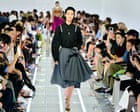
Milan Fashion Week usually functions as a well-oiled machine of commercial certainty. Tailored trousers, silk blouses, and safe evening wear roll down the runway to satisfy global buyers who need predictable inventory for luxury department stores. Then Miuccia Prada and Raf Simons decide to burn the instruction manual.
By systematically stripping trousers and dresses from their runway lineup, Prada transformed a standard seasonal presentation into a radical statement about modern dressing. Skirts took absolute star billing. Every look centered on the skirt, subverting standard commercial expectations and forcing an entire industry to rethink how a wardrobe is built from the ground up. Meanwhile, you can read other developments here: The Fifteen Dollar Masterpiece That Sat on a Neckline for Years.
This shift was not merely an aesthetic whim. It was a calculated commercial and cultural manoeuvre executed by two designers who understand that high fashion is currently suffocating under its own desire for mass-market predictability.
The Economics of the Runway Monotony
For the past decade, luxury brands have treated the runway as a glorified digital catalog. The formula remained stubbornly consistent: open with sharp outerwear, transition into a series of highly marketable trousers and knitwear, and close with red-carpet gowns. It is a structure designed to minimize risk for corporate parent companies that demand steady quarterly growth. To see the bigger picture, check out the recent report by The Spruce.
Prada operates differently. By eliminating trousers entirely from the women's collection, the house disrupted the most dependable revenue driver in retail. Trousers are the backbone of contemporary ready-to-wear. They fit a wider demographic, require less tailoring adjustment off the rack, and translate easily into e-commerce environments where the silhouette is instantly legible on a small smartphone screen.
When a brand of Prada's magnitude forces skirts into every single look, they are deliberately rejecting the easy sale. They are challenging the buyer to invest in garments that require more deliberate styling, more specific footwear, and a completely different posture from the wearer.
Deconstructing the Skirt Monopolization
To understand why this choice matters, look closely at how the garments were constructed. These were not traditional, polite pencil skirts meant for corporate boardrooms. They were heavy, textured, layered, and often subverted by industrial elements or contrasting proportions.
The skirt became a canvas for architectural experimentation. By anchoring every silhouette to a lower-body garment that traditionally signals formality or conventional femininity, the designers inverted the meaning of the piece. When paired with rugged utility jackets or technical knitwear, the skirt stopped being a symbol of compliance and transformed into an instrument of disruption.
This approach exposes a broader anxiety within luxury fashion. Consumers are experiencing fatigue. When every major house offers the exact same iteration of wide-leg trousers and oversized blazers, the distinction between brands collapses into a blur of beige logos. Prada re-established brand distinctiveness by making a choice that cannot be easily copied by fast-fashion conglomerates within a two-week turnaround cycle.
The Manufacturing Reality Behind the Silhouette
Shifting production lines away from trousers toward complex skirt construction is an operational nightmare. Luxury supply chains in northern Italy are optimized for specific garments. Mills weave fabrics with particular draping weights for trousers, while pattern makers spend decades perfecting the crotch rise and leg break of a tailored pant.
When you suddenly eliminate that category, you force pattern rooms to completely reinvent their grading systems. Skirts that rely on complex pleating, internal boning, or bonded technical fabrics require entirely different machinery and specialized artisan labor.
This is where the industry analysis gets interesting. Prada is not just designing clothes; they are stress-testing their own supply chain. They are signaling to their manufacturing partners that flexibility and craft must take precedence over repetitive volume. In an era where younger consumers can spot mass-produced uniformity from a mile away, this commitment to specialized manufacturing serves as an authentic marker of luxury.
What Follows the Skirt Supremacy
Competitors in Milan and Paris are already scrambling to adjust their mood boards for upcoming seasons. They see the commercial risk Prada took, and they are measuring the cultural fallout.
The takeaway for the industry is clear. Playing it safe with trousers and predictable silhouettes is no longer a shield against market stagnation. When the giants of the industry decide to abandon their safest categories, it exposes the lack of imagination in brands that refuse to take similar leaps. Luxury thrives on desire, and desire cannot be manufactured by offering people more of what they already own three pairs of in their closet. Prada proved that shaking up the foundation of daily dressing is the only way to make the world look twice.