The wind does not stop here. It has no reason to. It sweeps unobstructed across thousands of square miles of flat, black earth, carrying the smell of damp stubble and coming hard off the horizon until it hits the metal siding of a grain elevator or the low eaves of a farmhouse. For generations, the horizon has belonged to two things: the sky and the wheat.
Now something new is climbing into that sky.
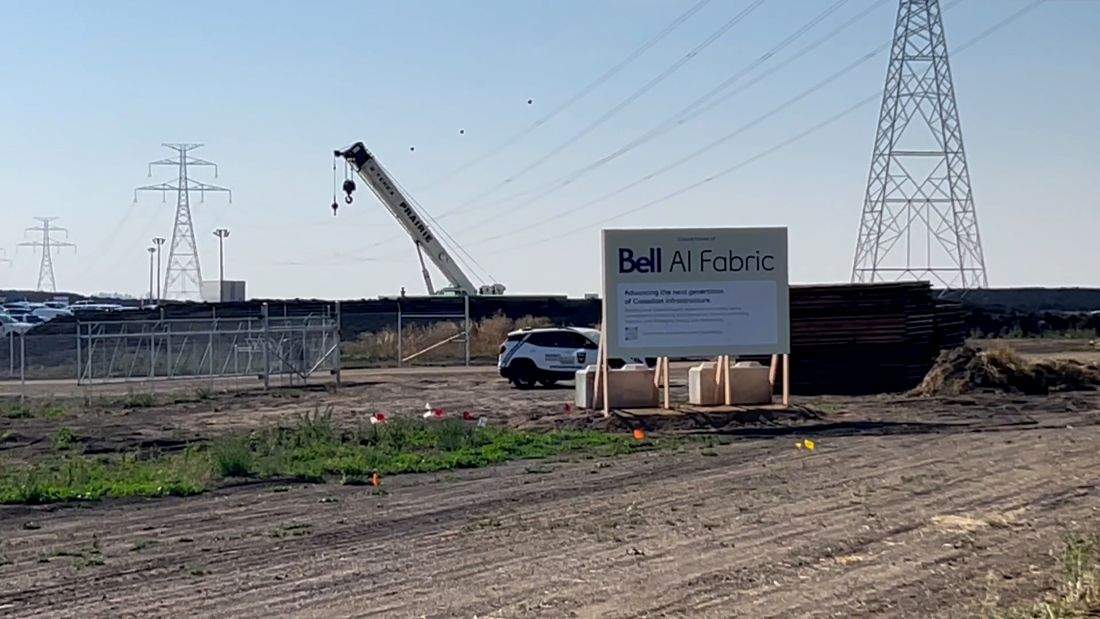
Just outside Regina, beneath the vast, indifferent blue of the Saskatchewan dome, a massive data centre is taking shape. It is designed to feed the insatiable appetite of artificial intelligence. It will draw staggering volumes of water and drink deep from the electrical grid, humming quietly day and night, processing the digital weight of algorithms thousands of miles away.
And right beside it, watching the concrete pour, are the people whose ancestors walked these plains before maps existed.
First Nations leaders have stepped forward with a demand so simple it sounds radical in the language of modern industry: more information. They want to know what this iron and silicon beast will extract from their traditional territory. They want to know what it will leave behind. Because when the server racks go live and the cooling fans start their eternal roar, the architects of this digital future will pack up their laptops and catch flights back to corporate towers in distant cities.
The First Nation remains. They have to live here.
Consider what that means on a Tuesday morning when the frost is still whitening the fence posts.
Data centres are often sold as weightless. They live in the cloud. They are ethereal, clean, modern. But physics refuses to participate in corporate marketing. A server farm is a heavy, thirsty industrial plant. It requires millions of gallons of water to keep its processors cool. It requires a massive, unyielding block of electrical power.
When you plug an artificial intelligence facility into the grid of a sparsely populated province, you alter the balance of everything attached to those wires. You change what the local utility must generate. You change where the water flows.
Chiefs and band councils are looking at these steel shells with a very specific kind of memory. History has taught Indigenous communities across the Canadian prairies a harsh, recurring lesson about outsiders arriving with blueprints for progress. The fur traders came. The railway surveyors came. The oil companies came. Each wave promised jobs, prosperity, and a modernization that could not be refused. Each wave left behind ecological scars, broken promises, and communities that had to pick up the pieces after the extraction was complete.
Now comes the digital prospector.
The pitch is identical, even if the vocabulary has changed. Instead of rails of steel, they lay fiber-optic cables. Instead of oil wells, they drill deep into the electrical grid.
To understand the unease, you have to stand where the local residents stand. Imagine looking out your kitchen window at a horizon you have known since childhood, only to see a compound of windowless warehouses rising like a monolith. Imagine being told that this facility will power the future of global technology, yet when you ask what it means for your local watershed, you are met with bureaucratic silence or dense corporate slide decks filled with terms designed to obscure rather than illuminate.
Information is power. In this case, withholding information is a form of control.
When a First Nation demands transparency, they are not merely asking for technical specifications. They are asserting jurisdiction over their ancestral lands. They are saying that consultation cannot be a rubber stamp applied after the bulldozers have already cleared the topsoil.
The developers talk about efficiency. They talk about scale. They talk about the race to build the infrastructure that will run tomorrow's automated world. But efficiency for whom? Scale at what cost?
If an algorithm in Regina needs to process data faster to serve a user in New York or Tokyo, the heat is generated here. The water is consumed here. The strain on the local infrastructure is borne here. And if something goes wrong—if the groundwater table shifts, if the energy demands cause brownouts, if the toxic runoff from cooling systems leaks into the local ecosystem—the people in those distant corporate offices will not smell it on the wind.
The people who have to live here will.
There is a profound disconnect between the speed of the digital age and the patience of the land. Silicon Valley operates on the mantra of moving fast and breaking things. The prairie operates on cycles of seasons, centuries, and survival. You cannot patch a broken aquifer with a software update. You cannot reboot a depleted water table.
When First Nations leaders ask for more information, they are attempting to bridge this chasm. They are insisting that before the servers start humming and the power lines hum with a new, heavy burden, there must be accountability.
This is not anti-technology. It is pro-survival. It is the recognition that human progress is a fraud if it leaves behind communities that cannot drink their own water or breathe their own air.
The data centre near Regina will likely be built. The momentum of the digital economy is too heavy, the investments too vast, the political pressure too intense to stop it entirely. But how it is built, and who holds the power to monitor it, remains entirely unwritten.
The wind continues to blow across the plains, flattening the dry grass and rattling the newly erected chain-link fences. Somewhere inside the perimeter of the new facility, a test light blinks green in the dark.
Out on the reserve, a few miles away, someone looks out the window at the gray western sky, listening to that low, distant hum, waiting for answers that should have been given before a single spade ever broke the soil.