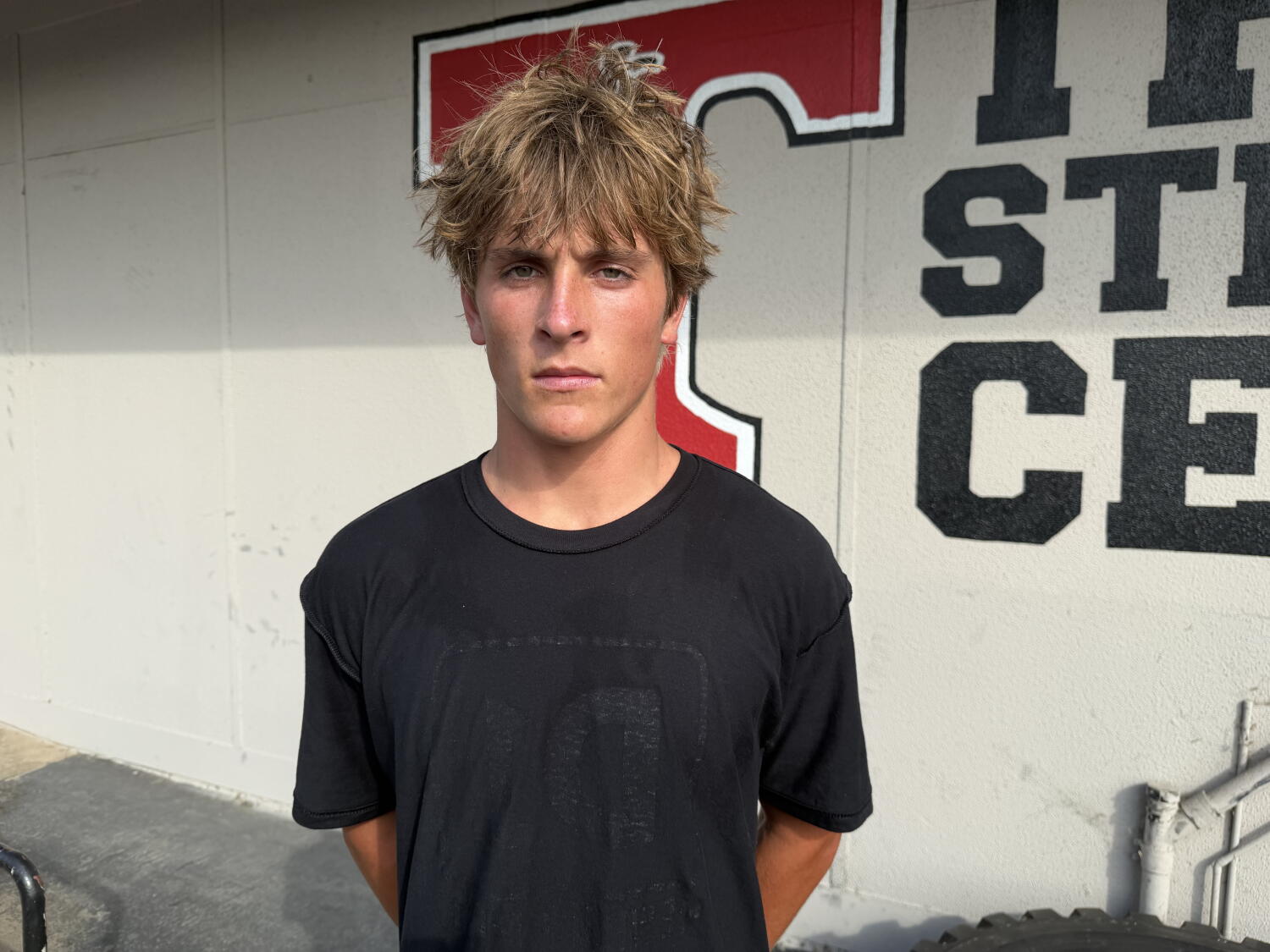
Preston Beck is throwing into windows that most high school juniors should not even attempt to target. As the starting quarterback for San Clemente High School, the class of 2028 prospect has quietly transformed from an intriguing lineage-based curiosity into one of the most mechanically polished signal-callers in Southern California. Yet the local sports pages love to frame these arcs as fairy tales. They talk about rapid growth, natural poise, and inherited genius.
The reality of playing quarterback under the Friday night lights of Orange County is far less romantic. It is an environment of intense scrutiny, physical attrition, and an unyielding youth football machine that chews through prospects before they ever reach a college campus. If you enjoyed this post, you might want to look at: this related article.
To understand Beck's trajectory, we have to look past the superficial headlines of his early recruiting offers from programs like BYU, Nevada, and Colorado State. We have to examine how a sophomore stepping into the fire mid-season actually survives the brutal demands of the Trinity and Alpha league ecosystems. When Beck took over the starting job for the final stretch of his sophomore campaign, he did not just manage games. He stabilized a San Clemente offense that was searching for an identity, steering the Tritons to a stellar record and a deep postseason run into the CIF championship game.
Quarterback development in Southern California operates on an unforgiving timeline. By the time a player reaches their junior year, the window for raw potential closes. Evaluators stop grading on a curve for youth. They want to see pre-snap diagnostic skills, the ability to manipulate deep safeties with helmet movement, and functional mobility that goes beyond just escaping a collapsing pocket. For another angle on this event, refer to the latest coverage from Bleacher Report.
Beck shows flashes of that advanced processing. Standing at roughly six-foot-two and hovering around 180 pounds, his physical frame is still maturing. He lacks the thick, immovable build of a prototypical pro-style senior, meaning his survival depends entirely on timing and anticipation.
Watch the tape from his sophomore breakout. He does not wait for receivers to clear coverage before pulling the trigger. He delivers the ball with an compact, repeatable release right as his targets break out of their cuts. That kind of synchronization takes hundreds of hours of throwing sessions that do not show up on a stat sheet.
Naturally, the surname carries weight. Being the son of former BYU standout and NFL quarterback John Beck opens doors, but it also paints an immediate target on a player's back. Every opposing defensive coordinator in the section watches the film knowing exactly whose bloodline is under center. They design specific pressure packages to test whether the young quarterback can read disguised coverages under duress.
The narrative surrounding quarterback sons usually splits into two lazy extremes. Critics assume they are entitled system products receiving unearned hype, while boosters treat them as finished products years ahead of schedule. Both views miss the mark. Growing up around elite quarterback coaching provides a distinct structural advantage in understanding playbook language, but it also creates an impossible standard of perfection. One bad half against a top-tier CIF opponent invites whispers about whether the success is systemic or individual.
San Clemente head coach Jonah Oliver and his staff have managed Beck by leaning into his strengths as an anticipatory thrower rather than asking him to play a style that doesn't fit his frame. They use rhythm passing to neutralize aggressive pass rushes. They maximize short-to-intermediate timing routes that allow playmakers to pick up yards after the catch.
Still, the competition level in Southern California high school football is relentless. Programs like Los Alamitos and the perennial powerhouses of the upper divisions expose every flaw in a young quarterback's footwork and decision-making matrix. When the pass rush gets home and passing lanes shrink, the margin for error shrinks to zero.
The real test for Beck is not whether he can collect early scholarship offers or put up clean numbers against lesser non-league opponents. The test is how he handles the physical and mental toll of a full varsity schedule as the undisputed focal point of a historic program. As the season progresses, defensive coordinators will adjust their tendencies, forcing him to beat them with secondary reads and off-schedule creativity.
The hype machine will continue to churn out breathless weekly updates about his recruitment and his physical growth. But behind the digital noise, a high school junior is simply trying to master the microscopic details of footwork, protection calls, and ball placement before the next blitz arrives.