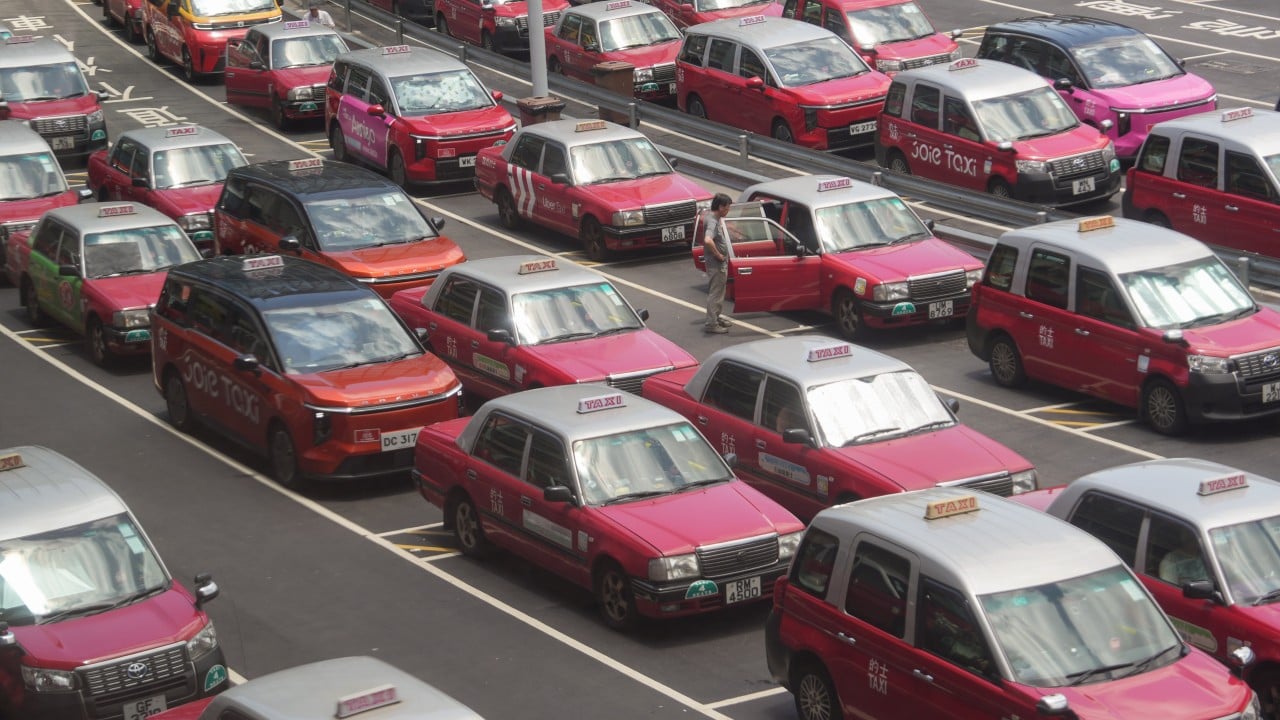
The rain over Nathan Road does not fall so much as it suspends itself, a heavy, gray vapor that smells of wet asphalt and old exhaust. At 3:00 AM, the neon signs of Tsim Sha Tsui reflect off the damp pavement in long, bleeding streaks of crimson and emerald. Most of Hong Kong is asleep, tucked away in towering concrete hives that scrape the underbelly of the clouds.
But inside a faded red taxi idling near the Jordan road intersection, the world is downcast and very small.
Lau Wai-chung stretches his left leg, wincing as his knee clicks. He is fifty-eight, though his hands—calloused, stained with grease, and permanently curved to fit the circumference of a steering wheel—look seventy. For thirty-two years, Lau has watched Hong Kong change through a rearview mirror. He watched the British flag come down; he watched the financial towers rise like glittering glass stalks; he watched the pandemic turn his vibrant, breathless city into a ghost town of masked silences.
Tonight, he is watching a small digital ledger on his smartphone. The math is brutal. It does not care about his seniority, his aching joints, or the fact that his daughter’s university tuition is due in three weeks.
Lau drives a vehicle powered by liquefied petroleum gas, or LPG. For decades, the green-and-red fleets of Hong Kong taxis and the green-striped public light buses have been the circulatory system of the territory, keeping five million commuters moving every single day. They ran on LPG because it was supposed to be the clean, sensible choice—the fuel that saved the city from the choking black diesel smoke of the 1990s.
LPG was meant to be the savior. Now, for men like Lau, it feels like an anchor dragging them into the harbor.
The Invisible Math of the Night Shift
To understand the quiet crisis unfolding on Hong Kong’s roads, you have to look past the global headlines about stock market fluctuations and real estate valuations. You have to look at the pressure gauge of a fuel pump.
Every morning and every evening, thousands of drivers participate in a silent, synchronized ritual. They pull into the dedicated LPG filling stations scattered across New Territories, Kowloon, and Hong Kong Island. They hook up the heavy, brass-nozzled hoses. They watch the numbers spin.
For years, that digital readout was manageable. But the global energy market is a fickle, volatile beast. When geopolitical tensions flare thousands of miles away in Eastern Europe or the Middle East, the ripples travel through international supply lines and land squarely on the shoulders of a man trying to buy a bowl of wonton noodles in Mong Kok.
Consider the baseline reality of a Hong Kong taxi driver. They do not own the cars they drive. Instead, they operate under a deeply entrenched rental system.
Every twelve-hour shift begins with a fixed deficit. A driver must pay the vehicle owner a rental fee, which can range from HK$350 to HK$500 depending on whether it is a day or night shift, a weekday or a holiday. Before they even turn the key, before they make a single dollar of profit, they are in the red.
Then comes the fuel.
"Five years ago, filling the tank left me room to breathe," Lau says, flicking a speck of dust off his dashboard. He speaks in a low, gravelly Cantonese that carries the rhythm of the streets. "Now? I look at the LPG price per liter, and I do the calculation in my head while I’m driving. Every kilometer without a passenger isn't just wasted time. It is a direct theft from my family’s grocery budget."
When international oil and gas prices surged over the past year, the cost of LPG ticked upward month after month. For a casual observer, an increase of a few cents per liter seems trivial. For a driver covering three hundred kilometers a shift, it is the difference between survival and insolvency.
The pressure is systemic. When fuel costs rise, drivers become desperate. They cruise less, hoping to conserve gas, which means passengers wait longer on rainy street corners. They work longer hours, pushing past the limits of fatigue, their eyes bloodshot under the glare of oncoming high beams. The entire transport network, the very thing that makes Hong Kong one of the most efficient cities on earth, begins to fray at the edges.
The Policy that Arrived at the Eleventh Hour
Recognizing that a city with an immobilized transport sector is a city in cardiac arrest, the Hong Kong government stepped in with an intervention designed to break the fall.
It is a targeted, short-term relief measure: a two-month subsidy aimed directly at the commercial LPG transport sector. Under this framework, the government will cover a significant portion of the LPG fuel costs for registered commercial vehicles, effectively lowering the price at the pump for taxi drivers and public light bus operators.
The policy is not a permanent fix, nor does it pretend to be. It is an economic tourniquet.
The mechanism is simple enough. For sixty days, when a driver fills up at a designated station, the subsidy is applied directly, bypassing the need for complicated reimbursement paperwork that elderly drivers traditionally despise. The goal is immediate liquidity—putting cash back into the pockets of operators before the mounting pressure forces them to abandon the industry entirely.
But why two months? Why now?
The answers lie in the delicate balancing act of municipal governance. The authorities are walking a tightrope between fiscal responsibility and social stability. A permanent fuel subsidy is an economic impossibility; it distorts markets and drains public reserves. Yet, leaving the transport sector to collapse under the weight of global inflation would trigger a domino effect.
If taxi fleets go dark, minibus routes disappear. If minibus routes disappear, the hundreds of thousands of residents living in the hilly enclaves of the New Territories—areas untouched by the mass transit railway lines—are effectively cut off from their jobs, their schools, and their hospitals.
The two-month window is intended to act as a buffer, a bridge across a period of acute market volatility. The government is betting that within this timeframe, global energy prices will stabilize, or at least normalize to a level that the local economy can absorb without requiring emergency life support.
The Human Ledger
Outside Lau’s window, a green minibus roars past, its engine whining as it tackles the incline toward Waterloo Road. The driver inside looks remarkably like Lau: shoulders hunched, face illuminated by the green glow of the taximeter, a thermos of lukewarm oolong tea resting in the cup holder.
These men and women are not economic theorists. They do not read white papers on energy transition or market liquidity. They measure policy by the weight of the coins in their pockets at 5:00 AM when they hand the keys over to the next shift driver.
"The subsidy helps," Lau admits, his tone cautious, almost reluctant to allow himself a moment of optimism. "It means for the next eight weeks, I don't have to choose between filling the tank and buying the good medicine for my wife’s arthritis. It gives us a moment to catch our breath."
But a moment is all it is.
The deeper anxiety within the Hong Kong transport community stems from a profound sense of uncertainty about the future. LPG was once championed as the environmental gold standard. In the late 1990s, the government launched a massive push to replace the city’s highly polluting diesel taxis with LPG models. It worked. The air grew clearer; the iconic black clouds that used to follow buses up Nathan Road largely vanished.
Yet, technology moves on, and the goalposts have shifted. Today, the conversation is no longer about LPG; it is about electrification. The city has laid out ambitious plans to introduce electric taxis and electric public light buses, aiming for a carbon-neutral future.
This leaves an entire generation of drivers caught in a technological twilight zone.
They are operating vehicles that run on a fuel source increasingly viewed as a relic of the transition era. Charging infrastructure for commercial electric vehicles is still in its infancy across the territory’s vertical neighborhoods. A taxi driver cannot simply plug their car into a wall on the twentieth floor of a public housing estate. Until the infrastructure catches up with the rhetoric, the city remains tethered to the LPG pumps, vulnerable to every geopolitical tremor that shakes the energy markets.
The two-month subsidy is a acknowledgment of this vulnerability. It is an admission that while the city dreams of a seamless, high-tech tomorrow, it still relies on the sweat and old steel of today.
The View from the Passenger Seat
To truly understand why the price of LPG matters to someone who has never driven a taxi, you have to look at the social fabric of Hong Kong.
This is a city defined by its density. Space is the ultimate luxury. Because very few people own private cars—parking spaces alone can cost more than luxury apartments in other parts of the world—the population relies on public transit with an intensity that is nearly unique to this territory.
When you step into a Hong Kong taxi, you are entering a shared civic space.
It is the arena where a corporate banker wrapped in bespoke wool sits on the same vinyl seat that carried an elderly grandmother from the wet market two hours prior. It is where arguments are had, deals are struck, and tears are wiped away in the privacy of a moving cabin. The drivers are the keepers of these secrets, the silent witnesses to the city's collective psychological state.
When the drivers are hurting, the city feels it. It manifests in subtle ways: a sharpness in the driver's voice when you ask for change, a reluctance to take a passenger across the harbor because the return trip might be empty and unprofitable, a general hardening of the urban landscape.
The subsidy is less about preserving the profit margins of transport firms and more about maintaining the equilibrium of daily life. It is an investment in the social grease that keeps the city from grinding gears.
The Shift Change
The rain has stopped, leaving the streets with a mirrors-like sheen that duplicates the waking city. The sky over the harbor is turning a pale, watery blue, the color of a bruised plum.
Lau pulls into a permanent filling station in Kowloon Bay. The station is bright, clean, and smells faintly of pressurized gas and cheap floor cleaner. A dozen other taxis are lined up, their engines purring in a low, metallic chorus.
He steps out of the car, his joints popping in the cool morning air. He nods to the driver behind him—a younger man with a cigarette tucked behind his ear and a face line-etched with tiredness. They don't talk about the government announcement. They don't discuss the nuances of the two-month subsidy policy or analyze the global supply curves.
Instead, Lau watches the attendant attach the nozzle to his car. The numbers on the pump begin their rapid, dizzying climb.
For the first time in months, the final figure stays beneath the mental threshold that causes Lau’s chest to tighten. The subsidy has done its job for today. The bleeding has stopped, the ledger is balanced, if only temporarily, and there is enough left over for a plate of roasted pork and rice before he goes home to sleep.
He climbs back into the driver's seat, slips the car into gear, and pulls out into the morning traffic. The city is waking up. Thousands of doors are slamming shut; thousands of workers are stepping onto the pavements, looking for a ride. Lau turns his red roof-light on, the word TAXI glowing bright against the fading dawn, ready to carry the weight of Hong Kong for another mile.