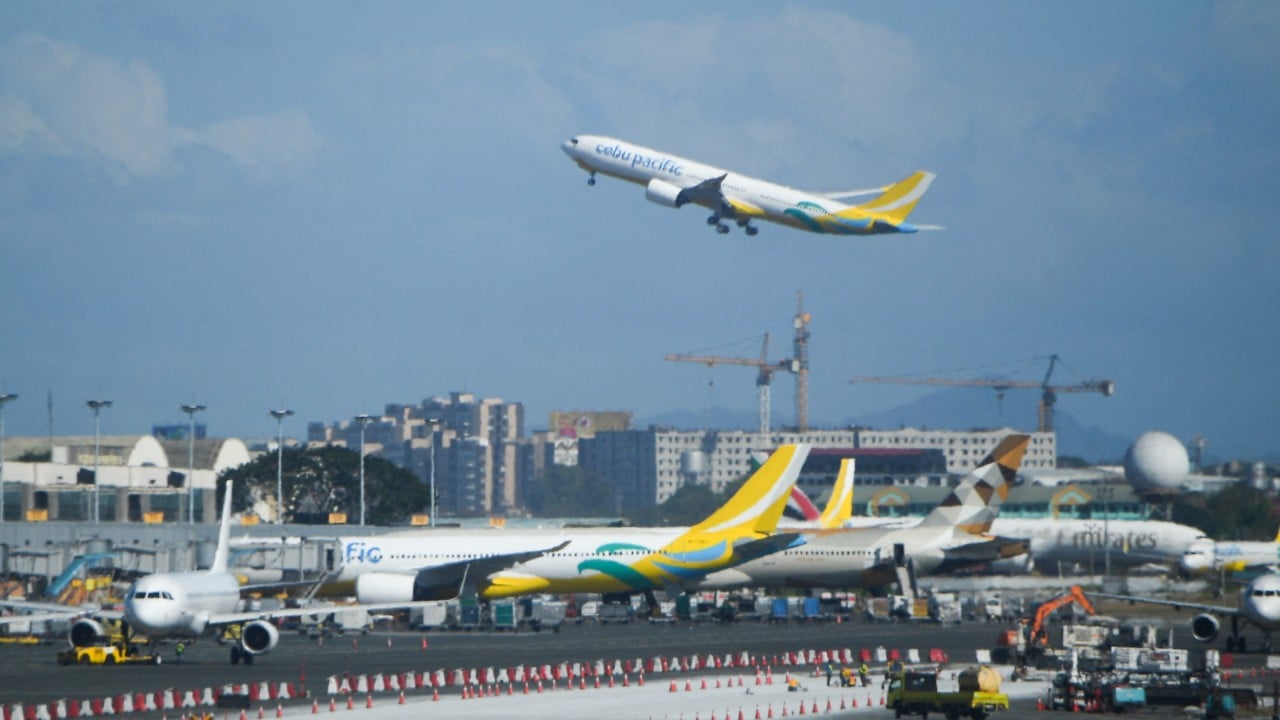
The boarding gate at Ninoy Aquino International Airport Terminal 3 is a crucible of human longing.
Step inside on any given Friday night, and you will witness a strange, modern paradox. On your left, a long queue of Filipino travelers prepares to board a budget flight to Bangkok or Taipei. They are traveling light, carrying crisp new canvas tote bags and passports tucked into leather sleeves. On your right, an equally long queue waits for a domestic prop-plane to a remote island in the Visayas. These travelers are burdened. They haul massive cardboard boxes bound in packing tape, plastic grocery bags bursting with snacks, and a palpable sense of exhaustion.
Here is the irony that defies standard economic logic: the family flying to Thailand is likely spending less money than the family flying home to Romblon.
It is cheaper for a resident of Manila to spend four days eating pad thai in a neon-lit night market in Bangkok than it is to spend four days on a white-sand beach in El Nido. Mathematically, it makes no sense. Geographically, it feels like an insult. Yet, millions of Filipinos consistently choose the costlier, more logistically punishing option of holidaying within their own borders.
To understand why, you have to look past the spreadsheets. You have to look at the hidden currency of Philippine travel.
The Geography of the Premium
Let us look at a hypothetical traveler. We will call her Maria.
Maria is a thirty-something graphic designer working in Makati. She represents the rising Filipino middle class—people with disposable income, a hunger for experiences, and a scarce amount of annual leave. When Maria looks at her screen to book a vacation for the upcoming long weekend, she is presented with a glaring fiscal reality.
A round-trip flight from Manila to Taipei costs roughly 6,000 pesos on a flash sale. The hotel in Taiwan is clean, predictably priced, and accessible by a flawless subway system. Food is cheap. No surprises.
Then she clicks on a flight to Batanes or Siargao. The ticket price hops to 12,000 pesos. The boutique resort charges a premium because its electricity comes from a diesel generator. To get from the airstrip to the beach, she will need to hire a private tricycle or a specialized van, navigating a transport ecosystem that lacks a centralized app or transparent pricing.
Why does this gap exist? The answer is infrastructure. Or rather, the fragmentation of it.
The Philippines is an archipelago of over 7,000 islands. Tourism infrastructure is not a unified web; it is a series of isolated pockets. When an international airline flies into a massive regional hub like Bangkok or Kuala Lumpur, it benefits from economies of scale, heavy state subsidies, and fierce market competition. When a domestic carrier flies a 70-seat turboprop onto a short, rain-slicked runway in the Philippine provinces, the cost per seat skyrockets.
Every bottle of sparkling water, every clean linen sheet, and every liter of fuel used at an island resort often has to be shipped via a complex chain of outrigger boats, trucks, and ferries. The traveler pays for that entire journey.
Logically, Maria should choose Taipei. Her wallet screams for it. Her Instagram feed, filled with friends posing under cherry blossoms or next to street-food stalls, nudges her toward the departure gate.
Yet, Maria clicks "Book Now" on the domestic flight. She chooses the expensive friction of home.
The Weight of the Balikbayan Box
The domestic traveler in the Philippines is rarely just a tourist. They are a participant in a profound cultural ritual.
In Western societies, travel is often viewed as an act of escape. You leave your city to lose yourself, to become anonymous in a foreign crowd, or to disconnect from your obligations. In the Philippines, travel is frequently an act of convergence.
Consider the nature of the domestic vacation. When a Filipino travels to an island or a rural province, they are rarely staying entirely inside the bubble of an air-conditioned resort. They are visiting an aunt, attending a town fiesta, tracing their roots, or showing their children where their grandparents were born.
This introduces a cultural taxation known as pasalubong—the mandatory practice of bringing gifts from your place of travel to those left behind, and vice versa.
When Maria packs for Siargao, her luggage is not filled with lightweight linen outfits. It is stuffed with items requested by relatives or caretakers. When she returns, her bags will be heavy with local delicacies, dried fish, or woven handicrafts. The cost of the trip is not merely the flight and the room; it is the social contract of generosity that underpins Filipino life.
There is a deep emotional safety in navigating a landscape where you speak the language, understand the unspoken social cues, and know exactly how to haggle without causing offense. You cannot quantify the value of shared laughter in a local dialect or the relief of knowing that if something goes wrong, someone will understand your panic.
To foreign observers, paying a premium to stay in a country with developing infrastructure seems irrational. But for the local traveler, that premium is an investment in community survival. The money spent on a local boatman or a family-run homestay does not vanish into the corporate coffers of an international hotel conglomerate. It directly funds the tuition of a child in the provinces or puts food on a kitchen table that looks exactly like the one you grew up with.
The Friction is the Point
We have become obsessed with frictionless travel. We want one-touch bookings, automated check-ins, and predictable, sterile experiences.
But friction creates texture.
Traveling within the Philippines requires a specific kind of emotional fortitude. You must accept that the ferry might be delayed by an unpredictable tropical depression. You must accept that the internet connection will drop the moment you leave the main town. You must accept that a bumpy two-hour ride on the back of a motorbike is the only way to reach that hidden waterfall.
This friction acts as a filter. It transforms a simple holiday into an expedition.
When you finally arrive at a destination like the white sands of Calaguas or the jagged limestone cliffs of Coron, the beauty is heightened by the sheer effort it took to witness it. There is a raw, uncommodified majesty to these places precisely because they are difficult to reach. If a mega-highway connected every pristine beach in the country to Manila, the magic would dissolve into the asphalt.
International destinations offer convenience, but they rarely offer a mirror.
When a Filipino travels abroad, they are always, to some degree, an outsider. They are navigating foreign menus, converting currencies in their head, and monitoring their behavior to fit international norms. It is stimulating, but it is exhausting.
Domestic travel allows for a rare vulnerability. You can eat with your hands. You can sing karaoke at 2:00 AM in a roadside shack without judgment. You are home, even if you are on an island you have never stepped foot on before.
Balancing the Ledger
The economic disparity cannot be ignored forever. The Philippine government and local tourism boards face a critical crossroads. If domestic travel remains a luxury item reserved for the affluent or the fiercely dedicated, the country risks alienating its own people.
Change is occurring, though it moves with the slow, deliberate pace of an island tide.
New regional airports are opening, bypassing the bottleneck of Manila. Local communities are organizing their own tourism cooperatives, cutting out the predatory middlemen who inflate prices for transport and tours. There is a growing collective awareness that sustainable tourism must be affordable to the people who actually live in the destination country.
But until the prices equalize, the choice to holiday at home remains an emotional decision rather than a financial one.
It is a declaration that some things are worth overpaying for. The specific shade of blue where the Pacific Ocean meets the Philippine Sea. The smell of garlic rice cooking over charcoal in the early morning dampness. The immediate, unconditional warmth of a stranger who treats you like a returning cousin.
The queue at Terminal 3 continues to move. The travelers bound for international cities look forward, checking their digital boarding passes on their phones. The domestic travelers look around, chatting with neighbors, adjusting their heavy boxes, sharing snacks before the gate even opens.
They know the flight will be bumpy. They know they paid too much for the ticket. They know that when they land, they will face a long, unpredictable journey over rough roads and choppy waters.
But they also know exactly who is waiting for them on the other side of the dark.