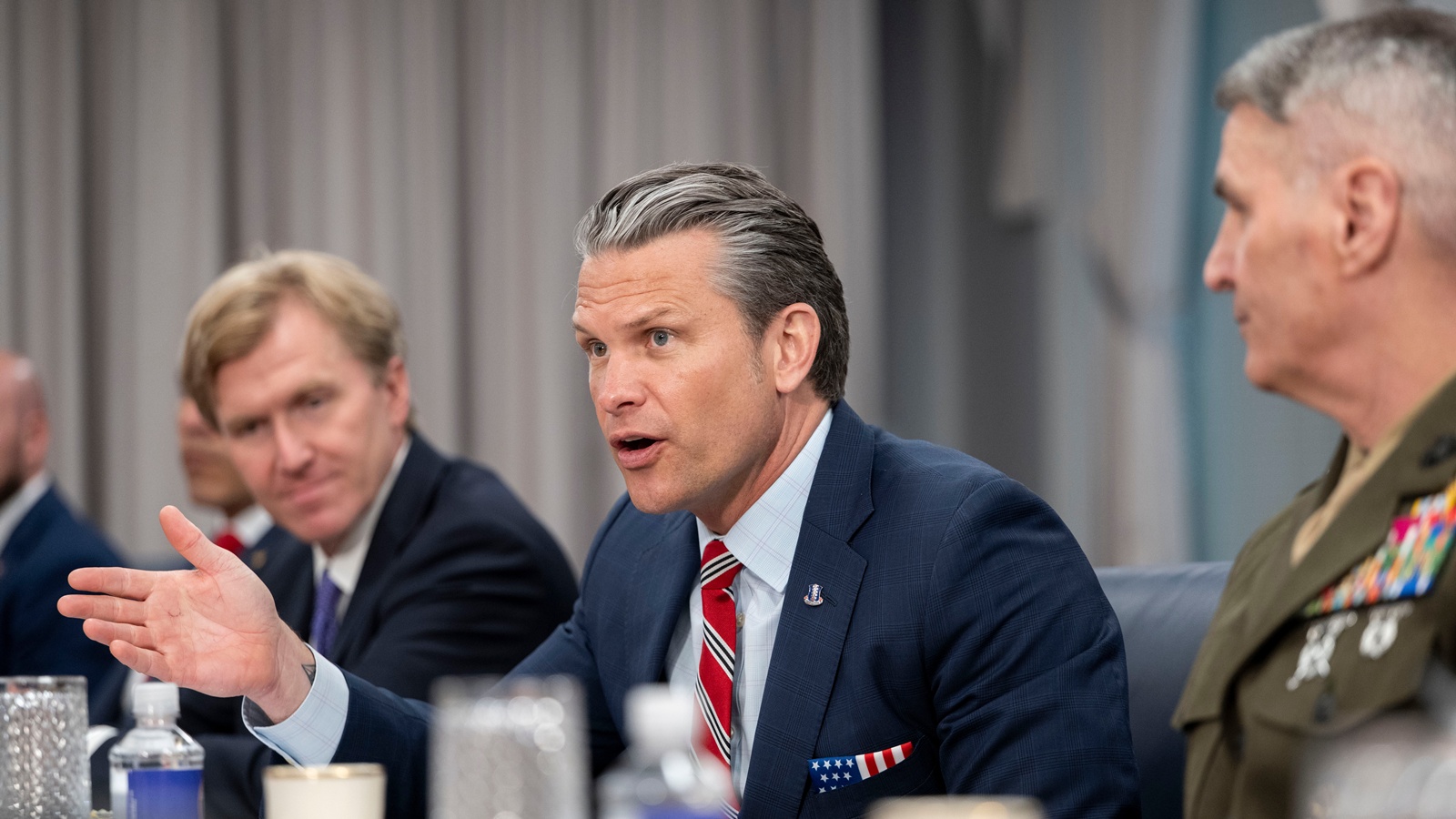
The ink on a federal budget request does not bleed, but it smells unmistakably of iron.
Deep within the windowless rings of the Pentagon, where the fluorescent lighting hums a monotonous flat B-flat, a number was scrawled onto a briefing slide: $80,000,000,000. Eighty billion dollars. To the human brain, a figure that vast ceases to be money. It becomes an abstraction, a mountain of zeros too tall to climb, a statistic meant to be parsed by economists and debated by talking heads on cable news. Meanwhile, you can find similar developments here: Germany and the Brutal Reality of Its Missing Army.
But numbers like that are never static. They are kinetic. They represent the quiet movement of steel, the rerouting of cargo ships across dark oceans, and, ultimately, the reshaped lives of people who will never see the inside of a Washington briefing room.
The Wall Street Journal broke the news quietly, noting that this massive funding package was being eyed to cover the brewing, unpredictable costs of a potential conflict with Iran, alongside other pressing military contingencies. To the casual observer, it was just another headline in a relentless cycle of geopolitical friction. To those who pay attention, it was the sound of a tripwire being tautened. To explore the full picture, we recommend the recent analysis by NBC News.
Consider a hypothetical private first class—let us call him Marcus. Right now, Marcus is likely sitting in the humid belly of a transport vehicle or cleaning the grit out of a rifle mechanism in a staging area halfway across the globe. He does not read the Wall Street Journal. He does not know about the $80 billion package. Yet every dollar of that proposed funding is a ghost tracking his footsteps. It dictates whether he gets the upgraded ceramic plates for his body armor. It determines how many gallons of aviation fuel are allocated to the choppers that would extract him if a routine patrol goes sideways.
This is where the dry facts of defense spending collide violently with human reality. The Pentagon does not request eighty billion dollars for a rainy day. It requests it because the horizon is already turning the color of smoke.
The mechanics of this request tell a story of strategic panic. A funding package of this scale, structured outside the traditional, heavily debated defense budget, functions as a financial emergency room. It bypasses the agonizingly slow gears of standard congressional appropriation. It is designed for speed because contingency is a polite word for chaos.
When a superpower begins shifting its financial weight on this scale, the ripple effects move faster than the tides. In the Persian Gulf, the price of maritime insurance spikes before a single extra hull arrives. On the trading floors of Chicago, oil futures tick upward, a silent tax levied on every commuter filling their tank at a gas station in Ohio. The global economy is a nervous creature, and an $80 billion shadow cast by the Pentagon is enough to make it bolt.
Why Iran, and why now? The geopolitical ledger has been filling up for years. Friction points do not disappear; they simply gather friction until a spark catches. For decades, the relationship between Washington and Tehran has been a grim dance of proxy conflicts, economic sanctions, and cyber warfare. But a funding package specifically earmarked for potential escalation signifies a transition from posturing to preparation. It is the moment the theater director stops rehearsing the scene and starts mic'ing the actors.
The temptation is to view this strictly through the lens of statecraft—as a chess game played by old men in tailored suits. But chess pieces do not have mothers.
Imagine a family in Isfahan or Shiraz. They are navigating the grinding reality of an economy already choked by years of international isolation. They are buying bread, arguing about rent, and worrying about their children’s exams. To them, the news of an American defense package is not a policy shift. It is a suffocating weight, a reminder that their homes sit on the fault line of an architecture they had no hand in designing. They too are bound to those zeros.
The sheer scale of the funding demands an accounting that goes beyond ledger books. Eighty billion dollars could rebuild the crumbling water infrastructure of a dozen domestic cities. It could fund medical research initiatives for a generation. When it is diverted into the machinery of preparation for war, it represents an opportunity cost that is permanently lost to the ether. We are trading the tangible future for the prevention of a catastrophic present.
It is a terrifying gamble.
The true danger of these massive, preemptive funding pools is that they can become self-fulfilling prophecies. Wealth allocated toward a specific conflict creates its own gravity. Supply lines are established. Contracts are signed. Troops are positioned. Once the machinery is spun up to an eighty-billion-dollar velocity, stopping it requires an immense act of political will—an asset that is often in shorter supply than capital. The money creates momentum, and momentum has a habit of looking for an exit.
But perhaps the most unsettling element of this development is the silence that accompanies it. There are no air raid sirens sounding in American suburbs. There are no draft cards landing in mailboxes. The modern state has perfected the art of preparing for immense conflict while keeping the civilian populace entirely insulated from the gears. The war package is discussed in terms of fiscal responsibility and strategic readiness, scrubbed clean of the blood and dust it implies. It is technocratic preparation for human tragedy.
We are left watching the shadows on the wall, trying to deduce the shape of the creature casting them. The $80 billion is not just money; it is a metric of fear and foresight, a concrete admission that the peace we take for granted is held together by increasingly expensive wire.
As the debate moves through the committees and the halls of Congress, the numbers will likely be scrubbed, adjusted, and buried in broader omnibus bills. The headlines will fade, replaced by the next immediate crisis. But somewhere out in the dark water of the straits, a sonar tech will keep his headsets on, listening to the thrum of foreign propellers, perfectly aware that the price of his vigilance has just risen exponentially.