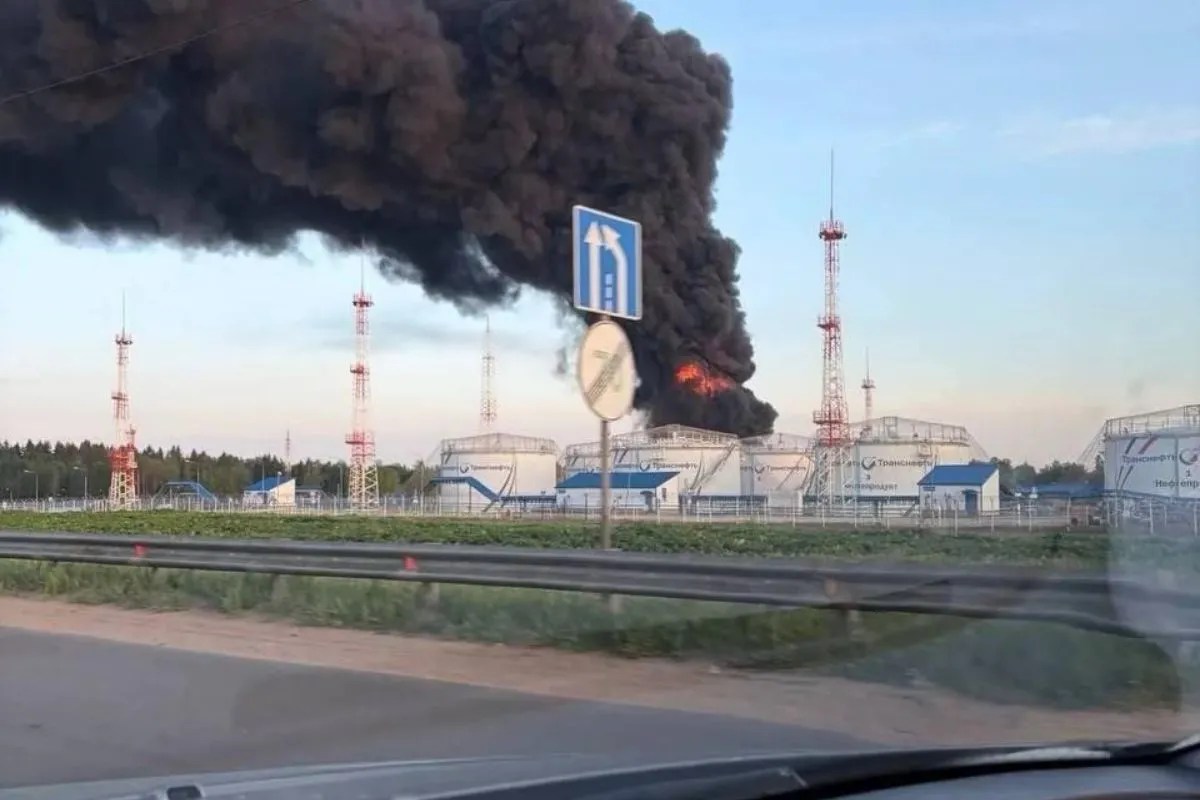
The contract looked like a lifeline. In a quiet village outside Gorakhpur, the heat during the summer months is heavy, thick, and quiet. Opportunities are just as stagnant. For a young man watching his family struggle to pay off generational debts, the promise of a construction job in Russia did not feel like a gamble. It felt like an exit strategy. He packed a single suitcase, kissed his mother goodbye, and boarded a flight toward a geography he had only ever seen on a map. He expected hard labor, bitter cold, and long hours. He did not expect the sky to explode.
Thousands of miles away from the front lines of eastern Ukraine, deep within the Russian hinterland, the war was supposed to be a distant abstraction. It was something on the state television channels, a series of strategic updates delivered by anchors in crisp suits. But modern warfare has discarded the traditional concept of a front line.
One night, the abstraction shattered.
The sound arrived first. A low, synchronized thrumming that vibrated in the chest before it could be heard by the ear. It sounded like an angry swarm of mechanized hornets, thousands of them, cutting through the midnight air. Then came the fire.
The Shattered Illusion of Distance
More than 500 drones swarmed across the border in one of the largest coordinated aerial assaults of the conflict. This was not a localized skirmish. It was a massive, calculated attempt to overwhelm air defense systems through sheer volume. The strategy is simple but devastating: launch enough cheap, autonomous aircraft to saturate the radar screens until the defense grid chokes on the numbers.
When the metal rained down, it did not choose its targets by nationality.
A makeshift dormitory housing migrant workers became a casualty of geometry and bad luck. Shrapnel cares nothing for geopolitics. In the wreckage of that facility, one Indian laborer lost his life. Three of his countrymen were pulled from the debris, bleeding, burned, and profoundly disoriented. They had traveled across a continent to build, only to be caught in a machinery designed entirely to destroy.
This is the new reality of globalized conflict. The stakes are no longer contained by trenches or national borders. Instead, the violence leaks outward, snaring the most vulnerable people who happen to be standing in the wrong coordinate at the wrong millisecond.
The Mechanics of the Swarm
To understand how a migrant worker from South Asia ends up in the crosshairs of a drone attack in Russia, you have to understand the terrifying evolution of cheap military technology.
Historically, launching an airstrike required immense capital. It required fighter jets, trained pilots, millions of dollars in fuel, and sophisticated launching pads. Today, a drone can be assembled in a basement using off-the-shelf components, commercial GPS chips, and a fiberglass frame. When mass-produced, these units cost a fraction of a traditional missile.
Consider the math confronting air defense commanders.
A single interceptor missile used to shoot down an incoming threat can cost upwards of a million dollars. A kamikaze drone might cost twenty thousand. When a military launches 500 drones simultaneously, they are not just trying to hit specific buildings; they are executing an economic attack. They are forcing the defender to spend hundreds of millions of dollars in ammunition to shoot down cheap plastic and lawnmower engines.
And when those interceptor missiles run out, or when the radar software fails to track the 499th drone because it was distracted by the first 498, the drone finds a roof. Sometimes that roof belongs to an oil refinery. Sometimes it belongs to a warehouse.
Sometimes, it belongs to a barracks full of sleeping men who do not speak the local language.
The Human Currency of Economic Migration
Why were they there? The question hangs in the air, uncomfortable and heavy.
The presence of foreign laborers in Russian industrial and construction sectors is a direct consequence of a shifting wartime economy. As a nation mobilizes its own population for military service or defense manufacturing, vacancies open up in the civilian infrastructure. The factories still need to run. The roads still need paving. The supply lines must be maintained.
To fill the void, recruitment agencies stretch their tentacles deep into the global south. They promise high wages, expedited visas, and a chance to build a nest egg that would take a lifetime to accumulate at home. The recruiters rarely mention the drones. They don't talk about the air raid sirens that have become a standard feature of life in provincial Russian towns.
For the workers, the decision is driven by a calculated risk, though the risk is rarely explained honestly. They enter a landscape where the rules of engagement change by the hour. One day you are a civilian laborer earning a living; the next, you are collateral damage in a war you have no stake in.
The Anatomy of an Strike
Imagine the confusion in those final moments. The power grid fails. The sirens wail in a language you are still trying to learn. The air smells of burning aviation fuel and ancient insulation.
The survival instinct is universal, but it requires information to function. When the sky lights up, which way do you run if you don't know where the shelters are? The three injured Indian workers who survived the blast face a long recovery, not just from the physical tears in their flesh, but from the psychological whiplash of their circumstance. They left home for a paycheck and woke up in a combat zone.
The Indian embassy faces the grim, recurring task of coordinating body repatriations and medical evacuations. It is a bureaucratic process wrapped in grief—meticulous paperwork, consular stamps, and long-distance phone calls to families who are still trying to understand how a job offer turned into a funeral notice.
The Borderless Future
The tragedy highlights a fundamental shift in how modern history is being written. War is no longer localized. The supply chains of violence are global, and so are the casualties. The microchips inside the drones might come from one country, the explosive payload from another, the coordinates programmed by an operator sitting in a hidden bunker, and the person who dies from the impact might be an economic migrant from an entirely different hemisphere.
The sky over Europe and Asia is changing. It is becoming crowded with autonomous algorithms and cheap fiberglass wings. As the technology becomes more autonomous, the human cost becomes more random.
Back in the quiet villages of India, the news filters through slowly, stripped of the grand geopolitical narratives favored by television pundits. The families do not see a strategic victory or a calibrated counter-offensive of 500 drones. They see an empty chair at the dinner table. They see a passport that came back in a plastic bag. They see the true, unvarnished price of a modern war, paid in full by those who never wanted to fight.