The Office in Brussels
Cold glass towers stretch toward a gray Belgian sky. Inside one of them, hundreds of civil servants pore over spreadsheets, market shares, and legal briefs. They are bureaucrats by title, but architects of a modern digital empire by trade. Their goal is not profit. Their goal is balance.
When the European Commission levies a multi-billion-euro fine against a technology giant like Google, it sounds like dry economics. It sounds like numbers on a ticker tape. But behind those figures lies a fundamental clash of philosophies. On one side stands Europe, armed with antitrust laws and a belief that markets must be restrained to remain free. On the other side stands Silicon Valley, fueled by scale, speed, and an ideology of disruption.
Step back. Look at how a single decision in a European courtroom ripples outward, shaking boardrooms thousands of miles away.
A Threat from Mar-a-Lago
Across the ocean, the temperature is different. The air in Florida is warm, and the rhetoric is scorching.
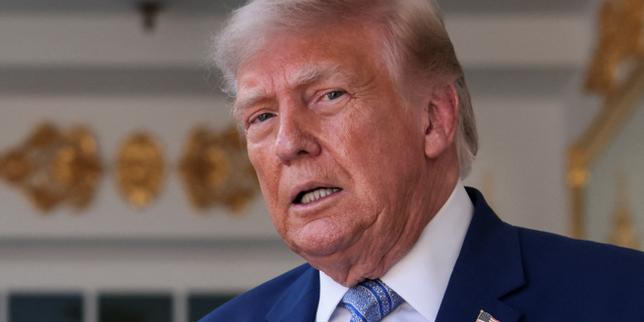
Donald Trump leans into a microphone, his voice cutting through the hum of cameras. He addresses the European Union’s regulatory crackdowns with characteristic bluntness. He warns that Europe is playing a dangerous game. He declares that the massive fines levied against American technology companies will extract a very heavy price in return.
Trade wars rarely start with explosions. They start with words. A warning here. A tariff threat there.
To understand the tension, consider a hypothetical small business owner in Ohio. Let us call him Mark. Mark runs a boutique manufacturing company that relies entirely on digital ad placement to find customers globally. When he hears that political leaders are threatening retaliatory trade measures over tech fines, he feels a sudden chill. He does not care about antitrust theory. He cares about the cost of reaching his buyers.
When superpowers collide over digital sovereignty, the shrapnel hits the edges.
The Anatomy of a Fine
Why does Europe keep fining Google?
The answer goes back decades. Europe views the digital public square differently than the United States. In the European view, a platform that acts as both the referee and the player cannot be trusted. If you own the dominant search engine, the dominant mobile operating system, and the dominant ad-exchange network, you hold too many cards.
Antitrust enforcement is not about punishing success. It is about preserving the soil so smaller plants have a chance to grow in the shade of the redwoods.
Yet, the enforcement mechanisms provoke fierce resistance. Critics argue that these penalties are protectionist in disguise—a way for a continent lagging in tech innovation to tax the companies it cannot build. Supporters argue it is the only way to hold trillion-dollar entities accountable to local laws.
Both things can be true at once.
Consider the sheer scale of the penalties. Billions of euros vanish from corporate balance sheets with the stroke of a pen. To a tech titan, it is a line item. To a politician facing an electorate worried about national competitiveness, it is an insult.
The Invisible Stakes
We live inside the infrastructure we critique.
Every map query, every search result, every ad served is part of a quiet, continuous negotiation between governments and corporations. When political figures threaten retaliation, they are drawing lines in the sand. They are asking a fundamental question: Who writes the rules of the twenty-first century?
Is it the elected leaders of sovereign states? Or is it the executives whose servers hum quietly in data centers across the globe?
The confrontation between Brussels and American political leadership highlights a deepening fracture. Globalization is fraying at the edges. The frictionless digital economy is encountering national borders, and those borders are bristling with tariffs, retaliatory threats, and regulatory armor.
Mark, back in his Ohio workshop, checks his analytics dashboard. The metrics are fluctuating. He does not know if the shift is algorithmic, economic, or political. He only knows that the ground beneath his feet feels less stable than it did yesterday.
The gavel falls in a courtroom. A microphone captures a warning on a stage. Between the two lies a vast, interconnected world holding its breath, waiting to see who blinks first.