The metal always feels cold before it burns. Anyone who has ever stepped onto a precision manufacturing floor knows that specific chill. It is the temperature of absolute control. Air filtration systems hum at a frequency you don't so much hear as feel in your molars. The air smells of ozone, cutting fluid, and the sharp, clean scent of scrubbed aluminum. In these spaces, human error is supposed to be engineered out of existence. We build cleanrooms and automate assembly lines precisely because the things we are constructing cannot tolerate the chaotic whims of human biology.
But automation is an illusion of safety.
When an industrial explosion tears through a high-tech facility, it doesn’t just shatter glass and twist steel. It tears a hole through the quiet assumption that we have tamed the elements we use to protect ourselves. The recent disaster at the Hanwha Aerospace plant in South Korea is a brutal reminder of that reality. Five people went to work expecting the predictable routine of calibrated machinery. They never came home. Two others are now fighting the kind of injuries that alter the trajectory of a life forever.
To understand how this happens, you have to look past the sterile press releases and the dry financial tickers. You have to look at the grease on the floor and the pressure in the pipes.
The Chemistry of Quiet Spaces
Consider a specialized technician. Let’s call him Min-woo. He is not a statistic; he is a composite of every skilled worker who slips on steel-toed boots and a static-dissipating smock at 6:00 AM. Min-woo’s job isn’t manual labor in the nineteenth-century sense. He doesn't swing a hammer. He monitors digital readouts. He calibrates robotic arms that handle chemical compounds with tolerances measured in microns.
The facility where he works, nestled in the industrial heartland of South Korea, is part of a global supply chain that keeps the world’s aerospace and defense sectors moving. Hanwha Aerospace isn't making commercial drones or standard aluminum siding. They create the foundational hardware of modern flight and national security. This means handling materials that are inherently volatile. Rocket propellants, specialized coatings, and advanced alloys require environments where a single stray spark or a microscopic static discharge can act as a catalyst for catastrophe.
On an ordinary Tuesday, the routine feels invincible. The machines move with a rhythmic, hypnotic grace. You forget that you are standing next to compressed energy. You forget that the vacuum pumps are fighting a constant battle against atmospheric pressure.
Then, a seal fails.
It takes less than a millisecond. A pocket of volatile gas escapes its containment. The friction of the escape itself generates the necessary thermal energy. In the world of high-pressure manufacturing, we call this an unplanned energetic event.
In the real world, we call it hell.
The Anatomy of an Unplanned Event
The shockwave from a chemical explosion inside a closed structure behaves differently than one in an open field. It doesn't dissipate. It reflects. It bounces off reinforced concrete walls, doubling back on itself, multiplying the destructive pressure.
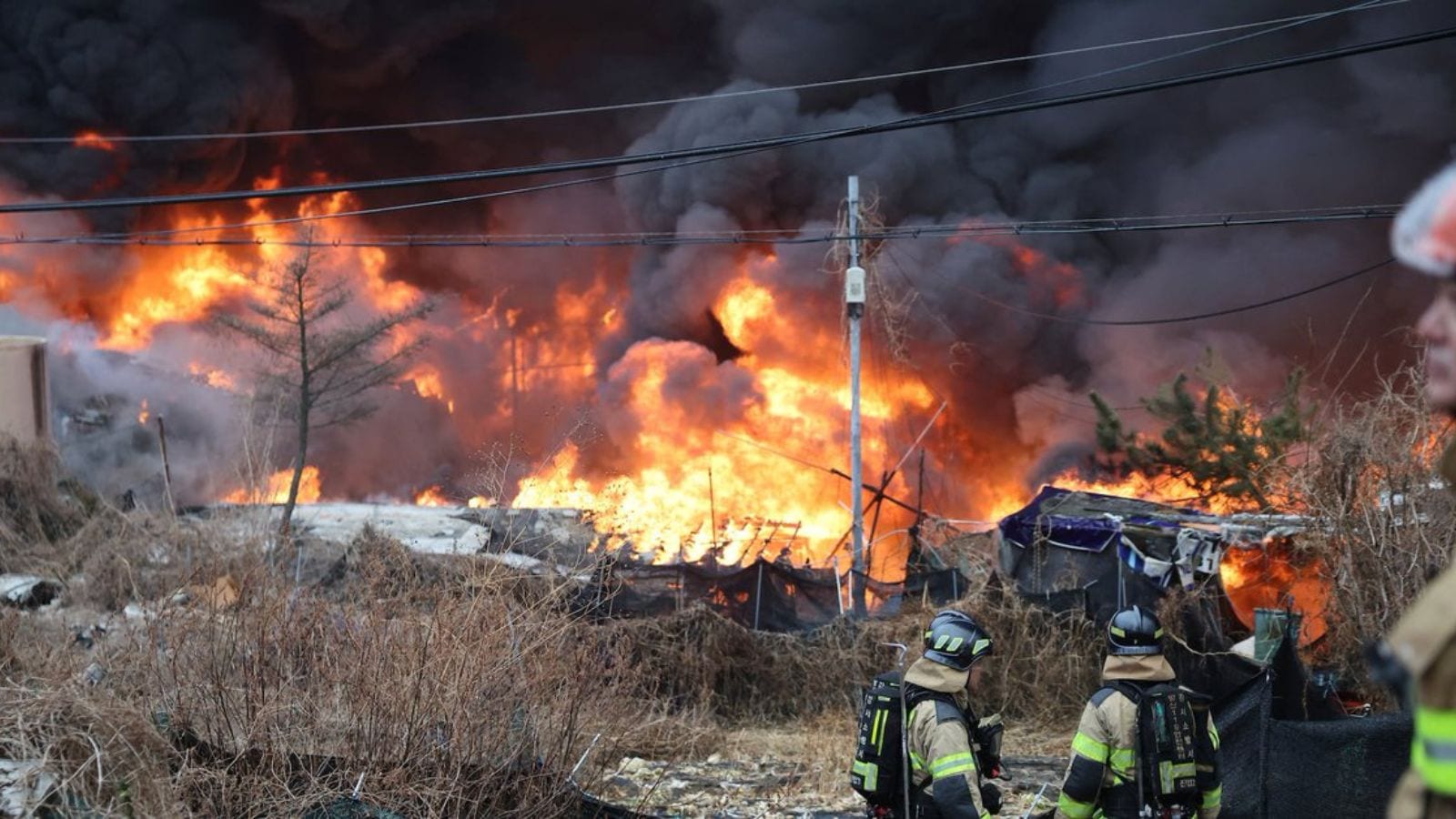
Those within the immediate blast radius don't have time to register a sound. The concussive wave travels faster than the speed of human neurological transmission. For those slightly further away, the experience is a sensory overload that defies comprehension. The pristine, white-paneled walls of the cleanroom vanish in a flash of blinding orange and suffocating black smoke. The hum of the ventilation system is replaced by the scream of tearing metal and the sudden, terrifying drop in atmospheric pressure that pops eardrums.
When the dust settles, the corporate machinery begins to turn.
Stock tickers flicker. PR teams draft statements expressing deep regret and promising comprehensive investigations. Government regulators prepare their clipboards. But on the ground, the reality is measured in the silence of five stopped hearts and the frantic sirens of ambulances speeding toward the regional trauma center.
The public looks at Hanwha Aerospace and sees a Titan of the defense industry, a company riding a wave of global demand for artillery, aviation components, and space launch vehicles. They see contracts worth billions of dollars. But inside the facility, the currency isn't paper or digital credit. It is human attention. The moment that attention wavers, or the moment a component suffers from microscopic material fatigue that evades detection, the ledger is balanced in blood.
The Invisible Friction of Global Demand
Why do these failures occur in an era of unprecedented technological sophistication? The answer lies in the invisible friction of the global market.
Right now, the aerospace and defense sectors are under immense pressure. Supply chains are strained to a breaking point. Governments worldwide are clamoring for faster production, higher throughput, and quicker delivery times. When factories operate at near-maximum capacity for extended periods, the margin for maintenance shrinks. It is a subtle, creeping danger. You skip a preventative maintenance check by twelve hours because a critical shipment needs to clear the dock. You run a machine slightly hotter than recommended because the calibration technician is backed up with three other urgent requests.
It is a statistical game of Russian roulette. Most of the time, the chamber is empty. The machine holds. The shipment goes out. The profit margin is protected.
But eventually, the hammer falls on a live round.
The tragedy in South Korea highlights a paradox at the heart of modern industrial civilization. We rely on hyper-advanced technology to keep our societies safe, affluent, and connected. Yet, the production of that technology remains rooted in dangerous, volatile physical processes. We have digitized the office, but we cannot digitize the smelting of titanium or the mixing of solid rocket fuel. Those tasks require heat, pressure, and chemical reactions that remain fundamentally indifferent to human survival.
The Ripple in the Suburbs
The true cost of an industrial disaster is never sustained by the corporation. It is distributed among living rooms in the surrounding suburbs.
Picture the kitchen table at Min-woo’s house. The dinner is wrapped in plastic, sitting in the microwave, waiting for a shift that ended hours ago. The phone rings. It isn't the foreman; it’s a neighbor who saw the smoke rising over the industrial park on the local news channel. The confusion mutates into dread, then into the cold certainty that life has split into two distinct eras: before the blast, and after.
Neighbors gather. They speak in the hushed tones reserved for sudden violence. They don't talk about Hanwha’s market capitalization or the geopolitical implications of South Korean defense exports. They talk about the guy who helped fix the communal gate, or the colleague who always brought extra kimchi to the breakroom.
This is the human element that gets scrubbed from the official reports. The five individuals who perished were masters of a hidden craft. They possessed the tacit knowledge required to operate complex, temperamental machinery that cannot be learned from a manual. When they died, that knowledge vanished with them, leaving behind a vacuum that cannot be filled by simply hiring new recruits.
The Illusion of the Zero-Risk Workplace
We want to believe that if we follow every protocol, wear every piece of personal protective equipment, and sign every safety waiver, we can achieve zero risk. It is a comforting lie.
The reality of working with high-energy systems is that risk can be managed, mitigated, and minimized, but it can never be eliminated entirely. The laws of thermodynamics are absolute. Energy seeks equilibrium. If you trap vast amounts of thermal or chemical energy inside a metal cylinder, that energy is constantly looking for a way out. It is testing the welds. It is eroding the valves. It is waiting for the one second in ten years where human oversight aligns perfectly with mechanical vulnerability.
This does not absolve management of responsibility. Accountability is the only mechanism that keeps the safety margins from being eroded by the pursuit of quarterly earnings. Investigations must be ruthless. They must trace the failure not just to the broken pipe, but to the board meeting where the budget for that pipe was approved.
But for the workers who return to the facility next week, the fear will be a physical presence in the room. They will step back onto the floor. They will feel that same cold metal. They will hear the same low hum of the filtration systems. But the illusion of absolute control is gone. They will look at the machines not as tools, but as apex predators that have been temporarily caged.
The smoke over the Hanwha facility has cleared, and the production lines will eventually resume their relentless rhythm. The world demands its parts. The contracts must be fulfilled. But beneath the roar of the engines and the hiss of the pneumatics, the silence of the five who were lost will remain, a permanent vibration in the concrete floor.