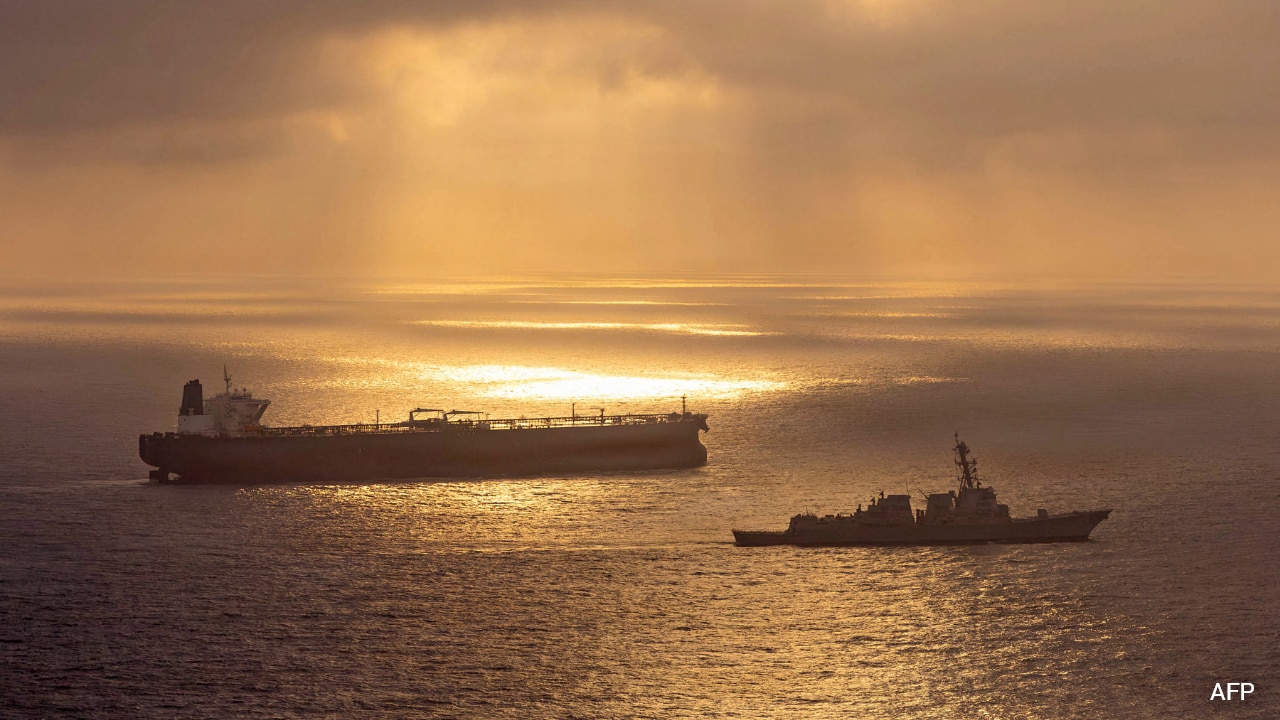
The United States has officially terminated its military blockade of Iranian ports, allowing crude oil tankers to breach the Strait of Hormuz for the first time in 110 days. This sudden operational retreat, executed by US Central Command on Thursday, serves as the immediate compliance mechanism for a fragile ceasefire agreement signed at the Palace of Versailles. While Washington frames the move as a necessary step to defuse a global energy crisis and combat domestic inflation, the underlying mechanics of the deal reveal an extraordinary diplomatic gamble. The White House has traded immediate, tangible leverage for a volatile 60-day window of negotiations.
Behind the scenes of the aborted Swiss signing ceremony at Bürgenstock, the reality of this accord looks less like a definitive peace and more like an unstable economic truce.
Concessions Up Front and Leverage Delayed
Standard diplomatic protocol dictates that sanctions relief and military concessions occur incrementally, matching verified steps taken by the opposing party. This agreement flips that script entirely. By dismantling the naval blockade before the technical-level talks even begin in Switzerland, the US administration has surrendered its primary tool of enforcement.
The numbers tell the story of an immediate windfall for Tehran. Within hours of the Central Command directive, major global shipping lines began moving vessels that had been trapped since the outbreak of hostilities in February. Merchant tracking data shows that two Iranian-flagged tankers immediately cleared the southern ports, carrying 3.8 million barrels of crude oil directly into the global market. Vice President JD Vance confirmed that over 12.5 million barrels of oil transited the channel on the very first night of the blockade being lifted.
This immediate resumption of commerce provides the Iranian economy with a massive cash injection at a moment when internal dissent and military strikes had pushed the regime to the brink. In return, Washington received a non-binding memorandum of understanding and a promise of future cooperation.
The administration argues that this front-loaded relief was the only way to avert a domestic economic disaster. Crude prices had climbed to unsustainable levels, rattling financial markets and threatening to trigger a severe recession ahead of the upcoming midterm elections. President Donald Trump explicitly noted his desire to avoid the economic legacy of Herbert Hoover. However, by solving a short-term political problem at home, the administration may have hollowed out its long-term strategic position.
The Illusion of Freedom in an International Waterway
A core element of the agreement involves the temporary management of the Strait of Hormuz, yet the fine print reveals a looming legal and economic battleground. The memorandum states that Iran will allow commercial vessels to transit the channel without cost for exactly 60 days. After that window closes, the future administration and maritime services of the strait will be determined jointly by Iran, Oman, and other Persian Gulf states.
This clause contains a dangerous trap. Iranian officials are already signaling their intent to impose mandatory service fees on all commercial shipping once the 60-day period expires.
Maritime legal experts point out that imposing tolls or service fees on an international strait violates established international law, specifically the United Nations Convention on the Law of the Sea. The right of transit passage guarantees that ships can navigate these critical choke points without interference or financial extraction by coastal states. By acknowledging Iran’s role in determining future maritime services after two months, the US has inadvertently given a veneer of legitimacy to Tehran's revisionist view of international waters.
The strategic reality on the water remains equally perilous. While the blockade is gone, the strait is far from safe. Industry groups estimate that roughly 80 naval mines remain floating or anchored within the central shipping lanes.
Clearing these explosives will take weeks of coordinated operations by both Western naval forces and Iranian teams. Until those waters are completely swept, the resumption of commercial shipping is a high-risk gamble for independent tanker owners. Major maritime operators are forcing their vessels through out of sheer economic necessity, but a single stray mine detonation could collapse the entire agreement in an afternoon.
Chaos at the Diplomatic Table
The structural instability of the accord is mirrored in the chaotic execution of its diplomatic rollout. The grand signing ceremony planned for the Swiss lakeside resort of Bürgenstock degraded into bureaucratic confusion within 24 hours of its announcement.
Pakistani Prime Minister Shehbaz Sharif, whose government acted as a key mediator alongside Qatar, abruptly canceled his flight to Switzerland. Pakistani officials noted that because the memorandum had already been signed electronically, a formal gathering of heads of state was an unnecessary exercise in protocol. This sudden exit forced a rapid downgrading of the event.
Vice President Vance, who was scheduled to lead the American delegation to jumpstart the technical negotiations, postponed his own departure, stating that the timeline was no longer fixed. This lack of diplomatic coordination creates a dangerous vacuum. While the technical teams try to establish a framework for the 60 days of talks, the political leadership on both sides is already pulling back from face-to-face engagement.
This breakdown in messaging has energized critics in Washington. Congressional figures are questioning why the administration agreed to lift a highly effective military blockade before ensuring that the diplomatic choreography was secure. The chaotic optics suggest a rush to secure an agreement before the market opened, rather than a calculated, deliberate diplomatic strategy.
The Radioactive Subtext
The most critical vulnerability of the 60-day clock centers on Iran's nuclear infrastructure. The administration claims that the accord will force Tehran to renounce its nuclear ambitions in writing. Envoy Steve Witkoff briefed lawmakers on a side letter between Iran and the International Atomic Energy Agency that supposedly invites UN inspectors back into the country to locate and inspect enriched materials hidden under the rubble of recent air strikes.
The scope of this challenge is unprecedented. Iran currently holds a stockpile of more than 9,000 kilograms of enriched uranium, with approximately 440 kilograms refined to near weapons-grade levels.
The agreement stipulates that this material must be diluted on-site under international supervision. However, executing such an operation in a war-damaged, highly hostile environment within 60 days is logistically impossible. Diluting hundreds of kilograms of highly enriched uranium requires stable facilities, specialized chemical equipment, and months of uninterrupted access.
Furthermore, the Iranian political establishment is already setting limits on these upcoming negotiations. In his first public statement since being wounded at the start of the conflict, Supreme Leader Ayatollah Mojtaba Khamenei endorsed the direct talks but added a sharp warning. He stated clearly that face-to-face negotiations do not mean accepting the opinion of the enemy.
This rhetorical line suggests that while Iran is eager to collect the economic benefits of the lifted blockade and restarted oil sales, its core stance on its nuclear sovereignty has not changed. The regime has a long history of utilizing temporary pauses in pressure to reconstitute its capabilities and outlast Western political cycles.
The Geopolitical Fallout
The sudden shift in American policy leaves regional allies in an incredibly difficult position. Israel, which has spent months executing military operations designed to degrade Iran’s regional proxy networks, was pointedly left out of the final negotiations. The Versailles pact calls for an immediate end to hostilities on all fronts, including the conflict between Israel and Hizbollah in southern Lebanon.
By forcing a ceasefire through economic levers and unilateral maritime actions, Washington has effectively capped Israel’s strategic options. The Israeli leadership now faces a choice between compliance with an American-engineered truce or independent action that could alienate its primary backer.
The wider Persian Gulf states are watching this development with deep skepticism. Nations like Saudi Arabia and the United Arab Emirates rely on the absolute freedom of navigation through the Strait of Hormuz for their economic survival. By allowing Iran to float the idea of service fees and maritime administration over the strait, the US has introduced an element of permanent instability into the regional security architecture.
The 60-day clock is now running. The blockade has been lifted, the tankers are moving, and the immediate economic pressure on the West has eased. Yet, by trading its most potent military lever for a collection of unsigned promises and loose diplomatic frameworks, the administration has created a highly volatile environment where a single naval mine or a defiant statement from Tehran could reignite a wider war.


