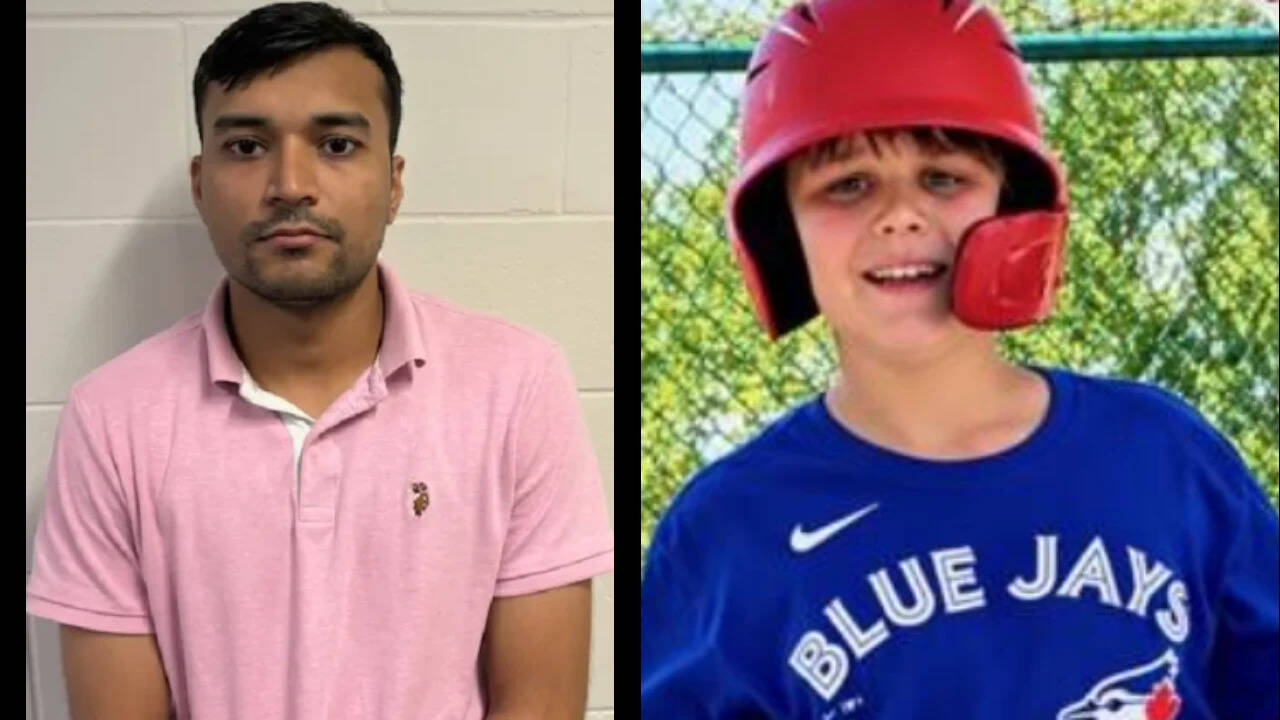
Glass crunches under a sneaker in the dead of night. That sound wakes a shop owner before the alarm even finishes ringing.
Every small business owner knows the knot in the stomach that comes with a midnight alert. You spend years building something out of thin air—sweat, borrowed money, long hours standing behind a counter while the rest of the world sleeps—and then a single phone notification suggests it is all being torn apart. In cases like an Indian-origin store owner in Florida charged with murder after hitting and running over a fourteen-year-old who allegedly broke into his shop, the tragedy splits open on two fronts at once. A fourteen-year-old boy is dead. A merchant who came to chase a livelihood is facing the heaviest charge on the books.
Nobody walks into a convenience store or a corner market expecting a courtroom battle over murder. Yet the law draws a sharp, unforgiving line between protecting property and taking a life, especially when a suspect is fleeing rather than posing an immediate, inescapable threat inside a room.
The Midnight Call Every Merchant Fears
Picture a hypothetical small-business owner—let’s call him Rajan—sitting on the edge of his mattress at 2:15 a.m. His phone buzzes with motion alerts or a call from a neighbor. His pulse hammers against his ribs. For someone who emigrated from India or grew up in an immigrant family where a shop represents generational sacrifice, that shop isn't just inventory and cash registers. It is school tuition, rent, pride, and proof that the gamble paid off.
Adrenaline narrows a person's vision. In that state, every shadow looks like ruin.
To understand the tension at the heart of a Florida break-in case, you have to feel both sides of that panic without excusing what follows. On one side stands a business owner who has likely dealt with petty theft, broken windows, insurance headaches, and slow police response times that leave owners feeling abandoned. On the other side is a fourteen-year-old child—barely old enough for high school, still carrying baby fat in his jaw, making a reckless, destructive choice in the dark.
Neither life was supposed to end on asphalt outside a storefront.
Consider what happens next: someone gets behind the wheel of a vehicle, intending to stop a thief or chase down someone who just smashed glass and grabbed merchandise. A car is not a deterrent. It is a two-ton battering ram. When a vehicle strikes a fleeing teenager and runs him over, the legal story shifts overnight from "victim of a burglary" to "defendant in a homicide prosecution."
Why Pursuit Turns Victims Into Defendants
Many people assume that catching someone in the act of a break-in gives a property owner broad leeway. That assumption is dangerous.
In criminal law, self-defense and defense of property are tightly bounded concepts, not blank checks. Even in states with strong self-defense traditions and "Stand Your Ground" statutes, using lethal force generally requires a reasonable fear of imminent death or great bodily harm to yourself or another person. Property alone rarely justifies taking a human life, and chasing down a retreating suspect in a motor vehicle frequently undercuts any claim of immediate self-defense.
Prosecutors look closely at intent, distance, speed, and whether the threat had already passed or shifted. If a fourteen-year-old is running away or trying to get out of the area, hitting him with a car looks less like split-second survival and more like vigilante retribution—or reckless disregard for human life that crosses into second-degree murder or manslaughter, depending on the exact facts and charging decisions.
Wait. Think about how fast a life can unravel in three seconds of bad judgment.
One moment, a shop owner is angry, scared, and trying to protect what he built. The next moment, blue-and-red lights are strobing against the storefront windows, crime-scene tape is boxing in the parking lot, and handcuffs are clicking shut over wrists that spent the day stocking shelves and greeting regular customers.
The Weight of Age and Impulsiveness
A fourteen-year-old breaking into a store is not a hardened criminal mastermind. Usually, a kid that age is caught up in peer pressure, thrill-seeking, family instability, or a foolish belief that nothing bad can really happen to him. Teen brains are still wiring impulse control and consequence assessment; they react to dares and moments without grasping the gravity of a felony or the lethality of a moving car.
When a fourteen-year-old dies after a break-in, grief hits like a freight train. A family loses a son who hadn't even reached adulthood. Classmates stare at an empty desk. A community argues in comment sections, some focusing on the crime committed at the shop, others horrified that a child was run down in the street.
Both reactions come from real pain, yet they often talk past each other.
If we treat the teenager solely as a statistic or a menace, we miss the tragedy of a childhood cut short before he ever had a real chance to grow up and face accountability through the justice system. If we treat the store owner solely as a monster, we miss the desperation and fear driving small merchants who feel like they are fighting alone against rising retail crime and property loss.
The Invisible Stakes for Immigrant Entrepreneurs
Small retail has always been a tough climb, and immigrant-owned shops often carry extra weight. Long shifts, thin margins, language barriers in stressful moments, and a deep reluctance to walk away from a business that cost everything to open—these pressures shape how owners react when things go sideways.
I have stood behind counters late at night and watched how quiet a neighborhood gets after eleven. Every sound outside feels magnified. You hear a car engine idling too long or glass shattering across the lot, and your stomach drops into your shoes. You don't have security guards on payroll. You have locks, cameras, and your own nerve.
That vulnerability explains the anger. It does not justify running someone over.
When fear and anger hijack the steering wheel, nobody wins. The store still has damage. The family still has a funeral. The owner still faces years in prison, ruined savings, and a label that follows him for the rest of his life.
What Florida Law Actually Demands in the Dark
Let's use a simple analogy to make the legal boundary unmistakable. Imagine a locked vault holding everything you own. If someone tries to force that vault open while you are trapped inside with no exit, the law recognizes your right to defend yourself against severe harm. Now imagine the thief panics, drops the bag, and bolts down the street, and you jump into a truck and mow him down in the intersection. At that point, you aren't defending the vault anymore. You are administering street justice with a lethal weapon.
That distinction is where so many real-world cases collapse.
Law enforcement exists to investigate break-ins, gather surveillance footage, track suspects, and bring them before a judge. When a private citizen takes enforcement into his own hands using a vehicle, he steps out of the role of wronged business owner and into the role of suspect. Even if the break-in happened minutes earlier, even if the property damage is real, the act of hitting someone with a car creates a separate, devastating crime.
And once a murder charge is filed, the legal battle becomes grueling. Bail can be steep or contested. Defense attorneys have to parse video angles, vehicle telemetry, witness statements, and state-of-mind evidence while the public has already formed strong opinions from a headline.
Beyond the Headline
Stories with dramatic elements—an Indian-origin merchant, a Florida storefront, a murder charge, a fourteen-year-old alleged burglar struck by a vehicle—get shared fast because they hit raw nerves around race, youth, crime, and self-defense. Headlines compress months of investigation and layers of human history into a single sentence.
Real life is messier than a headline.
Behind the charging documents are two families whose lives were shattered on the same night. One is learning how to bury a fourteen-year-old boy. The other is learning how to survive a murder prosecution while staring at the ruins of a livelihood.
No verdict can bring back a child. No court date can erase the choices made in the dark outside a broken window.
Sirens fade into the humid Florida night, leaving behind shattered glass, a stalled engine, and a quiet street where two lives collided without mercy.


