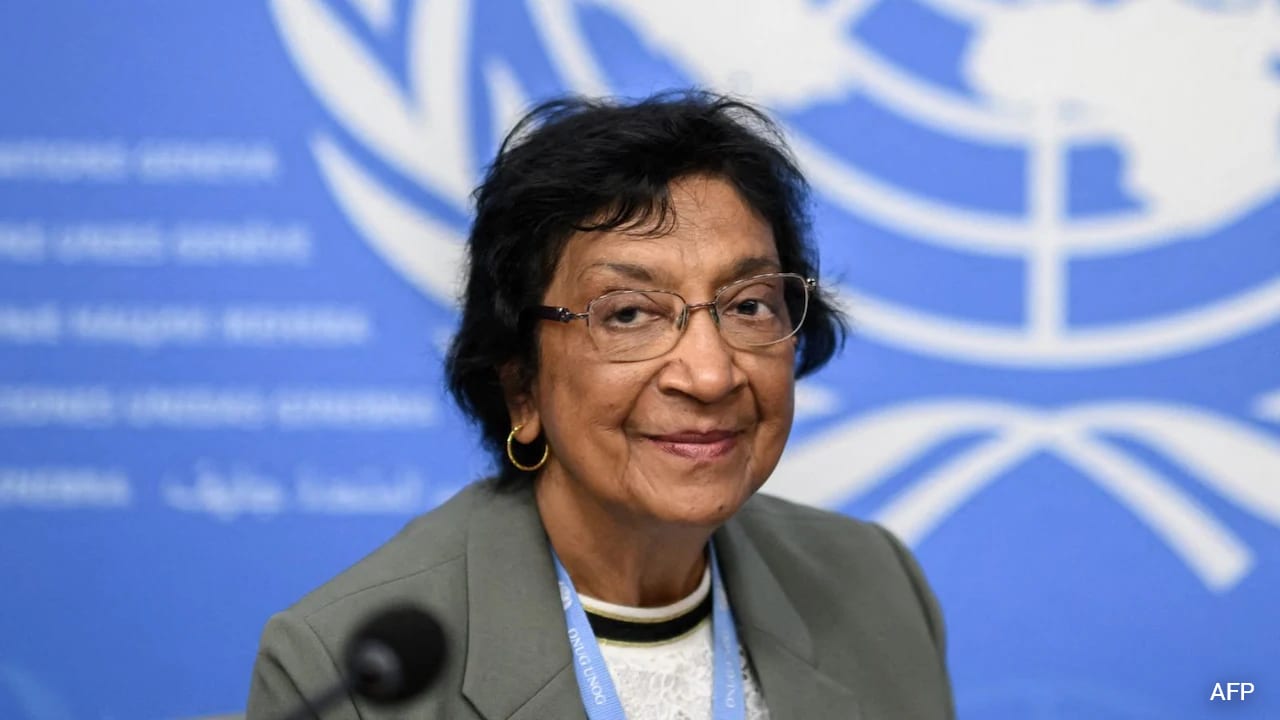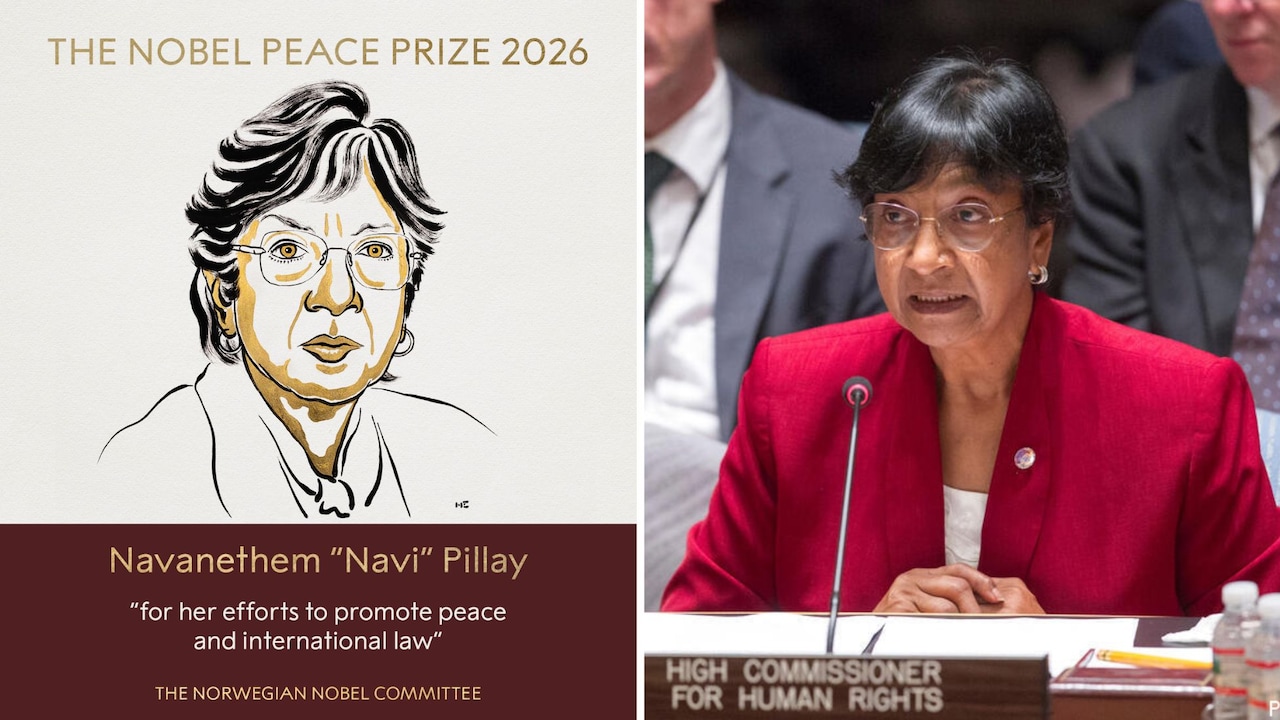
We forget what an unbroken rule sounds like until someone stands up in a room full of smoke and speaks it in a calm, flat tone.
The courtroom floors of the late twentieth century were not clean. They were caked in the red dust of political expediency, stained by the grease of oil deals, and slick with the silent tears of people whose names were written on scraps of paper and shoved into coat pockets before dawn. In those spaces, power usually won by shouting louder than the evidence. It took a particular kind of stubbornness to change the weather in that room. Navanethem Pillay did not shout. She listened until the silence became uncomfortable, and then she delivered a sentence that carried the weight of a falling vault.
To understand why the Nobel Peace Prize found its way to her door, you have to strip away the marble pillars of The Hague and walk into the raw, unpainted concrete of Durban during the apartheid years.
Imagine sitting in a small, cramped office where the air smells of stale cigarette smoke and wet wool. Outside, the police sirens are a constant, low-frequency hum that gets inside your teeth. It is 1967. You are a young woman of Tamil descent in a country that has officially categorized your existence as an administrative inconvenience. Every door you approach has a sign telling you where you cannot sit, where you cannot walk, where you cannot breathe.
Navanethem Pillay did not look at those signs as walls. She looked at them as poorly drafted legal briefs.
She became a lawyer because she realized that oppression is rarely chaotic; it is meticulously, bureaucratically organized. And if it is organized by rules, it can be dismantled by rules—provided you are willing to spend your youth arguing semantics while state security agents watch your front gate.
"They thought they could bury us in paperwork," she would note years later, reflecting on the endless defense of activists detained without trial. "So we built a shovel out of the same paper."
When people talk about international law, they usually picture men in expensive suits shaking hands under crystal chandeliers. They imagine treaties signed with fountain pens that cost more than a family car. But real international law is forged in the dirt. It is born when a survivor of torture looks a judge in the eye and describes the exact shape of the room where the lights were kept on for forty-eight days.
Pillay understood this viscerally. When she stepped onto the international stage—first as a judge on the International Criminal Tribunal for Rwanda, and later as the United Nations High Commissioner for Human Rights—she brought the perspective of someone who knew what it felt like to be illegal in her own birthplace.
Consider the Rwanda tribunal. In 1995, the world was still blinking away the sleep of the post-Cold War era, pretending that genocide was an ancient tribal frenzy rather than a planned, industrial slaughter. The conventional wisdom among diplomats was that prosecuting the architects of the 1994 massacres would destabilize the fragile peace. They whispered about reconciliation without reckoning. They suggested a polite sweep under a very large rug.
Pillay refused to sweep.
As a judge, she pushed through the legal fog to establish a precedent that sent shockwaves through every military barracks on earth: rape is an instrument of genocide. It is not an unfortunate byproduct of war. It is a weapon, as deliberate as a machete or a mortar shell, and it carries the same criminal weight.
I remember reading the transcripts of those rulings years later, sitting in a quiet library while rain tapped against the glass. The legal prose was clinical, stripped of adjectives, yet it felt like watching someone crack open a safe that had been locked for centuries. By naming the crime precisely, she carved a trench through the impunity of warlords. She told every soldier with a rifle that the shield of state sovereignty was made of tissue paper.
The irony of peace is that it is usually celebrated by people who have never had to fight for it. We love the myth of the dove descending from a clear sky, sudden and unearned. But true peace—the kind that lasts longer than a ceasefire—is built by plumbers of justice. It is forged by individuals who spend decades tightening bolts in the dark, making sure that when the next dictator tries to turn on the taps of violence, the pipes burst under the pressure of accountability.
When Pillay took up the mantle of UN High Commissioner for Human Rights in 2008, she did not soften her stance for the sake of diplomatic brunch invitations. Governments that prided themselves on clean human rights records found themselves squirming under her unblinking gaze. She called out powerful nations for secret detentions. She criticized allies and adversaries alike with an impartial sharpness that made career diplomats clutch their pearls.
To her, a violation of human rights in a powerful Western democracy was just as grotesque as a violation in a failing state. Justice does not have a sliding scale based on gross domestic product.
This is where the Nobel Committee made its quiet, profound statement. By honoring her, they were not just celebrating a long career of public service. They were issuing a warning to a modern world that is currently watching its democratic guardrails crumble under the weight of populism and digital surveillance.
We are living through an era where strongmen are back in fashion. They stand on stages and mock the very idea of international covenants, calling them the weak shields of global elites. They trade in grievance and division, convincing millions that human rights are a luxury we can no longer afford when the borders are under pressure.
Pillay’s life is the living refutation of that lie.
She teaches us that human rights are not a set of polite suggestions to be discarded during an emergency. They are the emergency brake. When a society starts throwing its legal protections out the window because the wind is blowing hard, it isn't being pragmatic; it is committing suicide in installments.
Think about the invisible stakes of her work. Every time a war criminal is indicted, every time a secret prison is forced to close its doors, every time a minority group is granted the right to speak their mother tongue in a courtroom, a tiny thread is added to the net that keeps humanity from plunging into total barbarism. We rarely see the net. We only notice it when it tears, usually with a catastrophic sound.
Pillay spent her life repairing those tears with coarse thread and calloused fingers.
When the news of her Nobel Peace Prize broke, it did not arrive with the celebratory fireworks of a pop star's tour or the financial roar of a tech startup's IPO. It came with the quiet dignity of an old oak tree standing firm after a gale. It was a reminder that the most enduring victories are rarely loud. They are won in windowless rooms where people refuse to sign away their integrity, even when the man with the stamp tells them it is easier to comply.
We look at the state of the world today—the fractured democracies, the displaced millions wandering across dust-choked borders, the algorithms designed to turn our neighbors into enemies—and we feel a paralyzing vertigo. It is easy to conclude that one person can do nothing against the machinery of global indifference.
Navanethem Pillay was once just a young girl sitting behind a "Non-Whites Only" sign in Durban, watching the machinery of the state grind people down into dust. She did not have an army. She did not have a treasury. She had a pen, a copy of the statutes, and an unwillingness to accept that the world had to be cruel simply because it was old.
She took those tools and she helped rewrite the rules of human survival.
The prize is nice, of course. The gold medal will sit in a display case somewhere, catching the light of a late afternoon sun. But the real monument to her work is much harder to see and infinitely harder to destroy. It exists in every courtroom where a tyrant is told, for the very first time, that he does not own the horizon. It exists in the quiet confidence of a survivor who knows that their suffering was entered into the record, indelible and unignorable.
The room is still smoky. The sirens still hum in the distance. But somewhere in the dark, the rules are holding.