Fluorescent lights hum at a frequency you only notice at 6:45 p.m. when the building empties and the cleaning carts rattle down the linoleum.
I have sat in enough windowless government offices to know that sound by heart. You lean back in an ergonomic chair whose lumbar support gave up three administrations ago, watch the clock tick past six, and feel the strange, weightless quiet of a place built for public service that suddenly belongs to shadows and paper. On the monitor in front of me, a terminal blinks with that stubborn, unhurried cursor that makes even a simple query feel like knocking on a heavy oak door.
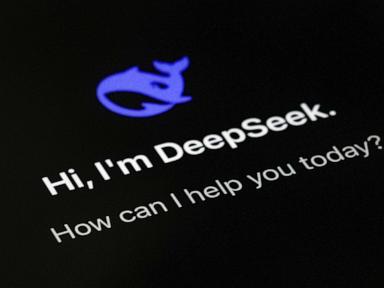
When Washington moves to ban DeepSeek from federal agency systems amid a widening artificial intelligence rift with China, the headlines make it sound like a neat administrative lock. A memo goes out. A procurement code updates. An IT administrator pushes a configuration patch before lunch, and the problem is solved.
Except it is never that simple.
Locked doors do not stop curiosity. They change where curiosity goes, who gets invited inside, and who ends up standing in the hallway with a notepad trying to figure out what happened behind the drywall.
Why a Ban Rarely Stays on Paper
To understand what a government ban on a foreign AI model actually does, you have to strip away the press releases and look at how work gets done inside real agencies.
Consider a hypothetical scenario. Picture a mid-level analyst named David working in a civilian department that tracks supply chains, agricultural yields, or infrastructure resilience. David is not a spy. He is not trying to sell state secrets on a dark web forum. He is thirty-eight, has two kids whose soccer schedules collide every Saturday morning, and is drowning in four hundred pages of dense technical filings before a Tuesday morning briefing.
His agency's approved software stack is slow, cautious, and locked down behind layers of legacy compliance. It works—mostly—until Friday afternoon, when a deadline looms and an open-weight or overseas model like DeepSeek promises faster synthesis, sharper code generation, or cleverer reasoning at a fraction of the compute cost.
Even with a formal ban on federal systems, temptation is a quiet thing. A personal phone rests on the desk. A browser tab opens on an unmonitored hotspot. A contractor pastes a sanitized snippet of text into an external window just to see if the logic holds up.
I have watched smart, conscientious people make that exact compromise out of sheer exhaustion rather than malice. When official tools lag behind the pace of the outside world, the friction itself becomes a security risk. People route around friction. They always have.
Let us pause and name a metaphor so we do not confuse poetry with policy. Think of a federal network as a walled city with watchtowers along the perimeter. A ban on a specific AI system is like posting a guard at the eastern gate with a photograph of one traveler. That guard might turn away the exact person on the list. Yet the city still has sewer grates, delivery alleys, courier pigeons, and citizens who trade favors at the tavern down the street.
AI does not move like a single traveler carrying a suitcase. It moves like water finding a hairline crack in concrete. Weights get forked, fine-tuned, wrapped in new interfaces, and hosted on servers across shifting jurisdictions. A ban targets a name and an endpoint, while the underlying capability keeps shifting shape.
The Invisible Stakes Beneath the Rift
Why does an artificial intelligence dispute between the United States and China carry so much weight that agencies draw hard lines around a single model?
Because software is no longer just a tool that types letters or sorts spreadsheets. Modern AI systems—especially reasoning models that break problems down step by step before answering—act like junior analysts, coders, and researchers working at machine speed. When a government agency plugs an AI model into its workflows, it is not merely asking a question. It is delegating judgment, pattern recognition, and drafting power to code trained on datasets and engineering priorities shaped far from the Potomac.
That is where trust fractures.
When you use an AI model, you are inheriting someone else's blind spots. Every training run reflects choices: which sources were prioritized, how edge cases were handled, what safety guardrails were installed, and what telemetry or logging might exist in the background. In an era of acute geopolitical rivalry between Washington and Beijing, those questions stop being theoretical computer science debates. They become questions of national resilience, data sovereignty, and strategic leverage.
Still. Let us be honest about what we do not know with absolute certainty.
Public reporting around federal bans and AI security often blurs together distinct fears: fear of data exfiltration, fear of hidden model behaviors or backdoors, fear of economic dependency on foreign compute and algorithms, and fear of falling behind in an arms race where speed and cost efficiency matter enormously. Sometimes policymakers react to concrete intelligence or technical risks. Other times, they act preemptively so they are not caught flat-footed later.
Admitting that uncertainty does not weaken the argument. It makes it real. If you spend enough time inside complex institutions, you learn that sweeping bans often arrive right at the intersection of genuine risk and genuine anxiety—when leaders know something big is shifting beneath their feet, even if every detail has not yet come into focus.
The Cost of Falling Behind Your Own Rules
There is an irony in government technology policy that repeats itself every few years like clockwork.
You ban a tool to protect security. That part makes sense on paper. If a system's data handling, provenance, or geopolitical alignment cannot be verified to federal standards, keeping it off official networks is a reasonable precaution.
Then comes the second half of the cycle.
While agencies block unapproved tools, private companies, foreign competitors, and agile adversaries keep experimenting at full throttle. If the public sector responds to every new AI breakthrough only with prohibitions and slow committee reviews, the gap between official capability and real-world capability widens.
Imagine another hypothetical character: Elena, a cybersecurity engineer brought in to help modernize an agency's defenses. Elena knows how attackers think because she has spent a decade trying to stay one step ahead of them. When she looks at a ban on a popular model like DeepSeek, she does not just ask whether civil servants can access it. She asks what happens when adversaries use cheap, high-capability models to probe vulnerabilities, write polymorphic scripts, or automate social engineering at scale.
If our side's defenders are stuck waiting six months for an internal approval while adversaries iterate every afternoon, a defensive posture can quietly turn into a handicap.
Banning a foreign AI model is a boundary. It is not a strategy.
A boundary tells you where to stop. A strategy tells you what to build instead, how to fund domestic alternatives that actually work well enough that people want to use them, and how to train civil servants to spot risks without turning every workflow into treacle.
What Happens Inside the Room Where Decisions Are Made
Picture a conference table in a downtown office building during a late-afternoon briefing. Half-empty coffee mugs sit beside thick binders and glowing laptops. Nobody is shouting like in a political drama. Real policy meetings are quieter than that—and often heavier.
Around the table sits a legal counsel worried about statutory compliance and procurement rules. Next to her is a chief information security officer whose hair has turned noticeably grayer since cloud migration began. Across from them sits a program director trying to keep a public-facing service running without blowing through a tight budget.
Each of them is carrying a different kind of fear.
The security officer fears the breach that makes the morning front page—the quiet leak of citizen records or internal memos that cannot be undone once copied. The legal advisor fears the oversight hearing where every email gets read aloud under harsh lights. The program director fears irrelevance and failure: an agency so locked down and slow that it can no longer fulfill its basic mission in a fast-moving world.
When a ban on a model like DeepSeek lands on that table, it brings relief to one person and friction to another. For the security officer, a bright red line is easier to enforce than a fuzzy gray area. For the program director, it can mean scrambling to rewrite workflows, retrain staff, or explain to leadership why a promising shortcut is suddenly off-limits.
I have sat in rooms like that. You watch smart people weigh imperfect choices against other imperfect choices, knowing full well that whichever path they pick, someone will criticize them six months later with the benefit of hindsight.
Beyond the Headline Rift
It is tempting to view the U.S.–China AI clash as a simple scoreboard: one side builds, the other side restricts, and the loudest headlines declare a winner.
History rarely keeps score so neatly.
Look back at earlier waves of technology tension—telecommunications gear, semiconductor lithography, encryption standards, cloud platforms. Whenever two major powers collide over foundational technology, the battleground shifts from pure invention to control over chokepoints: chips, talent, capital, standards, and trust.
Artificial intelligence compresses that entire history into months instead of decades. A model architecture that looks revolutionary in January can feel routine by autumn. Cost curves drop. Open weights circulate. Startups repackage capabilities into tools that look nothing like the original release.
In that environment, a government ban on a specific AI system is best understood as a snapshot in motion. It captures a moment when policymakers decided the risk of letting a particular model inside official walls outweighed the benefit of using it.
Yet the deeper question remains unchanged.
Can a democratic government move fast enough to build trustworthy, high-performing tools of its own while keeping sensitive data safe? Can it distinguish between genuine security threats and knee-jerk reactions driven by headline panic? And can it give everyday workers—people like David and Elena—clear, practical guardrails so they do not have to choose between doing their jobs well and following the rules?
Those questions will not be settled by a single directive. They will be settled in thousands of small moments: in procurement offices, in engineering standups, in policy debates, and at quiet desks long after the evening cleaning crew finishes its rounds.
A locked door can keep a stranger out.
It cannot tell you what kind of house you are building on the inside.