At 3:14 a.m. on a humid Tuesday in Nanshan District, the hydraulic hiss of a flatbed crane breaks the silence. A crew of twelve men in reflective vests guides a mature camphor tree—its root ball wrapped in burlap the size of a compact car—into a freshly dug pit along Shennan Boulevard. By 5:30 a.m., before the first electric taxis hum past the glass towers of Tencent and DJI, the asphalt is swept clean, the soil is mulched, and the street looks as though that tree has stood there for thirty years.
Nobody applauds. Nobody takes a photograph. Yet this nocturnal choreography is the most honest indicator of what is happening across Shenzhen right now. You might also find this similar coverage insightful: Le mythe du grand retour algérien au Sahel masque un déclassement stratégique brutal.
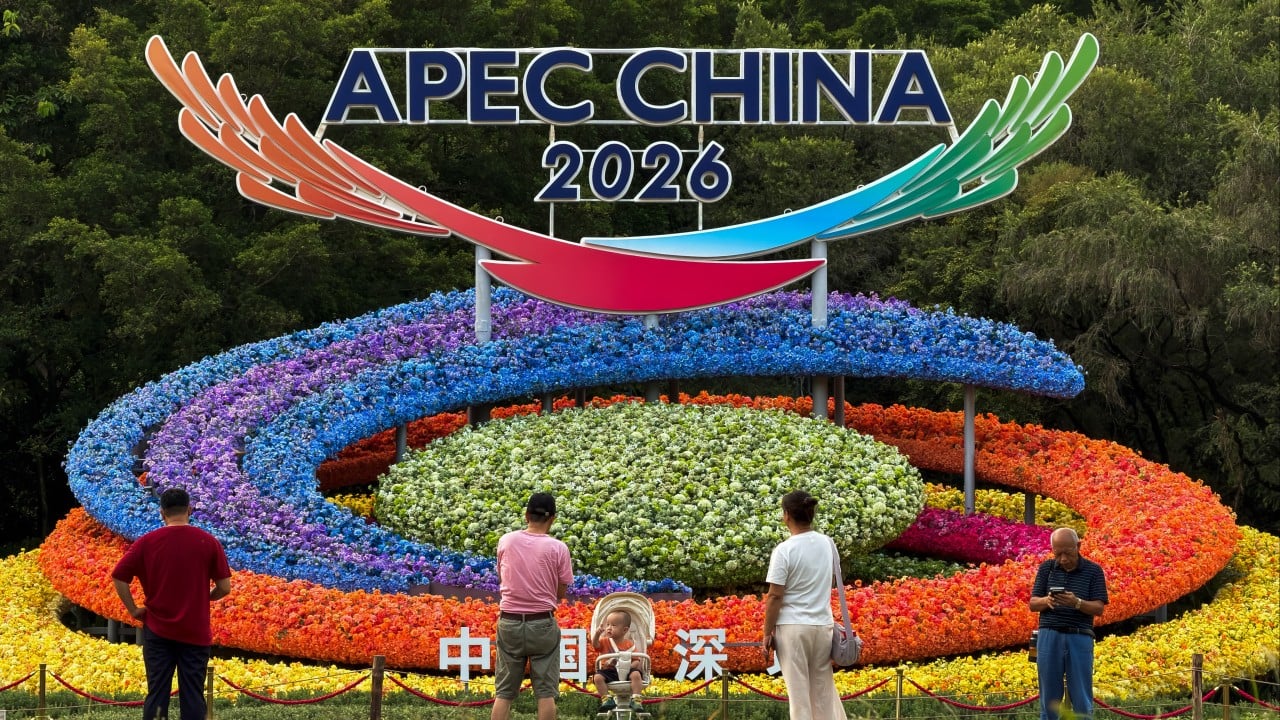
As China prepares to host the Asia-Pacific Economic Cooperation summit in late 2026, the city that built its reputation on breakneck speed is executing a very different kind of maneuver. The public notices the surface changes first. Traffic restrictions tighten around key arteries. Construction cranes vanish behind manicured green hoardings. Fresh foliage appears overnight along the corridors connecting Bao’an International Airport to the civic centers of Futian and Qianhai. To a casual observer reading standard municipal bulletins, this looks like routine host-city housekeeping—paint the curbs, clear the lanes, plant some trees, welcome the dignitaries.
Look closer, though, and a different story emerges. As extensively documented in detailed articles by USA Today, the implications are widespread.
Shenzhen is not merely tidying up for company. It is attempting to compress a decade of urban maturity into a few final months, using the gravity of an international summit to prove that China’s most famous boomtown has evolved from the factory floor of the world into its diplomatic and technological parlor. And for the 17.7 million people who actually live, commute, and build businesses inside this hyper-dense metropolis, that transformation carries a very real, very personal price tag.
The Architecture of First Impressions
To understand why a city famous for algorithmic efficiency is obsessing over leaf canopy and lane closures, you have to understand the psychology of host-city statecraft.
Think of it like preparing a family home for a high-stakes merger dinner. You do not just vacuum the living room. You quietly move the stacks of unfinished paperwork into the garage, adjust the lighting so the scuffed floorboards disappear into shadow, and place fresh flowers on the table to signal calm, prosperity, and control. In international diplomacy, urban infrastructure functions as body language. Every pothole filled, every diesel truck rerouted, and every smog-choked horizon cleared sends an unspoken message to visiting heads of state and global CEOs before a single trade agreement is signed.
China has perfected this theater over the past two decades. During the 2008 Beijing Olympics, the 2010 Shanghai Expo, and the 2014 APEC summit in Yanqi Lake, temporary factory shutdowns and odd-even license plate rules famously produced "APEC Blue"—skies so startlingly crisp that residents stepped outside just to stare at the clouds.
Shenzhen, however, presents a far trickier puzzle than Beijing or Shanghai ever did.
Unlike those historical capitals, Shenzhen has no imperial palaces or colonial riverfronts to lean on. Forty-six years ago, it was a collection of borderland fishing villages and rice paddies across the Sham Chun River from Hong Kong. Its identity was forged in hustle—in 24-hour electronics markets in Huaqiangbei, in migrant engineers sleeping under desks to meet shipping deadlines, in an unapologetic willingness to tear down yesterday’s building to make room for tomorrow’s prototype.
I remember walking through Futian a decade ago during a summer downpour, watching delivery drivers navigate half-finished sidewalks choked with scaffolding while towers rose around them at a rate of one floor every three days. Back then, the noise was the point. The dust was proof of life.
Now, as APEC’s final preparation phase locks into place, Shenzhen is asking itself to hold its breath.
The Commute That Redraws a City
Consider what happens next when a metropolis built around frictionless movement suddenly introduces deliberate friction.
Meet Lin Wei, a hypothetical hardware supply-chain manager living in Longhua District and commuting forty minutes south each morning to a robotics firm in Nanshan. Lin represents hundreds of thousands of mid-career professionals who form the nervous system of the Greater Bay Area. For years, his daily routine relied on predictable rhythms: leave at 7:45 a.m., merge onto the Beihuan Avenue expressway, grab a coffee downstairs at 8:30.
In the final stretch before the summit, Lin’s commute becomes a daily lesson in geopolitical logistics.
Municipal authorities have rolled out phased traffic management plans designed to guarantee uninterrupted motorcade corridors between summit venues, luxury hotels, and border crossings. Dedicated lanes appear along major thoroughfares. Heavy freight vehicles—the lifeblood of Shenzhen’s hardware ecosystem—face strict daytime bans, pushed onto nocturnal schedules so daytime traffic flows smoothly for delegates. Ride-hailing pickup zones shift three blocks away from major conference hubs. Even delivery e-bikes, the ubiquitous yellow and blue scooters that weave through Shenzhen’s sidewalks like schools of fish, encounter newly enforced exclusion zones.
For Lin, this means leaving forty minutes earlier, switching from his electric sedan to Metro Line 4, and watching his company’s component shipments arrive at 2:00 a.m. instead of 2:00 p.m.
He isn't angry. Most Shenzhen residents carry a pragmatic, almost civic pride in seeing their city step onto the global stage. Yet the irritation is palpable in the quiet sighs on crowded subway platforms and the frantic rescheduling of factory runs across Dongguan and Huizhou. When you restrict traffic in a city where time is literally treated as currency, every minute added to a commute ripples outward through supply chains that feed the rest of the planet.
Why not simply build more bypasses or rely entirely on Shenzhen’s already massive subway network? Because high-level diplomacy operates on non-negotiable security protocols. Twenty-one APEC member economies mean twenty-one sovereign security details, overlapping motorcades, and zero tolerance for gridlock. You cannot put trade ministers on a commuter train during rush hour, no matter how clean the stations are.
Why Million-Dollar Trees Matter
If traffic curbs represent the visible friction of APEC preparations, the city’s massive urban greening campaign represents its quiet ambition.
Walk down Binhai Avenue today and the sensory shift is immediate. Where bare concrete medians and construction barriers once baked under the subtropical sun, layered gardens of bougainvillea, banyan trees, and native palms now absorb the glare. Over the past year, Shenzhen’s urban management bureaus have accelerated an aggressive afforestation and streetscape beautification drive—planting hundreds of thousands of trees, upgrading hundreds of kilometers of greenways, and retrofitting aging commercial facades with uniform lighting and vertical gardens.
On the surface, planting trees before an international conference sounds like cosmetic vanity. Why spend millions transplanting mature greenery when everyone knows the real business happens inside air-conditioned plenary halls?
Because Shenzhen is trying to sell a new economic thesis, and trees are part of the pitch.
For years, multinational executives viewed Shenzhen as a place you visited to inspect a factory, negotiate a tooling contract, and leave as quickly as possible. You didn't bring your family. You didn't relocate your regional headquarters there; you put your headquarters in Singapore, Tokyo, or Hong Kong, and sent your procurement team across the border to Shenzhen.
Hosting APEC 2026 gives Beijing and Shenzhen a rare platform to shatter that mental model. By transforming industrial corridors into lush, walkable urban parks, the city is broadcasting a message to global capital: We are no longer just where you manufacture your products. We are where your executives can live, innovate, and raise their children.
There is also an environmental calculation baked into the soil. APEC’s recent policy agendas have leaned heavily into green growth, decarbonization, and sustainable supply chains. Shenzhen already boasts the world’s first fully electrified public bus and taxi fleets—a genuine triumph of industrial policy that noticeably quieted its streets years ago. Surrounding those electric vehicles with dense urban forest canopies turns the entire city into a living showroom for China’s green transition.
The Invisible Strain Behind the Curtain
Still, anyone who has lived through major civic mobilizations in East Asia knows the uneasy truth beneath the polish. Perfection has a way of masking pressure.
In the weeks leading up to a global summit, local officials operate under an intense, unspoken mandate: zero incidents, zero eyesores, zero surprises. That pressure cascades down through every layer of municipal governance.
Small street-level businesses—the noodle stalls tucked into urban villages, the independent repair shops operating out of ground-floor garages, the wholesale vendors loading vans on narrow side streets—often bear the brunt of sudden "urban environment rectifications." Scaffolding goes up overnight to standardize shop signs. Temporary closures halt noisy renovation work across entire districts. Dust-generating construction projects pause indefinitely, leaving contractors to juggle payroll while waiting for the green light to resume pouring concrete.
I spoke recently with a logistics coordinator in Bao’an who put it bluntly: "Everyone wants the summit to go well. We want the world to see what Shenzhen built. Just don't ask how many hours we spend rewriting delivery schedules so a truck doesn't cross a camera line at the wrong time."
There is an honesty in that tension that official press releases never capture. When a city stages an event of this magnitude, two realities exist side by side. One is the triumphant macro-story: a gleaming metropolis of innovation, clean energy, and diplomatic hospitality welcoming leaders from across the Pacific Rim. The other is the micro-reality of millions of ordinary people adjusting their alarm clocks, rerouting their deliveries, and absorbing minor inconveniences so the choreography holds together.
Is it worth it?
History suggests the answer depends entirely on what happens after the motorcades leave.
Beyond the Final Curtain
In 1980, when Deng Xiaoping designated Shenzhen as China’s first Special Economic Zone, skeptics outside the country dismissed the experiment as an ideological mirage. Even in the late 1990s, when foreign journalists visited the city, they wrote breathless dispatches about counterfeit markets and chaotic sprawl, struggling to imagine it ever rivaling established Asian financial hubs.
Today, Shenzhen’s GDP rivals that of entire European nations. Its port moves more containers than almost any other on earth. Its laboratories file more international patent applications than Silicon Valley.
Yet global perception always lags behind physical reality by at least a decade. Many decision-makers in Washington, Canberra, Santiago, and Seoul still carry an outdated mental snapshot of southern China—a blur of assembly lines, shipping crates, and haze.
APEC 2026 is designed to overwrite that image in high definition.
The traffic curbs will eventually lift. The freight trucks will return to the daytime highways. Lin Wei will reclaim his forty-minute morning commute, and the midnight crane crews will move on to the next municipal project.
What remains will be the trees—their roots finally gripping the red soil beneath Shennan Boulevard, shading a generation of engineers and founders who never knew the fishing village, only the city that learned how to catch its breath before welcoming the world.