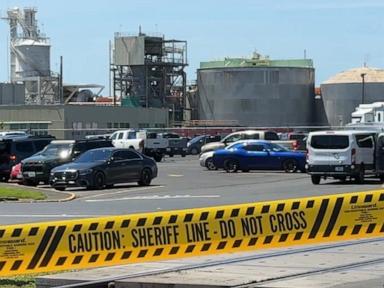
Steam hangs heavy over a Pacific Northwest mill town long before the sun clears the evergreens. You can smell it miles away—that sharp, unmistakable tang of sulfur and cooked wood fiber that locals call the smell of money. For generations, that vapor has meant mortgages paid, braces bought, and trucks fueled in rural Washington. It is the breath of an industry that built the state's timber towns from the mud up.
Walk past the chain-link gates, though, and the romance of heavy industry gives way to something far more fragile.
Steel looks permanent until it fails. A storage tank standing forty feet high, bolted into concrete and humming with pressurized pulp stock or caustic chemicals, radiates an illusion of invincibility. Workers walk beneath its shadow every shift, coffee thermoses in hand, trusting the invisible math of metallurgy, inspection schedules, and regulatory oversight to keep tons of scalding liquid behind a quarter-inch of welded plate.
When state regulators in Washington concluded that a pulp mill violated workplace safety standards prior to a deadly tank rupture, the official language arrived wrapped in the sterile insulation of bureaucracy. Citations. Willful or serious violations. Monetary penalties. Corrective action plans.
Bureaucracy is designed to cool down tragedy so lawyers and engineers can measure it. Strip away the regulatory phrasing, however, and you are left with a simple, terrifying truth: a vessel meant to hold back a lethal torrent gave way because the safeguards meant to catch its decline were ignored, delayed, or treated as optional.
The Anatomy of a Preventable Failure
To understand how a massive industrial tank ruptures, you have to picture what happens inside the shell over years of relentless service.
Think of a pulp mill tank not as a static barrel, but as a pressurized lung that never stops working. Day and night, caustic liquors, wood chips, steam, and acidic compounds churn against the interior walls. The chemistry inside a kraft pulp mill is intentionally violent; it has to be to break down lignin and turn raw timber into clean paper pulp. That same chemistry wages a quiet, unceasing war against the carbon steel or stainless alloy trying to contain it.
Corrosion does not announce itself with a siren. It works in millimeters.
Consider a hypothetical veteran operator—let us call him Ray—who has worked the digester and stock prep lines for twenty-two years. Ray knows the sounds of the mill the way a mechanic knows an aging engine. He can tell when a pump cavitation is starting just by the vibration through the catwalk grating under his boots. What Ray cannot see with his naked eye is localized wall thinning behind a layer of exterior insulation, or microscopic stress-corrosion cracking creeping along a weld seam forty feet above his head.
That is why industrial safety standards exist. They are not arbitrary hurdles invented by desk-bound inspectors in Olympia to slow down production. They are the collective memory of every worker who never came home from a shift.
Standards governing pressure vessels, atmospheric storage tanks, and process safety management require specific, non-negotiable rituals. Ultrasonic thickness testing. Internal visual inspections during scheduled turnarounds. Mechanical integrity audits. Clear protocols for taking compromised equipment offline before a hairline flaw becomes a catastrophic tear.
When Washington workplace safety officials investigated the fatal tank rupture, their findings pointed directly to breakdowns in those exact defenses. Safety standards designed to detect structural degradation and protect workers in the blast zone were not met.
Why Maintenance Always Loses to Production
If you spend enough time around heavy manufacturing, you learn a dark secret about how accidents actually happen. Rarely does a manager wake up and decide to put lives in danger. Instead, danger arrives through a thousand tiny compromises, each justified by the urgent math of keeping the mill running.
Shutting down a pulp mill is enormously expensive. Every hour a recovery boiler or pulp line sits cold costs tens of thousands of dollars in lost output, wasted energy, and restart delays. When a scheduled outage approaches, maintenance supervisors and plant managers face brutal pressure from corporate leadership to keep downtime to an absolute minimum.
Imagine the conversation in a fluorescent-lit trailer three months before a rupture. This is a composite scenario drawn from countless industrial investigations, yet its cadence is painfully familiar across North American manufacturing.
An inspection report flags anomalies on an aging tank. Maybe the ultrasonic readings show the steel shell approaching its minimum allowable thickness. Maybe an internal inspection was deferred during the last turnaround because a critical pump took longer to rebuild than expected. Taking the tank out of service now means bypassing a whole section of the line, cutting output by thirty percent for two weeks, and blowing the quarterly production bonus.
Someone asks if the tank can hold until the autumn shutdown.
Another voice points out that it has held fine for thirty years. No leaks. No visible bulging. Just patch the lagging, log a note to revisit it in six months, and keep the stock moving.
Nothing happens that day. Or the next week. The tank holds, which perversely rewards the gamble. In safety science, this is known as the normalization of deviance—the slow, quiet drift where breaking the rule becomes standard operating procedure because nothing blew up the last time you broke it.
Until the physics finally collects its debt.
The Seconds When Steel Gives Way
A tank rupture is not a slow leak. When weakened steel reaches its yield point under hydrostatic and pneumatic load, failure happens at the speed of sound.
A seam unzips. Hundreds of thousands of gallons of hot, chemically laden liquid—often heated well past the threshold of severe thermal burns—explode outward in a wall of force. The hydraulic shockwave alone can buckle neighboring piping, tear steel grating from its supports, and knock a grown man off his feet fifty yards away.
I have stood on the concrete floors of older Pacific Northwest mills after serious mechanical failures, looking at twisted catwalks and scarred steel beams where steam lines parted. Even days later, when the floor has been hosed down and yellow caution tape flutters in the draft, the air feels different. Workers walk faster past the dead zone. Nobody leans against the railings. Every hiss from a pressure relief valve makes three heads snap around at once.
Survivors of tank ruptures rarely describe a loud bang first. They describe the sudden disappearance of normal noise, followed by a wall of scalding mist so thick you cannot see your own outstretched hand. You do not know which direction leads to an exit ladder and which leads straight into a pool of caustic slurry pooling across the floor drains.
In the Washington mill tragedy, that violent release claimed a life—a worker doing the job they were paid to do, standing in a place their employer was legally and morally obligated to keep safe.
The Illusion of the Fine
Whenever state regulators like the Washington State Department of Labor & Industries (L&I) issue citations after a workplace fatality, the public conversation almost immediately turns to the dollar amount of the fine.
Here is the uncomfortable reality that every safety advocate and labor attorney knows, even if few say it out loud: regulatory fines are almost always a rounding error on a major industrial balance sheet.
Even when citations are classified as serious or willful, statutory caps mean penalties often land in the tens or low hundreds of thousands of dollars. Compare that figure to the revenue generated by a single week of continuous pulp production, or the capital cost of replacing an aging tank farm before its ledger depreciation is complete.
If a company views safety compliance purely through a financial lens, the incentives are warped from the start. Paying a penalty after a tragedy—and negotiating that penalty down during an administrative appeal—can appear cheaper on a spreadsheet than halting operations to rebuild decaying infrastructure.
That is why the official finding of safety violations matters far beyond the check written to the state treasury. Citations create a permanent, public record that the failure was not an "act of God" or a freak industrial mystery. It was a choice. It was the predictable outcome of failing to follow established engineering and safety standards.
What We Owe the People Behind the Gate
There is a tendency among those of us who work behind keyboards and glass walls to treat industrial accidents as distant, inevitable friction in the machinery of modern life. We want our cardboard boxes delivered overnight. We want cheap paper goods, clean packaging, and steady economic growth. We rarely stop to calculate the human subsidy embedded in those supply chains.
I admit that the technical side of process safety can feel numbing at first glance. Terms like non-destructive testing, corrosion allowance, and management of change sound dry enough to put a courtroom to sleep. It is easy to glaze over when reading regulatory summaries, easy to feel uncertain about how a layperson is supposed to judge whether a multimillion-dollar facility is being run responsibly.
Yet the core principle requires zero engineering degree to grasp.
If you ask human beings to work beside vessels holding boiling chemicals under pressure, you owe them absolute, uncompromising vigilance. You do not defer inspections because quarter-end numbers look tight. You do not patch over thinning steel and hope it lasts until next spring. And you never treat safety standards as bureaucratic red tape when they are the only thing standing between a shift worker and a closed casket.
The history of industrial safety in Washington—from logging camps to aluminum smelters to pulp mills—is written in blood and revised through grief. Every single rule in the state safety code exists because someone died before that rule was written.
When a mill violates those standards and a tank tears open, the tragedy is doubled. A family loses someone irreplaceable, and an entire community is reminded that the promises made at the factory gate are only as strong as the steel holding back the dark.
Outside the mill in Washington, the steam still rises into the gray coastal sky, carrying that familiar, sharp scent of cooked wood and sulfur across the valley. To a passing driver on the highway, it looks like business as usual. Inside the fence, the workers know better—they are still walking beneath the tanks, listening closely to the hum of the pipes, wondering which welds were checked last week and which ones are simply waiting for their turn to fail.


