Silence.
In the fourth quarter of a tie game, inside a stadium packed with eighty thousand screaming strangers, the loudest sound a quarterback ever hears is the ringing inside his own helmet right before the snap. I remember standing on the sideline of a rainy Friday night high school playoff game twenty years ago—not as a star, just a backup linemen holding a clipboard—watching our starting quarterback stare across the line of scrimmage. His shoulders rose and fell once. His eyes narrowed. In that fraction of a second, the entire weight of a town's expectations, a season's worth of bruised ribs, and the terrifying certainty that the clock was ticking down on his youth rested squarely on his twenty-one-year-old chest. If you enjoyed this post, you might want to read: this related article.
Every football player knows that clock. It ticks louder in the NFL than anywhere else on earth.
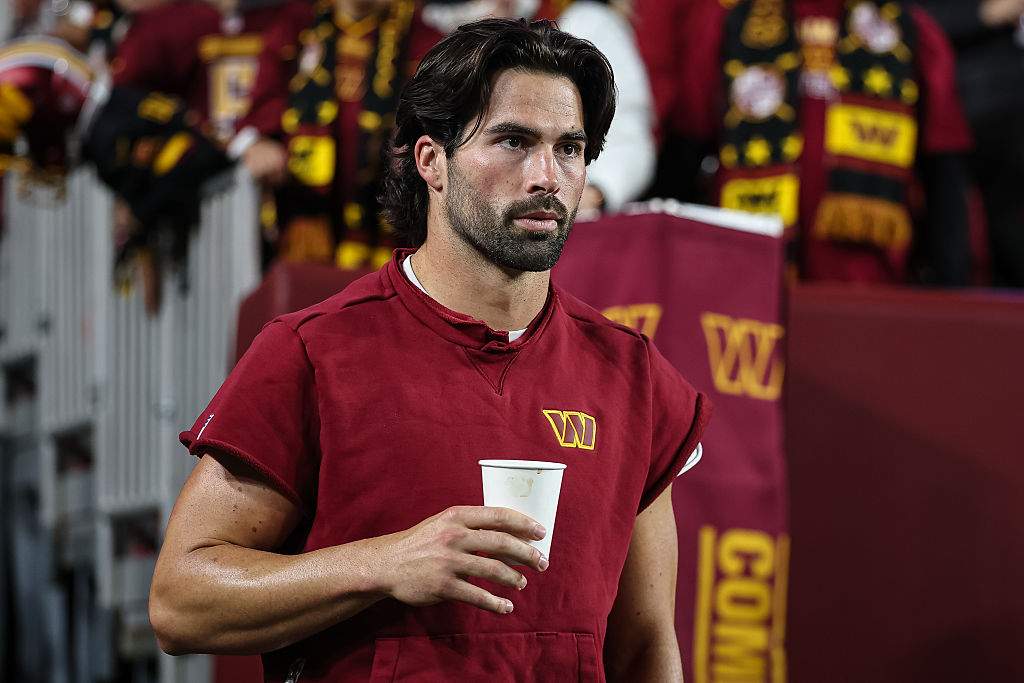
Which brings us to the news that broke across sports tickers and entertainment feeds alike, sounding at first glance like a fever dream cooked up by a network executive during a late-night brainstorm. Sam Hartman—former Wake Forest record-setter, Notre Dame signal-caller, Washington Commanders quarterback, and owner of arguably the most famous beard and jawline in college football history—has been named the new lead of The Bachelor. For another look on this event, see the recent update from The Hollywood Reporter.
On paper, it reads like a simple casting announcement. A handsome athlete steps off the turf and onto the manicured driveway of a California mansion. Cue the rose petals. Cue the dramatic orchestral swells. Cue the predictable internet jokes about hail mary passes and fourth-quarter comebacks.
Look closer, though. Beneath the glossy sheen of network publicity and the easy punchlines lies a fascinating collision of two ruthless American industries. When an active-era NFL quarterback trades his playbook for a velvet ring box, he isn't just looking for love on television. He is stepping into a psychological arena that makes a blitzing linebacker look polite.
The Anatomy of a Modern Quarterback Exit
To understand why Sam Hartman is standing in a tuxedo under the Malibu stars, you first have to understand the brutal math of professional football.
We like to pretend that NFL careers end in glory—a confetti shower, a tearful press conference, a bronze bust waiting in Canton. The reality is far quieter and infinitely more jarring. According to data long tracked by the NFL Players Association, the average career in the league lasts roughly 3.3 years. For undrafted free agents—the exact path Hartman walked when he signed with the Washington Commanders in 2024 after six grueling years of college ball—the margins are razor-thin. You live on the practice squad. You take reps with the third team. You pack your bags on a Tuesday because a front office needed an extra defensive back for Sunday's roster.
Consider a hypothetical Tuesday morning for a bubble quarterback in Ashburn, Virginia. Let us call this scene an educated reconstruction of life on the NFL fringe. The fluorescent lights of the facility hum at 5:30 AM. The coffee tastes like burnt chicory. You spend four hours breaking down film of a defense you will likely never face on Sunday, knowing that one pulled hamstring or one rookie draft pick in April can erase your locker nameplate before lunch. You have spent every autumn since you were eight years old being told that your worth is measured in completion percentages and third-down conversions.
Then, suddenly, the phone rings with a different kind of offer.
Sam Hartman was never a typical quarterback. During his college career—first rewriting the Atlantic Coast Conference record books at Wake Forest with 110 career touchdown passes, then transferring to South Bend to lead Notre Dame under the Golden Dome—he became something rare in modern sports. He became a crossover figure. Long before NIL deals turned college athletes into mini-conglomerates, Hartman possessed an effortless, old-Hollywood magnetism that made cameras linger on him during timeouts. Fans didn't just analyze his footwork; they dissected his hair care routine, his pre-game tunnel fits, and the stoic, slightly brooding calm he carried through triumph and heartbreak alike.
I have spent years covering both locker rooms and television production sets, and if there is one truth I have learned, it is that both environments run on the exact same fuel: manufactured urgency. Yet they demand opposite instincts. Football trains a man to hide every ounce of vulnerability behind a facemask. Reality television demands that he peel his chest open in front of six million viewers while a producer whispers questions from behind a boom mic.
Why ABC Needed a Different Kind of Leading Man
For nearly twenty-five years, The Bachelor has operated like an assembly line with a very specific blueprint. The franchise has historically favored corporate recruiters, pharmaceutical sales reps, former pilots, and the occasional retired athlete whose playing days were already fading into the rearview mirror. Think of Jesse Palmer, the current host of the franchise, who starred as the Bachelor back in 2004 while still technically an NFL quarterback for the New York Giants—a precedent that feels like ancient history in today's hyper-scrutinized media ecosystem.
In the two decades since Palmer handed out roses, the dating show has suffered from a quiet crisis of credibility. Audiences grew sharp. They spotted the rehearsed speeches. They recognized the contestants who arrived not with a suitcase full of dresses, but with a media kit and a target follower count. Ratings fluctuated as viewers grew weary of watching men recite therapy-speak they clearly learned the week before filming began.
ABC didn't just want a handsome face for its flagship season. The network needed gravity.
Hartman brings something you cannot coach in a pre-season media training session: scar tissue. Over six seasons of college football, he endured injuries that would have ended lesser careers. In August 2022, just weeks before his final season at Wake Forest, Hartman was sidelined indefinitely with Paget-Schroetter syndrome, a rare and potentially life-threatening blood clot condition in his subclavian vein. He underwent surgery to remove a rib and clear the clot, returned to the field a month later, and threw for 3,701 yards and 38 touchdowns that fall.
You do not go through a surgery that removes part of your ribcage just to play football unless you possess a terrifying level of resolve. Nor do you come out the other side looking at life quite the same way. When you have stared down a medical emergency at twenty-three, the manufactured drama of a cocktail party rose ceremony hits differently. You know what real pressure feels like. You know the difference between a crisis and an inconvenience.
That lived resilience is the secret weapon producers are banking on. When a man has actually faced mortality and the sudden death of his childhood dream, he tends to listen differently when someone sits across from him and tells him what they are afraid of.
The Invisible Playbook of the Bachelor Mansion
Still, toughness on a football field does not automatically translate to survival inside the Bachelor bubble. In fact, it can be a liability.
Let us pull back the curtain on how the show actually works, because most viewers only see the polished, forty-two-minute episodes edited months after the cameras stop rolling. Imagine walking into a mansion in Agoura Hills, California, with no phone, no internet, no music, and no books. Your entire circadian rhythm is dismantled. Rose ceremonies routinely stretch until four or five in the morning, leaving everyone involved sleep-deprived, emotionally raw, and surviving on adrenaline and sparkling water.
For an athlete accustomed to strict schedules—hydrate at 7:00, lift at 8:30, film at 10:00, sleep at 10:30—this environment is pure psychological warfare.
In football, you have an offensive coordinator in your headset telling you the play. You have eleven men around you working toward a single, measurable objective. On The Bachelor, there is no scoreboard. There is no film room to tell you if the woman crying on the couch is genuinely heartbroken or auditioning for a spot on Bachelor in Paradise. Every conversation is an audition, and the lead has to play quarterback, head coach, and general manager all at once, without a single trustworthy scout in the building.
I remember talking once with a former reality contestant who described the experience as living inside a snow globe that someone shakes every forty-five minutes. At first, the swirling glitter looks magical. By week three, you are dizzy, nauseous, and desperate for the floor to stop moving.
For Sam Hartman, the transition requires unlearning twenty years of muscle memory. A quarterback's entire job is to avoid turnovers—to protect the ball, read the blitz, and throw it away when the pocket collapses. Romance, especially the accelerated, pressure-cooked version demanded by network television, is nothing but turnovers. It requires throwing into double coverage without knowing if anyone is there to catch you.
What Sports Fans and Bachelor Nation Are Missing
The internet, true to form, immediately split into two camps when Hartman's casting made headlines.
On one side stood the die-hard college football and NFL faithful, many of whom viewed the move as a bizarre detour—or worse, a white flag on his pro football ambitions. To a certain subset of sports culture, trading shoulder pads for a boutonnieres feels like heresy. Why isn't he in a film room? Why isn't he fighting for a backup spot?
On the other side stood Bachelor Nation, thrilled by the aesthetic upgrade—let us be honest, social media practically melted down over the promotional photos—yet quietly skeptical about whether a twenty-something pro athlete is truly ready to settle down, or if he is simply launching his second career as a media personality.
Both sides are missing the bigger picture.
We live in an era where the wall between sports and entertainment hasn't just cracked; it has been bulldozed into dust. Look around the cultural square. Travis Kelce hosts game shows and dates the biggest pop star on the planet. Peyton and Eli Manning run a media empire from a couch. Jason Kelce transitioned seamlessly from anchoring the Philadelphia Eagles' offensive line to becoming one of the most ubiquitous faces on television. Athletes no longer wait until they are forty-five and grey-haired to build a life outside the white lines. They understand that athletic fame is a melting ice cube, and the smartest ones build a vessel to catch the water before it disappears.
Hartman is twenty-seven years old—old enough to have lived through real adult adversity, young enough to still carry the restless energy of a competitor who hates losing. By stepping onto The Bachelor, he isn't abandoning his identity as a competitor. He is simply changing the arena.
Think about the questions people immediately began typing into search bars the moment his name was announced. Did Sam Hartman retire from the NFL? How old is Sam Hartman? Where did he play college football? Is he actually looking for a wife?
Those questions aren't just idle trivia. They are the exact tensions that will drive every single episode of his season. Every time he sits down for a one-on-one dinner in a castle in Europe or on a beach in Costa Rica, that unspoken subtext will sit at the table like a third guest: Who are you when the stadium lights turn off?
The Vulnerability Trap
There is a specific kind of loneliness that only former or transitioning athletes understand.
For most of your life, you belong to a tribe. You share a locker room with eighty guys who know your exact weight, your exact injuries, your exact fears. You speak a private shorthand. You suffer together in July heat and celebrate together in November cold. Then, almost overnight, the tribe disperses. You are standing in a quiet apartment—or a sprawling California mansion—surrounded by people who know your highlight reel, your stats, and your Instagram handle, yet know almost nothing about the person inside the jersey.
That is the real test waiting for Sam Hartman. Not whether he can look dashing in a tailored tuxedo—we already know he can do that in his sleep. Not whether thirty women will vie for his attention—that is guaranteed by the casting department.
The real test is whether a man trained for two decades to project stoic invincibility can let his guard down long enough for someone to actually reach him.
If he plays it safe—if he treats the season like a game plan, saying all the right things, keeping his emotions tucked safely behind his ribs, avoiding mistakes—he will survive the filming schedule, collect a handsome paycheck, boost his public profile, and walk away with a hollow engagement that quietly dissolves six months later in a joint Notes app statement. We have seen that movie a dozen times. Nobody remembers the ending.
If, however, he brings the same reckless, full-hearted commitment to that driveway that he brought back onto the field in Winston-Salem after having a rib removed—if he allows himself to look foolish, uncertain, and genuinely desperate for a real connection—then television might just get the magic it has been chasing for years.
Under the Stadium Lights of Malibu
Picture the first night of filming. It is a scene repeated every autumn in the Santa Monica Mountains, yet it never loses its strange, electric charge.
The driveway has been hosed down so the asphalt gleams black under the studio lights. Limousines idle just out of frame, their engines purring softly in the cool Pacific air. Inside the foyer, producers check their clipboards. Sound technicians adjust transmitters.
And out on the stone steps stands Sam Hartman.
No helmet. No playbook strapped to his wrist. No offensive line standing between him and whatever comes barreling down that driveway next. Just a twenty-seven-year-old man adjusting his cuffs, taking one slow, deliberate breath as the headlights of the first limousine round the corner and cut through the dark.
The clock is running again.