The permission slips had been signed in blue ink, purple ink, crayon, and hurried pencil. They sat in a neat stack on the corner of a scuffed wooden desk, held together by a single brass paperclip. Tuesday morning smelled like autumn and damp wool. Twenty-four fifth-graders shoved past the classroom door with backpacks heavier than their owners, their voices bouncing off the cinderblock walls in a high, chaotic key.
At the center of it stood Mr. Miller.
He was thirty-four years old. He wore corduroy trousers with worn knees and a sweater that smelled faintly of cedar and black coffee. To a ten-year-old, he was an institution—someone who knew every species of oak tree by the shape of its leaf, who kept a jar of polished river stones on his shelf, and who treated every question about earthworms or gravity with the gravity usually reserved for state secrets. He believed in dirt. He believed that classrooms were too small to hold the world, and that children needed to touch the bark, feel the chill of moving water, and look up through a canopy of leaves to understand that they belonged to something older and larger than themselves.
The yellow school buses idled in the gravel lot, their exhaust pluming white against the October sky.
Three hours later, the yellow buses returned. But the air had changed.
There is a specific kind of silence that settles over a school parking lot when the worst thing imaginable happens. It is not a quiet of peace; it is a heavy, suffocating vacuum where sound refuses to travel. Police cruisers were already parked by the gymnasium doors, their blue lights rotating in slow, silent sweeps against the red brick walls. Parents began to arrive before the official notifications could crawl through the phone lines, drawn by intuition or a fractured text message, their faces pale and uncomprehending as they stepped out into the midday sun.
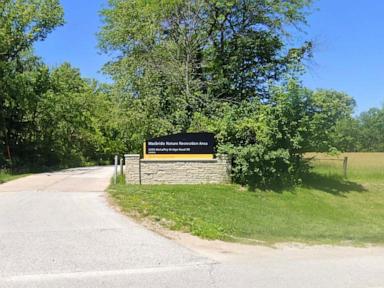
The nature reserve was supposed to be safe. It was a managed sanctuary of winding dirt trails, labeled flora, and gentle hills where generations of schoolchildren had chased dragonflies and eaten turkey sandwiches out of crinkled brown paper bags. It was a place designed for wonder, not tragedy.
Yet the wilderness does not negotiate with human intentions.
Weather in the foothills can turn with the flick of a wrist. A sudden, violent squall—the kind meteorologists call a microburst—had torn through the ravine just after noon. Old branches, heavy with wet autumn foliage, snapped without warning. Within seconds, a routine educational outing transformed into a desperate scramble against falling timber and rising flash waters in the creek bed.
In the chaos, amidst the shouting wind and the cracking of ancient limbs, choices were made in fractions of a second. Mr. Miller did not hesitate. Teachers do not train for catastrophe, but when the test arrives, they answer with their lives. He reached for a student who had stumbled on the slick embankment, pulling the child away from the path of a descending bough.
The forest absorbed the blow.
When the rescue teams finally cut their way through the tangled debris, the morning’s laughter was gone. The classroom on the second floor of the elementary school remained untouched, frozen in time at 8:15 AM. A half-finished drawing of a monarch butterfly rested on the front chalkboard. A row of blue jackets hung neatly from hooks in the hallway, waiting for owners who would not walk down that corridor again.
Grief in a small town does not arrive all at once. It seeps in slowly, through the cracks in daily routines.
The following morning, the sun rose with complete indifference. Across the district, alarms buzzed at six o'clock. Coffee pots gurgled. Millions of children across the country pulled on their sneakers, zipped their jackets, and climbed onto yellow buses, their minds occupied by spelling tests, soccer tryouts, and what was for lunch. Life demanded continuation. The machinery of civilization does not pause for broken hearts.
Yet, inside room 204, the air felt different.
The school superintendent held an emergency meeting that evening in the crowded gymnasium. Folding chairs squeaked against the varnished floorboards as hundreds of parents sat shoulder to shoulder, their hands knotted in their laps. Questions hung thick in the air, sharp and accusatory. Why were they out there when the forecast looked threatening? Who authorized the trail past the ravine? Where was the emergency shelter?
Anger is often the first line of defense against sorrow. It is easier to be furious than it is to accept that the universe is indifferent to our carefully laid plans.
A school board member, her voice shaking, tried to explain the unexplainable. She spoke of safety protocols, annual reviews, insurance riders, and risk assessments. She used words like compliance and mandate. But the parents were not listening to the vocabulary of bureaucracy. They were remembering small sneakers left by the front door. They were remembering the smell of damp wool and the bright, eager look in a child's eyes before they climbed onto a bus under a gray sky.
We live in an era obsessed with risk elimination. We pad playgrounds with rubber mulch, install tracking apps on phones, and sanitize every corner of childhood in an effort to wrap our children in bubble wrap. We demand guarantees from institutions, expecting schools to function as fortress-like incubators where danger is rendered extinct.
And yet, every parent knows the secret dread: you cannot protect a child from the world without also keeping them from experiencing it.
If you lock the doors, you keep out the wind, but you also miss the scent of pine after a rain. If you cancel every field trip, avoid every forest, and stay inside every time the sky looks uncertain, you create a sterile safety that costs something vital. Children need dirt under their fingernails. They need to see how the world works outside the glass screen of a tablet or the four walls of a classroom.
Mr. Miller knew this. It was why he fought for that trip. He knew that the appreciation of nature requires proximity to it, and proximity always carries a margin of risk. That is the haunting paradox at the heart of education and parenting. To teach a child to live is to expose them to loss.
Days later, makeshift memorials began to appear at the base of the flagpole outside the school. Piles of pastel-colored chalk, stuffed bears with sad button eyes, handwritten notes on loose-leaf paper, and small bouquets of wild asters wrapped in cellophane. Older students walked past in silence, their hands in their pockets, staring at the ground. Some of them cried openly. Others stood with blank expressions, trying to process a reality that felt structurally impossible. How could a Tuesday morning normal enough to start with cereal and a backpack end in eternity?
The empty desk in room 204 was eventually cleared.
It was done quietly, after the other children had gone home for the weekend. A box was filled with a watercolor painting of a blue whale, a half-used pack of colored pencils, and a notebook with dog-eared pages. The items were handed to a mother whose hands trembled so violently she could barely hold the cardboard flaps together.
In the weeks that followed, the district instituted a moratorium on all outdoor excursions. Permission slips were temporarily banned. The yellow buses stayed in the lot on Tuesdays. The hallways grew quiet during hours when laughter used to echo.
But safety policies cannot heal a community. They only manage the symptoms of fear.
The real work happened in the quiet conversations around kitchen tables at midnight. Parents held their surviving children a little tighter, kissed their foreheads a little longer, and forgave themselves for the petty arguments over bedtime or vegetables. They realized, with a sudden, aching clarity, how fragile the architecture of ordinary life truly is. We build our days on the assumption that tomorrow is guaranteed, constructing routines out of coffee cups and traffic jams, forgetting that everything we love is held together by invisible, breaking threads.
The nature reserve reopened after a month.
The storm-damaged branches were cleared away by park rangers with chainsaws. The mud on the embankment dried, hardened, and was covered over by a fresh layer of fallen leaves. Deer returned to the clearing. The creek ran clear and cold over smooth gray stones, paying no attention to history.
On a crisp November afternoon, a lone hawk circled high above the tree line, riding the thermals where the air meets the sky. Down on the trail, beneath the towering oaks, the forest floor was quiet, holding its breath in the cold autumn light.