January in Saskatoon does not forgive hesitation.
When the wind comes whipping off the South Saskatchewan River at forty below, the air tastes like frozen copper. Your eyelashes stick together before you can cross the street from your car to the front door of a restaurant. For decades, that brutal winter dictated how people in the Canadian prairies ate, thought, and dreamed about food. Luxury meant escaping the geography. A celebration dinner meant a thick cut of beef flown in from Alberta, paired with asparagus shipped three thousand miles from Peru, washed down with a Cabernet from Napa Valley. The prairie itself was treated like a giant, monotonous pantry that produced wheat, canola, and lentils for the rest of the world, while its own kitchens looked elsewhere for glamour.
Christie Peters looked at that frozen expanse and saw something entirely different.
She did not see a culinary wasteland. She saw an unmined goldmine hiding in plain sight beneath three feet of snow.
To understand what Christie Peters has done to the cultural fabric of Saskatchewan, you have to understand the quiet ache of prairie insecurity. Growing up in Saskatoon, there was always an unspoken rule that if you wanted to be great—truly, undeniably world-class—you had to leave. You went to Vancouver for the ocean and the sushi. You went to Montreal for the bistros and the late-night energy. You went to Toronto for the money. Staying behind felt like settling.
Peters left, too. She spent years cutting her teeth in high-pressure kitchens in Vancouver and Europe, learning the classical techniques, the relentless discipline, and the brutal choreography of fine dining. She learned how to break down whole animals, how to coax deep umami out of humble roots, and how to command a brigade of cooks when the ticket machine starts screaming at eight o'clock on a Friday night. By every traditional metric of the culinary industry, she had escaped. She had made it out.
Then, she did the most radical thing a prairie kid could do. She came home.
The Gamble on 20th Street
Imagine walking down 20th Street West in Saskatoon in 2012. Picture a neighborhood caught between its gritty, working-class history and an uncertain future. At the time, the Riversdale district was not the trendy, sunlit corridor of independent boutiques and pour-over coffee shops it is today. It was a place where storefront windows were often boarded up, where cabs sometimes hesitated to drop passengers after dark, and where opening an ambitious, chef-driven restaurant sounded less like a business plan and more like an act of self-sabotage.
That is where Peters and her partner, Kyle Michael, opened The Hollows.
They took over a faded, historic Chinese-Canadian diner—the Golden Dragon—and kept the vintage neon sign glowing outside like a beacon for the brave. Inside, they tore down the drop ceilings, exposed the raw bones of the building, and built a dining room that felt like an eccentric grandmother’s parlor colliding with a punk-rock apothecary. Preserved jars of pickled green strawberries and fermented wild mushrooms lined the shelves like glowing amber specimens.
The menu was a declaration of independence.
There was no imported sea bass. There were no out-of-season berries flown in on cargo jets. Instead, Peters built her kitchen around a strict, almost stubborn philosophy of hyper-locality. She forged direct relationships with small-scale Saskatchewan farmers, foragers, and ranchers who had been largely ignored by the mainstream hospitality industry.
Consider what happens next when a chef decides to cook exclusively with what survives a prairie climate. You lose the easy crutches of modern restaurant cooking. You cannot rely on fresh citrus in February. You cannot fall back on olive oil or fresh herbs shipped from California. You are forced to become an alchemist.
Peters turned to preservation, fermentation, and whole-animal butchery not as trendy buzzwords, but as survival tools. She cured pork belly from heritage pigs raised just outside the city limits. She turned chokecherries—a tart, astringent wild berry that most locals only knew from their grandparents' jelly jars—into complex, wine-like reductions that rivaled aged balsamic vinegar. She took pike and walleye pulled from icy northern lakes and treated them with the same reverence a Tokyo sushi master gives to bluefin tuna.
I remember the first time I sat at a worn wooden table inside The Hollows during a blinding February blizzard. Outside, the city was paralyzed. Inside, the room smelled of woodsmoke, rendered duck fat, and warm sourdough. A server placed a plate in front of me featuring roasted rutabaga—a vegetable I had spent my entire childhood actively avoiding—glazed in fermented birch syrup and topped with crispy, cured pig’s ear and shaved prairie cheese.
It was electric. It tasted of soil, frost, smoke, and time. For the first time in my life, I wasn't eating food that pretended to be from somewhere else. I was eating the exact place where my boots were planted.
The Architecture of a Food Movement
A single restaurant, no matter how brilliant, is just an anomaly. A movement requires infrastructure, mentorship, and an ecosystem that outlives the novelty of a hot opening.
As The Hollows gained national acclaim, landing on lists of Canada’s best restaurants and drawing food writers from Toronto and New York into the dead of a Saskatchewan winter, Peters didn't retreat into the comfortable ego of a celebrity chef. Instead, she doubled down on the neighborhood.
In 2015, just a few doors down from The Hollows, she opened Primal.
If The Hollows was an experimental laboratory of foraging and fermentation, Primal was a warm, boisterous love letter to Italian culinary traditions filtered entirely through a Saskatchewan lens. Think about that combination for a second. Italy is famous for cucina povera—the art of making extraordinary food out of simple, peasant ingredients. Saskatchewan is the breadbasket of North America, growing some of the highest-protein durum wheat and heirloom grains on the planet, yet almost all of that grain was being shipped overseas to be turned into pasta by someone else.
Peters closed the loop.
At Primal, she milled local heritage grains in-house to make fresh, extruded pasta by hand every single morning. She paired those noodles with wild boar ragù, aged prairie cheeses, and cured meats hung in her own charcuterie rooms. She proved that you didn't need to import flour from Naples to make world-class tagliatelle; you just needed to respect the farmer twenty miles down the highway who grew the wheat.
Let’s look at the invisible economics of this choice. When a traditional restaurant buys a case of imported pasta or factory-farmed meat through a massive multinational distributor, roughly eighty cents of every dollar leaves the local economy immediately. It disappears into corporate supply chains, trucking conglomerates, and distant shareholders. When a chef like Peters buys whole hogs directly from a family farm near Rosthern, or wild mushrooms from a forager near Prince Albert, that money stays in the soil. It pays for a neighbor’s tractor repair. It keeps a small rural school open. It turns a restaurant from a mere consumer of resources into an economic engine for an entire region.
The Weight of the Crown
It is easy to romanticize the farm-to-table movement from the comfort of a dining room chair, holding a glass of natural wine under warm Edison bulbs. The reality behind the kitchen doors is far heavier, messier, and frequently terrifying.
Running independent restaurants in a small market with brutal winters is not a smooth upward trajectory. It is a daily knife-fight with thin margins, supply chain disruptions, and physical exhaustion. When you commit to whole-animal butchery, you cannot just order fifty tenderloins for a busy Saturday night. You have to buy the entire pig, which means you have to be creative enough to sell the trotters, the cheeks, the liver, and the skin on Tuesday night when the dining room is half-empty because a polar vortex just rolled in.
When the global pandemic hit in 2020, the hospitality industry faced an existential reckoning. Dining rooms went dark overnight. For restaurants built on the intimate, slow-crafted magic of in-person hospitality, takeout boxes felt like a cruel compromise.
And then came the hardest decision of all. In late 2020, after eight years of reshaping Saskatoon’s culinary identity, Peters and Michael closed The Hollows.
For the local community, it felt like losing a landmark. People mourned the Golden Dragon neon sign, the weird pickled things on the walls, and the sense of discovery that came with every changing menu. Critics and outsiders wondered if the momentum had broken. Had the prairie winter finally won?
Not even close.
Closing The Hollows wasn't a retreat; it was an evolution. Running two massive, labor-intensive concepts side by side while raising a family and navigating an industry in crisis had pushed the limits of human endurance. By focusing their energy on Primal and launching new, nimble projects—including Pop Wine Bar, a sunlit, laid-back space dedicated to low-intervention wines and snackable, hyper-local plates—Peters demonstrated a rare kind of leadership. She showed a younger generation of cooks that sustainability isn't just about how you treat the soil; it’s about how you treat yourself and your staff.
The Ripple Effect Across the Prairies
Walk into almost any ambitious restaurant in Saskatoon, Regina, or even smaller prairie towns today, and you will see Christie Peters’ fingerprints on the menu, whether she trained the chef or not.
Before she returned to 20th Street, the phrase "Saskatchewan cuisine" sounded like the setup to a joke. Today, it is a badge of honor. A whole generation of young chefs, bakers, brewers, and farmers grew up watching her refuse to apologize for where she was from. They saw her take the humble ingredients of their own backyards—sea buckthorn, wild rice, bison, lentils, honey, heritage wheat—and elevate them to art.
Consider the psychological shift that occurs when a community stops looking outward for validation. For generations, prairie culture was defined by stoicism and modesty—a quiet belief that you shouldn't get too big for your boots. Peters broke that spell. She proved that you can be deeply rooted in your community and fiercely ambitious at the same time. You don't have to water down your vision to make it palatable to a small market, and you don't have to abandon your home to find greatness.
She taught diners to ask different questions. Instead of asking why there weren't fresh oysters on the menu in November, people started asking which farm raised the pork on their plate and what kind of wood was used to smoke it. They learned to love the rhythm of the seasons, even when the winter season meant root vegetables, cured meats, and preserved berries. They realized that limitation isn't the enemy of creativity; it is the mother of it.
The Final Chord
If you want to understand the true legacy of Christie Peters, don't look at the national awards, the magazine profiles, or the glowing reviews from out-of-town critics.
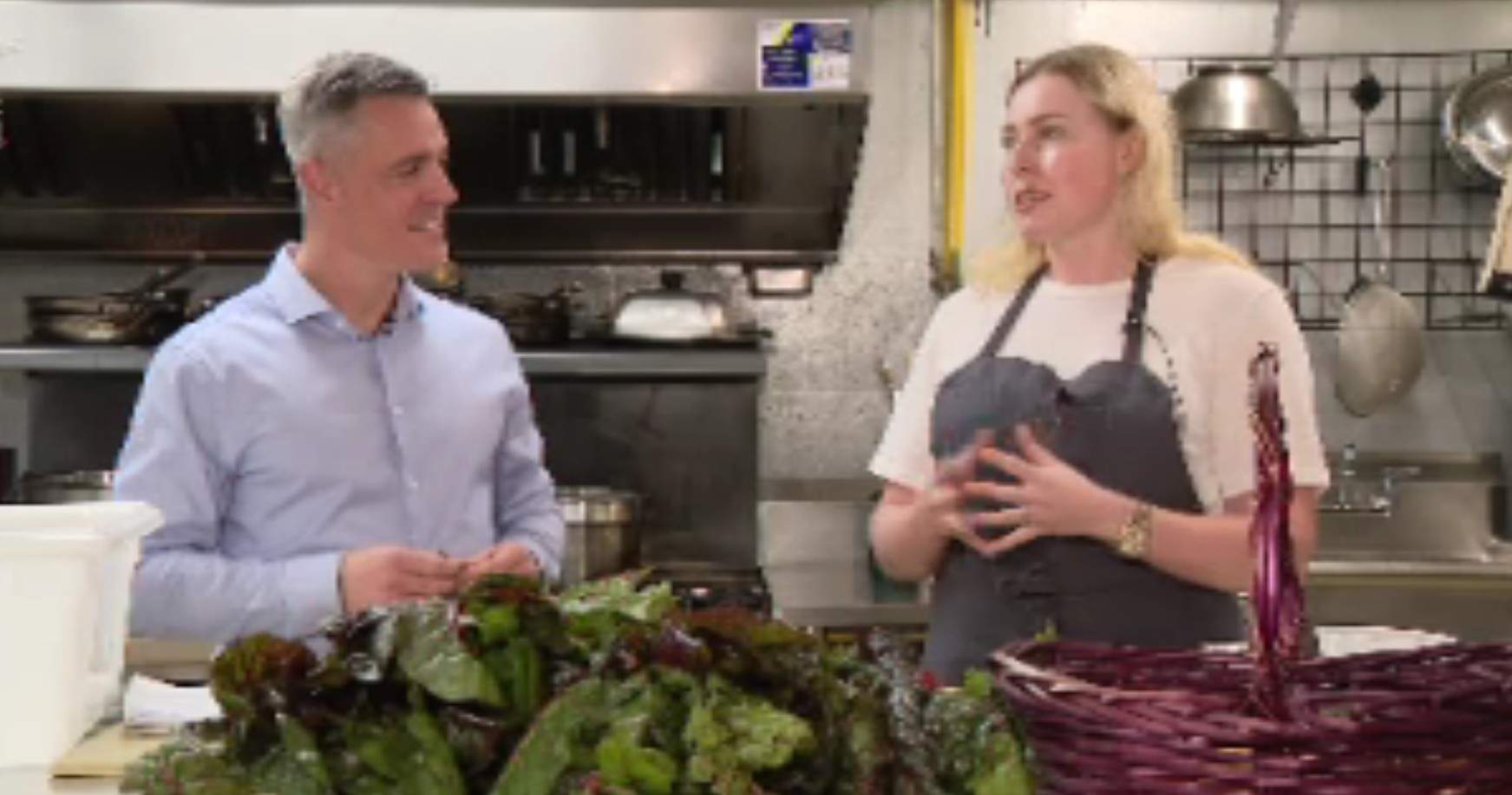
Instead, stand in the alley behind Primal on a crisp October morning just as the sun is coming up over the South Saskatchewan River. Watch a local farmer back a dusty pickup truck up to the kitchen door, unloading crates of late-harvest squash, knobby Jerusalem artichokes, and freshly milled flour still warm from the stone. Watch a young line cook—someone who grew up three hours away in a tiny farming town and used to think they had to move to Toronto to have a real career—step out into the cold air, inspect the produce with a practiced eye, and carry it inside to begin the day’s prep.
The wind is already starting to turn cold. Winter is coming, just as it always does.
Inside the kitchen, the stoves are lit, the pasta water is coming to a boil, and nobody is wishing they were anywhere else.