The rain in Dover smells like diesel, wet wool, and salt.
If you stand near the port on a Tuesday morning in late autumn, you can hear the low, rhythmic thrum of idling engines stretching back toward the white cliffs. Inside those cabs sit men and women with lukewarm coffee in thermos flasks and folders stuffed with customs declarations on their dashboards. They wait. Sometimes they wait for forty minutes. Sometimes they wait for six hours.
For nearly a decade, the word "Brexit" was treated like an abstract noun—a geopolitical chess match played in television studios, parliamentary chambers, and Brussels conference rooms. People argued about sovereignty, regulatory autonomy, and constitutional supremacy as if those ideas floated effortlessly above the ground, untouched by mud or friction.
They do not float. They land on dashboards in Dover. They land on kitchen tables in Manchester and Rotterdam. They land in the quiet panic of a twenty-two-year-old violinist in London who suddenly discovers that touring three European cities in a week requires more carnets, visas, and upfront cash deposits than her quartet will earn in an entire summer.
Now, years after the papers were signed and the champagne corks were swept off the floor, the estranged partners are sitting back down across from one another. Britain and the European Union are holding a high-stakes summit to patch up their fractured relationship. The headlines call it a "reset." Diplomats call it "pragmatic recalibration."
To understand what is actually happening in those wood-paneled rooms, you have to strip away the diplomatic jargon and look at what happens when a noisy, bitter divorce forces two people who still share a driveway to figure out how to get their cars out in the morning.
The Architecture of a Slow Burn
Consider a hypothetical small-business owner—let us call her Clara—who runs a specialty cheesemaking operation in Somerset. Before 2020, Clara sold forty percent of her aged cheddar to independent grocers in France, Belgium, and Germany. Shipping a pallet to Lyon was roughly as complicated as shipping one to Edinburgh. You printed an invoice, loaded the van, and waved goodbye to the driver.
Then came the Trade and Cooperation Agreement. Overnight, Clara’s cheddar became a third-country animal-origin export.
Suddenly, every single shipment required an Export Health Certificate signed by a qualified veterinarian—a profession already facing a severe shortage across the United Kingdom. Each certificate cost hundreds of pounds. If a single box on a fourteen-page form was ticked incorrectly, or if the ink smudged in the rain at Calais, the entire pallet could be rejected, impounded, or destroyed at the border. Within eighteen months, Clara stopped exporting to the continent altogether. The math simply stopped working.
Multiply Clara’s vanished pallets by tens of thousands of farms, chemical manufacturers, automotive suppliers, and logistics firms, and you begin to see the invisible weight dragging down the British economy. Official estimates from the UK’s own Office for Budget Responsibility have consistently projected that leaving the EU’s single market and customs union reduces the country’s long-run productivity and trade intensity by roughly four percent compared to remaining inside. Four percent sounds small on a spreadsheet. In the real world, four percent is the difference between a thriving high street and boarded-up storefronts, between a well-funded hospital ward and a three-month waiting list.
Across the English Channel, the pain was quieter, more diffused, yet unmistakable. European universities watched British research partners—historically among the strongest scientific institutions on earth—get locked out of continental funding networks before a partial deal was later salvaged. Dutch flower growers, French fishermen, and German carmakers watched supply chains that had hummed along for forty years suddenly develop a persistent, expensive limp.
Nobody won the divorce. Everyone just learned how to limp.
Why Pride Had to Blink
When two sides spend years shouting slogans across a widening trench, climbing out requires a very specific kind of courage—or a very specific kind of desperation. In this case, both arrived at the same time.
Look at the world outside Europe’s windows. A brutal land war grinds on in Ukraine, redrawing the map of continental security for the first time since 1945. Across the Atlantic, American foreign policy has grown increasingly unpredictable, forcing European nations to confront an uncomfortable truth: they can no longer assume Washington will automatically underwrite their defense or align with their trade interests. Meanwhile, global supply chains are fracturing along geopolitical fault lines, and state-subsidized industrial giants in Asia are reshaping manufacturing from steel to electric vehicles.
In that kind of storm, a prolonged cold war between London and Brussels starts looking less like a matter of principle and more like self-sabotage.
Britain needs growth. The UK government inherited sluggish economic expansion, strained public services, and voters whose patience for ideological purity evaporated the moment their grocery bills doubled. You cannot tax or cut your way out of stagnation forever; eventually, you have to make it easier for your businesses to buy and sell things with your largest next-door neighbor. Even after years of friction, the European Union still accounts for roughly half of all British trade. Geography, as diplomats love to remind each other in private, is stubborn. No trade deal signed with a nation ten thousand miles away can fully replace a market twenty-one miles across the water.
Brussels has its own ledger of anxieties. The EU needs Britain’s military weight, its intelligence apparatus, its diplomatic reach, and its seat on the United Nations Security Council. When Russian drones test NATO airspace or cyberattacks target European infrastructure, nobody in Paris, Berlin, or Warsaw cares how Brussels and London feel about shellfish quotas. Security does not respect customs borders.
So the summit happens. Not out of sudden romance, and certainly not because Britain is rejoining the European Union—a political non-starter that neither London is proposing nor Brussels is offering. Instead, this is an exercise in adult realism. It is an acknowledgment that leaving a marriage does not mean burning down the neighborhood.
What Is Actually on the Table
Strip away the grand speeches about "shared values" and "historic ties," and the negotiations come down to a handful of intensely practical—and politically treacherous—questions.
First, defense and security. Both sides want a formal security pact. Think of it as an institutional bridge allowing British and European defense ministers to coordinate weapons procurement, military mobility, cyber defense, and sanctions policy without having to reinvent the wheel every time a crisis erupts. For Europe, it locks Britain’s formidable military and intelligence capabilities closer into continental defense planning. For Britain, it opens the door for British defense contractors to participate more easily in joint European procurement funds at a moment when defense budgets across the continent are surging.
Second, the invisible wall around food and plants. In trade jargon, these are called sanitary and phytosanitary rules—or SPS agreements. In plain English, they are the rules governing whether a truckload of British sausages or Dutch tulip bulbs needs to be stopped, opened, inspected, and stamped at the border. Negotiating a veterinary agreement that aligns standards would strip away mountains of paperwork for farmers, supermarkets, and food exporters on both sides. It is the single fastest way to reduce friction at ports like Dover and Rotterdam without crossing Britain’s red lines on rejoining the single market.
Third, the movement of young people. This is where emotions run hottest. Brussels has pushed hard for a youth mobility scheme—a reciprocal arrangement allowing citizens aged eighteen to thirty to live, study, and work across the Channel for a limited period, much like the agreements the UK already holds with countries like Australia, Canada, and South Korea.
Mention "freedom of movement" in British politics, however, and alarms go off in every party headquarters. British leaders insist that free movement is dead and buried, wary of any policy that opponents could paint as sneaking back into the EU through the side door. Yet ask a twenty-four-year-old British graduate trying to land an internship in Berlin, or a Spanish hospitality worker trying to spend a summer in Cornwall, and the human cost of that political fear becomes painfully clear. An entire generation lost the effortless ability to cross a narrow stretch of water to learn a language, fall in love, or build a career.
Fourth, energy and climate. The North Sea is rapidly turning into one of the world’s largest clean-energy powerhouses, bristling with offshore wind farms and undersea interconnectors. Linking British and European electricity grids and emissions-trading systems more tightly is sheer common sense. Electrons do not carry passports, and fighting climate change with disconnected grids is like trying to bail out a boat with a slotted spoon.
The Trap of Remembering Who Was Right
I remember standing in a crowded pub in east London on the night of the referendum in June 2016, watching the results flicker across a muted television screen while rain lashed the windows. Half the room looked stunned, as if the floor had quietly vanished beneath their chairs. The other half looked triumphant, convinced they had just reclaimed control over their own destiny.
For years afterward, both sides remained trapped inside that night. Every economic hiccup was blamed on Brexit by one camp and defended as temporary growing pains by the other. Every negotiation with Brussels became a loyalty test. Give an inch on regulatory alignment, and you were accused of betrayal. Hold the line on every technical rule, and you were accused of economic vandalism.
That psychological trap is the real obstacle sitting at the summit table today.
To understand why, picture two neighbors who spent five years suing each other over a six-inch strip of fence between their gardens. By the time the lawyers are finished, neither neighbor remembers why the fence mattered, both are out tens of thousands of pounds, and neither can admit the lawsuit was a mistake without feeling like a fool. If one neighbor finally walks over with a pair of hedge trimmers and says, "Look, the branches are knocking down both our gutters—let’s cut them back together," the hardest part is not trimming the hedge. The hardest part is swallowing the pride required to walk across the lawn.
Brussels has its own version of that pride. Having watched Britain agonize over its exit for years, European leaders are deeply skeptical of any arrangement that looks like "cherry-picking"—enjoying the perks of the European club without paying the membership fees or accepting the rules. Every concession from the EU comes with a price tag: regulatory alignment, financial contributions to joint programs, or acceptance of European Court oversight where single-market rules apply.
And in London, every price tag carries political risk. Opponents stand ready to scream "surrender" the moment a British minister agrees to follow a European food standard or accept a European court ruling on a technical trade dispute.
Why This Matters Even If You Never Cross the Channel
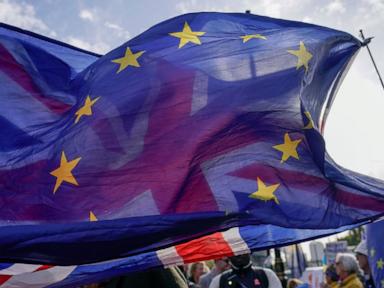
It is easy, especially from a distance, to dismiss a UK-EU summit as dry diplomatic housekeeping—another round of grey suits shaking hands in front of flags before disappearing behind closed doors.
Don't fall for that illusion.
What happens between London and Brussels is a stress test for whether modern democracies can course-correct without tearing themselves apart. We live in an era that rewards outrage over repair. Social media algorithms amplify the sharpest voices, the cleanest ideological lines, the most uncompromising slogans. Nuance does not trend. Compromise rarely goes viral.
Yet real life—the life where goods move on ships, nurses care for patients, researchers cure diseases, and young people look for work—runs entirely on compromise. It runs on boring, meticulous, unglamorous agreements that let two imperfect neighbors coexist without tripping over each other every morning.
If Britain and the European Union can build a durable, practical partnership out of the wreckage of a bitter separation, it proves that political decisions are not permanent tattoos. Mistakes can be softened. Rough edges can be sanded down. Grown-ups can look at the evidence on the ground—the stalled trucks, the shuttered export lines, the isolated labs—and quietly adjust course without needing anyone to kneel in apology.
If they fail, locked once again into old grievances and performative toughness, the cost will not be paid by the politicians holding press conferences under crystal chandeliers.
It will be paid at four in the morning on a damp Tuesday in Dover, where a driver sits behind the wheel of a forty-ton lorry, engine idling, staring at a red brake light two hundred yards ahead, waiting for someone to stamp a piece of paper so he can finally go home.