Dirt gets under your fingernails. It stays there for days, hiding in the crescent curves, refusing to leave no matter how many times you wash your hands after mending a fence line at dawn.
Most people think of corporate boardrooms as glass boxes floating entirely detached from the earth, places where numbers dance on spreadsheets and green is just a color code on a financial statement. But walk out to the edges of the Midwest when the frost is lifting. Look at a stretch of tallgrass prairie that hasn't seen a plow in a century. Then look at the ledger that keeps the lights on at the supercenter down the highway.
Sometimes, change doesn't arrive with a megaphone. Sometimes it arrives in the quiet crunch of gravel under heavy tires, driven by people who realized that if you break everything, eventually you run out of things to sell.
Consider what happens next: a million acres of land sounds like a cartographic abstraction until you try to walk it.
Picture Elena, a conservation field manager whose boots are permanently caked in a stubborn mix of black Iowa loam and clay. She spends her Tuesdays kneeling in fields that were once slated for industrial sprawl or intensive, nutrient-stripping row crops, checking root depths and monitoring soil microbes. When corporations talk about footprints, they usually mean carbon emissions lingering in the stratosphere or plastic waste washing up on foreign shores. Elena deals with a different kind of footprint. She deals with the physical weight of a retail empire trying to reconcile its sprawling existence with the very ground that sustains it.
For decades, the math was simple, brutal, and destructive. You paved over the meadow to build the parking lot. You bought the cheapest grain grown with the heaviest chemical fertilizers to stock the aisles. You treated nature as an infinite warehouse with an unlocked back door.
Then the math stopped working.
Rivers choked on runoff. Pollinator populations plummeted, leaving orchards struggling to set fruit. The soil lost its memory of how to hold water, turning gentle spring rains into flash floods that washed livelihoods downstream. The old way of doing business was eating its own foundation.
That realization birthed a massive, quiet shift. It is easy to cynicism-shrug at corporate sustainability pledges. We have all seen the greenwashed commercials featuring pristine mountains and acoustic guitars, designed to make you feel good about buying mass-produced goods wrapped in three layers of polyethylene. Skepticism is a survival trait in the modern marketplace.
Yet, looking past the marketing gloss reveals a harder, more interesting reality. When a retail giant wielding unprecedented supply chain gravity decides to tie its financial survival to land stewardship, the ripple effects reshape millions of acres. It is not charity. It is enlightened self-preservation disguised as a conservation pledge.
To understand why a retail behemoth cares about two point two million acres of restored and protected land, you have to look at the grocery aisle.
Every head of lettuce, every gallon of milk, and every cotton t-shirt begins in dirt. If that dirt dies, the supply chain breaks. It is that simple. When topsoil erodes away into the Gulf of Mexico, crop yields drop. When aquifers run dry because of archaic irrigation practices, food prices spike. The corporate balance sheet is inextricably tethered to the biological health of the planet, whether Wall Street wants to admit it or not.
So how do you scale conservation across a continent without buying every acre yourself?
You change the rules of engagement for the people who work the land.
Imagine a farmer named Marcus standing on his family's generational farm in Nebraska. For thirty years, Marcus farmed the way his father did, turning the earth over every autumn, leaving bare brown fields exposed to the howling winter winds. It felt productive. It looked neat and tidy from the county road. But every spring, the best part of his farm ended up in the roadside ditch.
When Marcus partnered with sustainability initiatives backed by corporate supply chain incentives, the shift felt unnatural at first. No-till farming. Cover crops like cereal rye and crimson clover that blanket the fields through the cold months instead of leaving them bare.
At first, his neighbors whispered at the coffee shop. The fields looked messy. They looked untamed.
But by the third season, something shifted. The soil changed color, darkening into a rich, sponge-like humus that smelled like rain on hot asphalt. When the summer drought hit hard, baking neighboring farms into cracked concrete, Marcus's fields held onto their moisture. His input costs for synthetic fertilizers dropped because the living soil was doing the heavy lifting, fixing its own nitrogen and feeding the crops naturally.
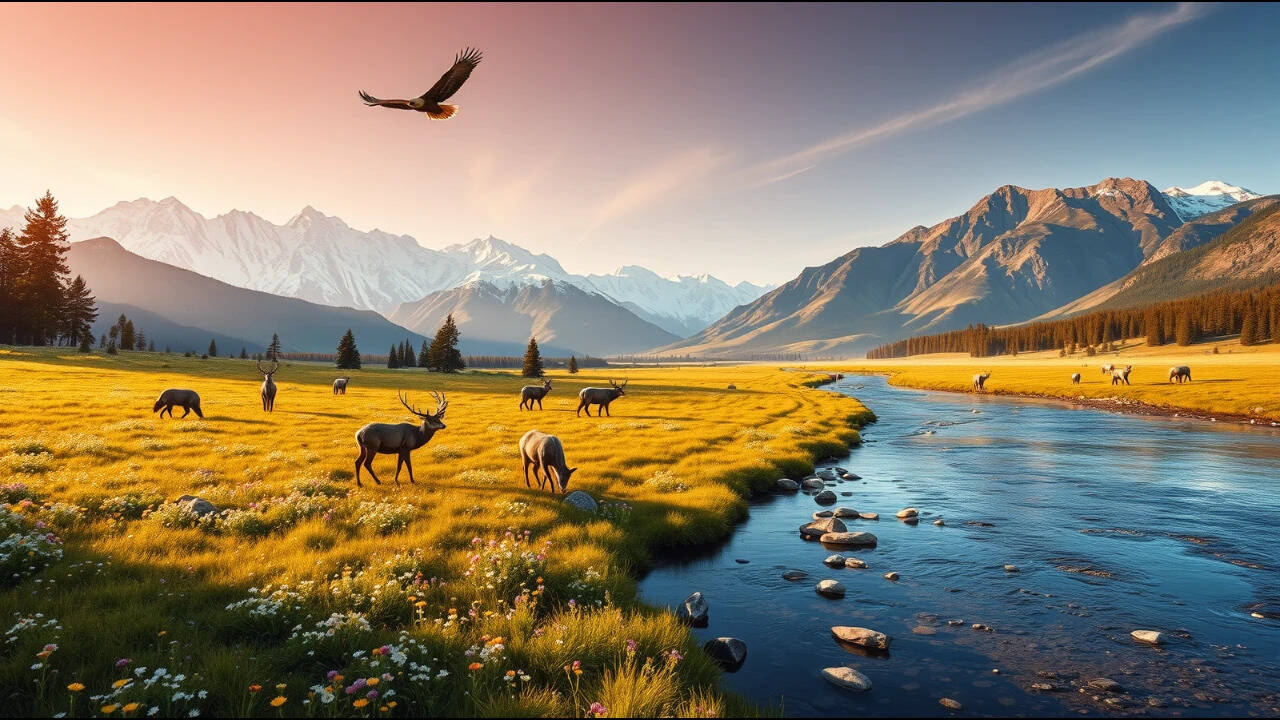
That is what two point two million acres of protected and restored land actually looks like on the ground. It is not a fenced-off national park where humans are barred from entering. It is working land, operating smarter. It is grasslands managed with rotational grazing that mimics the ancient movements of bison herds, building deep root systems that lock carbon safely away beneath the sod. It is forest acreage managed to prevent catastrophic wildfires while maintaining timber yields.
The numbers are staggering on paper. Two point two million acres is an area larger than the state of Delaware. It represents millions of tons of greenhouse gases pulled out of the air and stored safely in the earth. It represents countless migratory birds finding resting spots along flyways that were once unbroken stretches of concrete and monoculture.
Yet the true metric of success is found in the quiet details. It is the return of the northern bobwhite quail to a fence line in Missouri where silence had reigned for a decade. It is an underground fungal network waking up after years of chemical starvation.
Of course, the story is far from finished.
We are standing at a strange crossroads in human history. The forces of ecological degradation are powerful, driven by an insatiable global demand for cheap goods and fast convenience. A couple million acres, while monumental, is still just a fraction of what needs healing. Critics rightly point out that while supply chains are getting cleaner at the edges, the core engine of hyper-consumption keeps churning out plastic and carbon at an alarming rate.
You cannot offset your way out of a planetary crisis. Conservation without structural transformation is merely rearranging deck chairs on a sinking ship.
The real test of this movement will not be whether corporations can hit their acreage milestones in public relations reports. The test will be whether these practices become the default way of doing business for every farmer, rancher, and manufacturer on the planet, long after the press releases have faded from memory.
Think about the dirt under your fingernails again.
It takes five hundred years to form a single inch of topsoil, and only one heavy rainstorm to wash it away if you treat the earth like an adversary instead of a partner. For generations, modern commerce treated nature as an external cost to be minimized. Now, slowly, painfully, and imperfectly, we are learning that we are part of the ecosystem we are trying to exploit.
The wild is not a place you visit on vacation. It is the life support system humming quietly in the background of every grocery store, every logistics hub, and every human life. When we give a fraction of that wild back its breathing room, we are not just saving the bees or the topsoil.
We are saving ourselves.