The envelope arrives in the mail with a distinct lack of drama. It is a thick packet of paper, neutral and official, dropped onto a kitchen counter in Fresno or a dining table in San Diego. To the casual observer, it is just a primary ballot. But to the millions of Californians opening it, that piece of paper represents a high-stakes calculation about survival in a state that feels increasingly impossible to afford.
For months, the conversation around the dinner table has been the same. Gas prices are climbing again, nudged upward by conflicts half a world away in Iran. The home insurance policy that used to be a given is suddenly canceled, another casualty of a drying climate and fleeing providers. Rent is a looming shadow. It was against this backdrop of quiet anxiety that voters cast their ballots in a primary election that many expected to spin into absolute chaos. You might also find this similar article insightful: The Anatomy of Populist Rhetoric in Geopolitical Friction A Analytical Breakdown of the Henry Nowak Case.
But when the initial dust settled, a familiar name emerged from the noise.
Xavier Becerra, the mild-mannered veteran of both Sacramento and Washington, secured his spot in the November general election. Securing nearly 27% of the vote with about two-thirds of the ballots counted, Becerra pulled off a striking political resurrection. Only two months prior, he was a footnote in the polling data, hovering in the single digits, largely ignored by a public distracted by flashier, louder campaigns. As reported in detailed reports by Reuters, the results are notable.
His sudden ascent reshapes the battle for the leadership of the world’s fifth-largest economy. It is a reminder that in politics, as in life, the quietest person in the room is sometimes the one waiting for everyone else to wear themselves out.
The Cracks in the Concrete
To understand how a career politician went from a polling afterthought to the frontrunner for governor, you have to look at the collapse of what came before. The Democratic field was supposed to belong to Representative Eric Swalwell. He had the momentum, the visibility, and the institutional backing. Then came the sudden political implosion, triggered by allegations of sexual misconduct that forced him out of the race and out of Congress entirely.
When a frontrunner vanishes overnight, it creates a vacuum. Political vacuums are violent things; they pull in money, ambition, and desperation in equal measure.
For a moment, California Democrats stared down a genuine nightmare. The state utilizes a top-two primary system, meaning the two highest vote-getters advance to November regardless of their party affiliation. With a fractured, sprawling field of more than sixty candidates, the terrifyingly real possibility emerged that two Republicans could slip through the middle and leave the deep-blue state without a Democrat on the fall ballot. Party Chair Rusty Hicks began publicly turning the screws on lower-polling candidates, practically begging them to drop out to save the party from itself.
Becerra refused to budge.
Consider the calculation required to stay in a race when your own party establishment is telling you that your presence is a liability. It requires a specific kind of stubbornness, a trait Becerra likely picked up growing up in Sacramento as the son of Mexican immigrant parents. He pitched himself not as a radical disruptor, but as an underdog with a resume. He stayed in the fight, waiting for the institutional panic to turn into institutional logic. When Swalwell departed, the establishment did exactly what Becerra expected: they looked around for the safest, most experienced pair of hands available. Labor unions and Latino legislative leaders coalesced behind him, providing the financial and organizational baseline he needed to rocket to the top.
The Cost of the Status Quo
Yet, the enthusiasm for Becerra is far from universal. To many voters, he represents the very system that has allowed California’s daily realities to grow so painful.
Walk through any major municipality in the state, and the crisis is impossible to ignore. Tents line the sidewalks beneath glittering tech offices. It is an ambient tragedy that everyone sees but no one seems to know how to fix. During the debates, rivals pushed Becerra on this reality, asking how he would handle a homelessness crisis that has expanded substantially over the last several years. His response was telling, handing current Governor Gavin Newsom an "A for effort" on the issue.
To a voter wondering if they can afford to stay in the state another year, an "A for effort" feels less like a solution and more like an excuse.
The criticisms leveled against him do not stop at state lines. His tenure as the federal Health and Human Services Secretary under Joe Biden remains a prime target for his opponents. During the primary, rival campaigns repeatedly pointed to his agency’s handling of a massive influx of unaccompanied migrant children in 2021. The federal shelters were plagued by reports of inadequate living conditions, and worse, the agency failed to thoroughly vet some of the sponsors with whom children were placed. Some of those children were later discovered working dangerous, exploitative industrial jobs across the country.
It is a heavy piece of baggage to carry into a general election. It allows his opponents to frame him not as an experienced administrator, but as a bureaucratic insider who looked away when the details mattered most.
The Clash of Realities
The true nature of the November election depends entirely on who secures the second spot on the ballot, a prize currently contested in a grueling, slow-motion vote count.
On one side stands Steve Hilton, a former Fox News commentator who carries the endorsement of Donald Trump. Hilton holds a razor-thin margin for second place with roughly 26.4% of the vote. He represents the voice of absolute frustration, tapping into the anger of a Republican minority that feels entirely locked out of California’s future. For Hilton, Becerra is the ultimate symbol of a stagnant status quo.
On the other side is Tom Steyer, the billionaire climate activist who has already poured a staggering $215 million of his personal wealth into this primary alone. Steyer is hovering just behind at 21%, gaining ground as election workers painstakingly process the millions of late-arriving mail-in ballots that traditionally skew Democratic.
The contrast between these potential matchups is stark.
If Steyer catches Hilton, the fall election will become an expensive, bruising civil war within the Democratic family. It will be a philosophical battle between Steyer’s progressive, climate-first vision—backed by the ideological descendants of Bernie Sanders—and Becerra’s pragmatism. Steyer has already begun hammering Becerra for accepting money from corporate special interests and for signaling a willingness to slow down the state's aggressive greenhouse gas mandates to keep current gas prices from suffocating working-class drivers.
If Hilton holds his lead, the dynamic flips completely. In a state where registered Democrats outnumber Republicans nearly two-to-one, a matchup against a Trump-endorsed opponent makes Becerra the overwhelming favorite. It allows him to pivot away from defending his record on local problems and return to his favorite role: the chief legal warrior against the federal administration. As state attorney general, Becerra filed over 120 legal actions against Donald Trump's first administration, fighting on everything from immigration policy to environmental regulations.
The Uncounted Future
Right now, the election sits in a distinctively Californian limbo. More than three million ballots remain uncounted. The state’s laws allow mail-in ballots to be counted up to a week after election day, provided they were postmarked by the time the polls closed. It is a slow, meticulous process designed to ensure every voice is counted, but it leaves the political machinery of the state humming with nervous energy.
Donald Trump has already stepped into the void, making familiar, unsubstantiated claims of election fraud regarding the length of the count. Federal prosecutors have noted they are looking into allegations, adding another layer of national tension to a local race.
But away from the microphones and the cable news studios, the significance of this moment remains intensely personal. If Becerra wins in November, he will become the first Latino to be elected governor of California in more than a century. In a state where nearly 40% of the population identifies as Latino, that milestone is more than a statistic. It is a long-delayed reflection of the people who actually build, feed, and run the state.
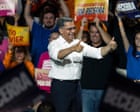
At his election night gathering in Los Angeles, Becerra looked out at his supporters and called his survival in the race an "everyday miracle." He spoke of California as a place that regularly makes the improbable seem inevitable.
It was a good line, delivered with the easy confidence of a man who has spent thirty-five years navigating public life. But the true test of that miracle lies ahead. Whether he faces the immense wealth of Steyer or the populism of Hilton, Becerra will eventually have to move past the poetry of the campaign trail. He will have to convince a weary, over-taxed electorate that the man who represents the establishment is capable of fixing the house that the establishment built.
The ballots will continue to be sorted, stacked, and scanned in quiet rooms across the state. The numbers will tick upward, a few thousand at a time, until the choice is final. But for now, the quiet underdog has taken the center stage, and the state waits to see what he will do with the spotlight.
.jpg)