Silence.
That is the first thing you notice when a modern assembly line stops, not with the cinematic shriek of grinding metal, but with the sudden, suffocating hum of fluorescent lights overhead and the confused murmur of men in steel-toed boots checking their watches.
Consider a hypothetical scene—one playing out in quiet variations across the American Midwest right now. Picture a plant floor outside Toledo, Ohio, where fifty-four-year-old Marcus Vance has spent half his life overseeing the precision assembly of electric traction motors. Marcus knows the exact weight of a rotor before he picks it up. He knows the smell of hot copper windings and machine oil. For the past three weeks, however, Marcus has been paid to sweep floors and reorganize inventory bins because a crate of gray, metallic blocks—each no larger than a deck of playing cards—failed to clear customs in Shanghai.
Those blocks are neodymium-iron-boron magnets. You cannot see them when you step into your car, unlock your phone, or board a commercial airliner, yet without them, the twenty-first century simply ceases to spin.
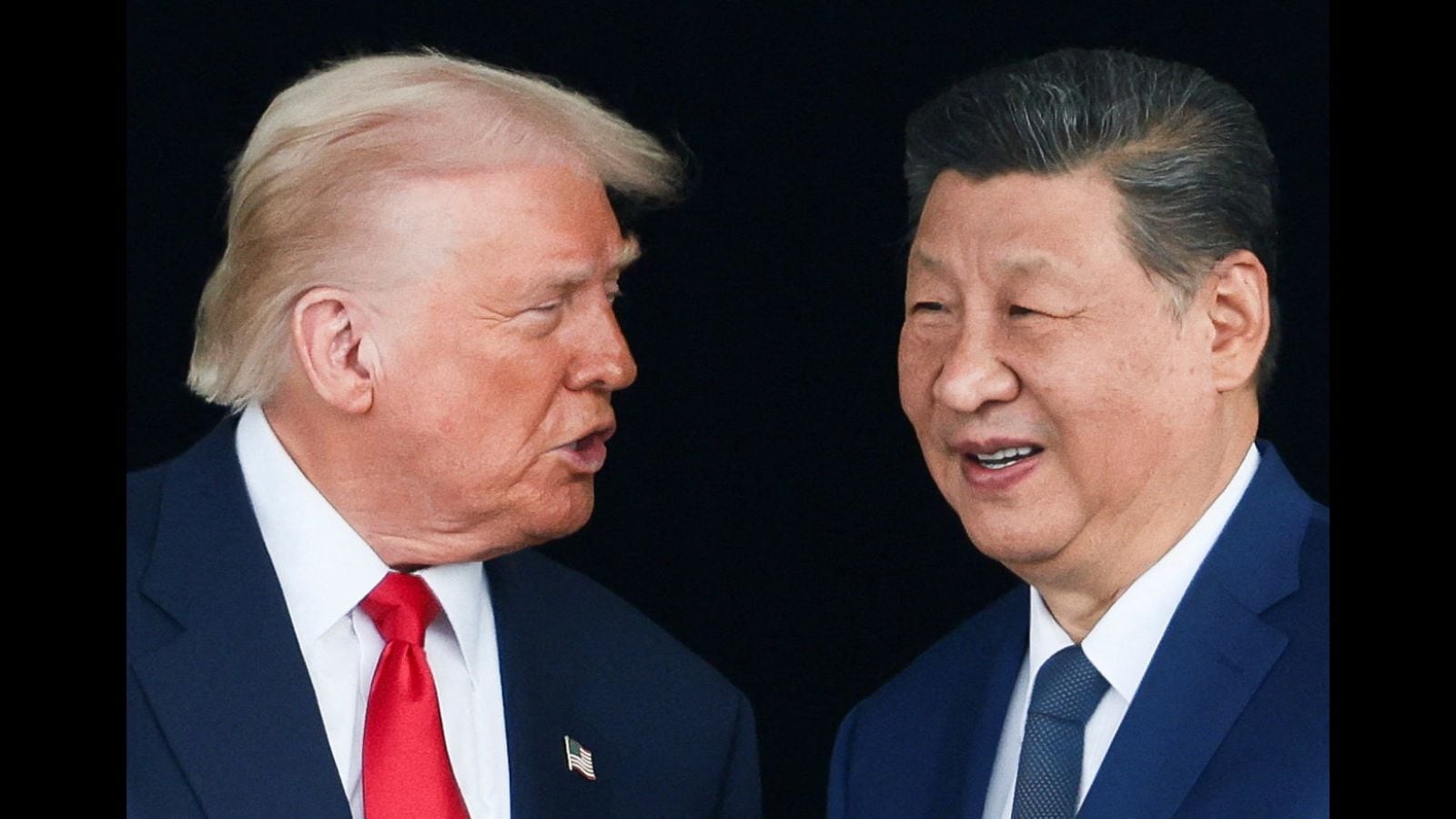
And just weeks before Chinese President Xi Jinping and U.S. President Donald Trump are scheduled to sit across from one another in Washington, the faucet delivering those magnets to American shores has abruptly tightened.
The Invisible Muscle Inside Everything
To understand why a dip in customs manifest numbers from Beijing should keep you awake at night, you first have to strip away the clean, minimalist shell of modern technology.
Think of a rare-earth permanent magnet as the invisible muscle of the industrial world. If electricity is the blood flowing through the veins of a machine, the magnet is the heart muscle that converts that electrical current into physical motion. Every time an electric vehicle accelerates silently onto a highway, an offshore wind turbine turns a massive blade against a North Sea gale, or a precision-guided missile corrects its trajectory mid-flight, a sintered block of neodymium, praseodymium, dysprosium, and terbium is doing the heavy lifting.
Here is the uncomfortable truth that economists rarely put in their headlines: you cannot substitute them. Not easily, and certainly not quickly. Ordinary iron magnets—the kind holding a child's drawing to your refrigerator—are too weak and too heavy. To generate the staggering magnetic force required by modern miniaturized motors, engineers rely on elements pulled from the bottom rows of the periodic table, elements whose names sound more like obscure Eastern European villages than the building blocks of superpower dominance.
When trade data quietly revealed that Chinese exports of rare-earth permanent magnets to the United States dropped sharply ahead of the high-stakes Washington summit, Wall Street barely blinked. A few commodity desks adjusted their spreadsheets. A handful of defense analysts scribbled notes in the margins of briefing books.
Yet on factory floors from Ohio to Bavaria, the tremor was unmistakable.
The Anatomy of a Chokepoint
Let us look closely at the numbers, because behind every dry customs ledger lies a deliberate architecture of leverage.
China does not merely mine a large share of the world's rare earths; it owns the labyrinthine, toxic, and fiercely complex midstream processing and magnet-manufacturing ecosystem. While the United States, Australia, and a handful of other nations have spent the last decade scrambling to reopen mines—such as the Mountain Pass facility in California's Mojave Desert—digging dirt out of the ground is only the opening act.
Once the ore is extracted, it must be cracked with harsh acids, separated through hundreds of solvent-extraction stages, refined into pure metals, alloyed, milled into micron-fine powder, pressed under intense magnetic fields, and sintered in high-temperature furnaces.
China controls roughly ninety percent of global rare-earth magnet production.
Let that figure sit with you for a moment. Ninety percent. Not fifty-one percent. Not a comfortable majority. A near-total monopoly over the physical components that allow an F-35 fighter jet's control surfaces to move, a submarine's propulsion system to whisper through the deep, and an MRI machine's superconducting coils to image a human brain.
When Beijing introduced strict export licensing requirements on medium and heavy rare earths—specifically targeting elements like dysprosium and terbium, which prevent magnets from losing their magnetism under blistering heat—the message was unmistakable. No official embargo was declared. No angry press conference was held. Instead, bureaucratic friction did the work. Licenses slowed. Inspections lengthened. Shipments to the United States contracted noticeably in the weeks leading up to the Xi-Trump summit.
It is the geopolitical equivalent of resting a thumb gently over the end of a garden hose—not enough to burst the pipe, just enough to remind the person holding the nozzle who controls the water.
Why Washington and Beijing Are Playing Chess With Rocks
I still remember walking through a heavy-machinery supply warehouse in Detroit a few years ago during the height of the semiconductor crunch. The warehouse manager, a weary man named Arthur who had survived the 2008 financial collapse and the pandemic supply freeze, pointed to rows of nearly finished transmissions sitting on wooden pallets under plastic wrap. Hundreds of millions of dollars in capital, frozen in place because a three-dollar microcontroller was missing.
"People think supply chains break like glass," Arthur told me then, rubbing the bridge of his nose. "They don't. They starve. One tiny piece stops showing up, and the whole organism slowly suffocates."
Arthur's warning echoes loudly today, though the missing piece is no longer a silicon wafer. It is a heavy rare-earth magnet.
To understand the timing of this export drop, you have to step inside the mind of a negotiator preparing for a summit where tariffs, semiconductor restrictions, and strategic supremacy are all on the table. For years, Washington has wielded export controls on advanced artificial intelligence chips and lithography equipment like a scalpel, aiming to slow Beijing's technological ascent. American policymakers operated under the assumption that high-end software and silicon were the ultimate high ground.
Beijing looked down at the ground itself—literally—and realized it held the foundation beneath the entire tower.
By tightening magnet exports right before Xi Jinping boards his plane for Washington, Chinese trade officials are signaling that escalation is a two-way street. If the United States restricts the chips that train China's neural networks, China can restrict the magnets that spin America's turbines, drive its electric vehicles, and guide its defense hardware.
The Heavy Rare-Earth Trap
It is easy to confuse light rare earths with heavy rare earths, and that confusion has lulled many Western investors into a false sense of security.
Light rare earths—like neodymium and praseodymium—are relatively abundant around the world. You can find them in California, Western Australia, Brazil, and Vietnam. Heavy rare earths—specifically dysprosium and terbium—are a different beast altogether. They are concentrated overwhelmingly in ionic clay deposits in southern China and northern Myanmar, where Chinese refiners process virtually the entire global supply.
Without a tiny pinch of dysprosium or terbium added to the alloy, a neodymium magnet loses its magnetic soul the moment temperatures climb inside an electric motor or a jet engine. It demagnetizes. It turns back into an expensive, useless lump of metal.
This is the hidden trap inside the green transition and modern defense modernization. Every time a Western government mandates higher efficiency standards for electric motors or expands its fleet of autonomous drones, it inadvertently deepens its dependence on those ionic clays in southern China.
The Illusion of Overnight Independence
Whenever a supply shock hits the headlines, a predictable chorus rises from pundits and politicians: We will simply build our own supply chain.
It sounds resolute. It plays well on television. And anyone who has ever stood inside a chemical separation plant knows how painfully naive it is.
Building a mine-to-magnet supply chain from scratch is not like launching a software startup in a garage. You cannot code your way around thermodynamics or environmental chemistry. Separating rare-earth elements—which sit right next to each other on the periodic table and share almost identical chemical behaviors—requires staggering volumes of water, hydrochloric acid, and specialized reagents, generating radioactive thorium and uranium tailings that must be safely managed under strict Western environmental laws.
In the United States, permitting a new mining and processing facility alone can take seven to ten years. Even with billions of dollars in Defense Production Act funding poured into domestic champions like MP Materials in California or Lynas Rare Earths in Texas, the gap between today's reality and true independence is measured in years, not months.
Meanwhile, inventory buffers at Western automakers and defense contractors are thin. Just-in-time manufacturing—a philosophy worshiped by business schools for forty years because it eliminated warehouse overhead—left companies naked against geopolitical weather. Most Tier-1 automotive suppliers hold between four and eight weeks of magnet inventory.
Do the math. If exports drop sharply for two consecutive months before a diplomatic summit, you do not have a theoretical policy debate on your hands. You have assembly lines going dark by the time the leaders shake hands for the cameras.
Inside the War Room of a Mid-Sized Manufacturer
Let us return to our hypothetical factory floor outside Toledo, because the macroeconomics only make sense when you see how they corner real people.
Imagine you are Elena Rostova, the chief procurement officer for a mid-sized American manufacturer that builds high-efficiency industrial pumps and servo motors. Your company employs four hundred people. You do not have a lobbying office in Washington, nor do you have a direct line to the Ministry of Commerce in Beijing.
Three months ago, your Chinese magnet supplier—a firm you have worked with reliably for twelve years—sent a polite email explaining that new export compliance paperwork would add twenty-one days to your lead time. You adjusted your schedule.
Six weeks ago, another email arrived. Heavy rare-earth content now required end-user verification certificates—documents proving that your industrial pumps would not end up inside defense hardware. You hired an outside legal counsel, gathered serial numbers, and submitted the dossiers.
Two weeks ago, the shipments stopped altogether. No rejection notice. Just silence from the freight forwarder in Ningbo.
Now, sitting in a glass-walled conference room at 7:00 AM with a cold cup of coffee, Elena faces three terrible choices:
- Pay spot-market prices in Europe or Japan—if she can even find unallocated inventory—at a three-hundred-percent markup that wipes out her company's entire annual profit margin.
- Re-engineer her motors to use ferrite magnets, which are cheaper and widely available, knowing full well the motors will become forty percent heavier, bulkier, and too inefficient to meet federal energy regulations.
- Furlough the second shift, sending men like Marcus Vance home without a paycheck while Washington and Beijing haggle over tariff percentages.
None of these options appear in the official communiqués released after high-level summits. Yet this is the precise pressure point Beijing's export slowdown is designed to squeeze. Every furlough notice, every delayed product launch, every panicked call from a corporate CEO to a senator's office becomes invisible leverage sitting on the table beside the Chinese delegation in Washington.
The Quiet Race to Re-Engineer the Periodic Table
Is there a way out of this chokepoint? Yes—though it will not come from a single silver bullet, nor will it arrive before the ink dries on whatever truce emerges from the Washington talks.
Across laboratories in Minnesota, Cambridge, and Tokyo, materials scientists are engaged in a quiet, frantic race to break the tyranny of heavy rare earths. Some are experimenting with iron nitride—a compound made from two of the most abundant elements on Earth, iron and nitrogen, which theoretical physics suggests could rival neodymium's magnetic strength if only engineers can stabilize its crystal structure at scale. Others are designing "magnet-free" switched reluctance motors that rely on clever electromagnetic geometry rather than permanent magnets, trading a slight penalty in acoustic noise for total freedom from Chinese supply chains.
At the same time, urban mining—the recovery of neodymium and dysprosium from shredded hard drives, retired wind turbines, and wrecked electric vehicles—is slowly moving from pilot plants to commercial reality. Every scrapped EV sitting in an auction yard contains roughly two kilograms of high-grade rare-earth magnets, a rich vein of refined metal that requires a fraction of the energy and environmental toll of virgin mining.
Yet all of these solutions share one unforgiving constraint: time.
The Handshake in Washington
When the cameras flash in Washington and the two leaders step up to their podiums, the headlines will focus on the theater of power—the body language, the tariff rates, the pledges to "stabilize bilateral relations" or "protect domestic workers."
If a deal is struck, customs officials in Shanghai and Ningbo may quietly stamp a backlog of pending export licenses, and shipping containers packed with magnetized blocks will once again cross the Pacific toward Long Beach and Savannah. The assembly lines will hum back to life. The crisis will fade from the business pages.
But the lesson will remain etched into the steel of every factory floor across the Western world.
You can write the most sophisticated artificial intelligence code on Earth. You can design sleek electric vehicles, build towering wind farms, and draft sweeping industrial policies. Yet until you control the dull, heavy, gray blocks of metal hidden deep inside the machines that make the world move, you are only renting your future from the person who holds the keys to the mine.
Outside Toledo, Marcus Vance hangs his broom back on the wall hook at the end of his shift, glances down the silent, motionless line of half-built rotors waiting for their magnetic hearts, and turns off the lights.