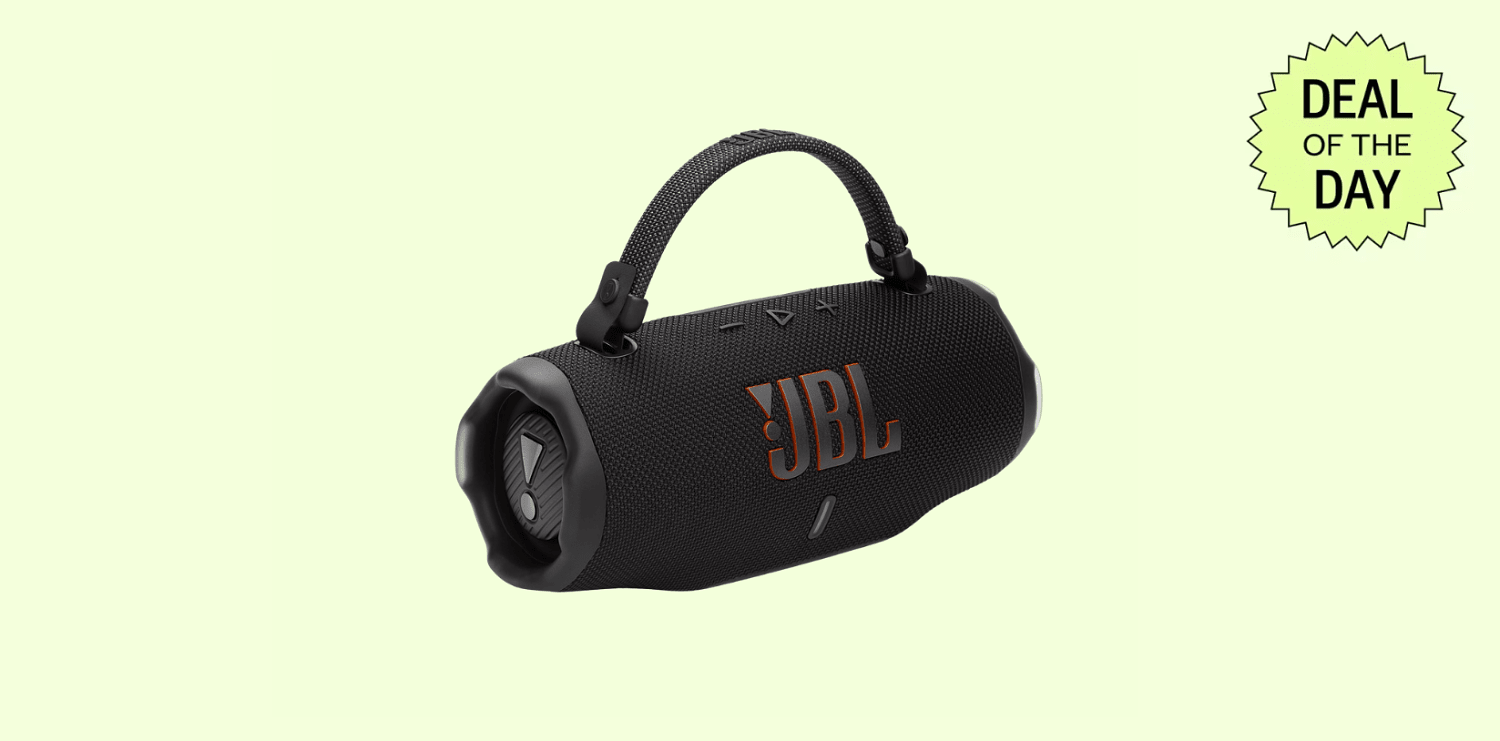
Silence.
That is the specific, suffocating sound of a summer afternoon dying prematurely because someone accidentally kicked a cheap plastic speaker into the shallow end of a swimming pool.
I still remember the exact afternoon it happened to me three years ago during a July Fourth gathering in upstate New York. The burgers were hitting the grates, the cold drinks were sweating on a cedar picnic table, and a curated playlist of 1970s soul was stitching the entire backyard together into a single, breathing organism of laughter and warmth. Then, a stray frisbee clipped the edge of the table. A black cylinder tumbled in slow motion through the humid air, hit the concrete coping, and sank three feet to the blue vinyl floor of the pool. The bass died instantly, replaced by a pathetic, gargling static before the circuitry shorted out for good. Within ten minutes, people stopped dancing. Within twenty, conversations fractured into awkward small talk. Within an hour, guests were checking their watches and murmuring about beating the traffic home.
We rarely talk about audio hardware in emotional terms, treating portable speakers as interchangeable commodities measured strictly in wattage, decibels, and retail discounts. Yet anyone who has ever hosted a dinner party, camped beside a rushing river, or spent a windy afternoon on a public beach knows the truth. Music is not background noise. It is social architecture. When that architecture collapses because a piece of consumer electronics cannot survive a splash of chlorinated water or a sudden cloudburst, the memory itself fractures.
Which brings us to a rare, quiet anomaly happening right now in the retail market—one that has nothing to do with flashy product launches and everything to do with timing, durability, and a sixty-dollar price drop that hasn't been seen since the dead of winter.
The Myth of the Disposable Gadget
To understand why a specific price drop on a ruggedized JBL Bluetooth speaker matters, you first have to confront the wasteful cycle most of us accept without question. Walk into any big-box electronics aisle in late spring, and you are greeted by walls of brightly colored plastic tubes promising "splashproof" audio for thirty or forty dollars.
Consider a hypothetical buyer—let’s call her Elena—preparing for a weeklong coastal trip with her family. Standing in that aisle, she faces a classic consumer trap. She doesn't want to spend nearly two hundred dollars on a portable speaker, so she grabs a forty-dollar budget model. It sounds fine in her quiet living room. Two days later, at the beach, a rogue wave washes over her towel, packing fine grains of quartz sand into the speaker's fabric grille and forcing salt water into an unsealed charging port. By Wednesday, the charging cable won't make contact. By Friday, the battery refuses to hold a charge. Elena throws the dead brick into a boardwalk trash can, resolves to buy another cheap one next year, and spends the rest of her vacation listening to tinny audio piped through a smartphone speaker propped inside a dry red plastic cup.
Over five years, Elena spends two hundred dollars on four mediocre speakers that sound like AM radios and end up in landfills.
The audio engineering world solved this problem years ago, though most shoppers remain confused by the alphabet soup printed on the packaging. When manufacturers slap an IPX4 or IPX5 rating on a box, they are essentially telling you the device can survive a light drizzle or a sweaty gym bag, provided you never submerge it and keep it far away from dust. True outdoor survivability requires a different standard entirely: IP67 certification.
Think of an IP67 rating not as a raincoat, but as a welded submarine hatch. The first digit—six—signifies complete, impenetrable protection against solid particulates like beach sand, trail dust, and ash from a campfire. The second digit—seven—means the internal acoustic chambers and lithium-ion batteries can sit completely submerged under one meter of fresh water for thirty minutes without a single drop breaching the seals.
JBL built its modern reputation on turning this military-grade resilience into everyday objects, led by workhorses like the JBL Flip 6 and JBL Charge 5. Encased in dual passive radiators that visibly thump with low-end frequencies and wrapped in a tight weave of ballistic-style fabric, these devices were engineered to be dropped on gravel, rinsed off under a garden hose, and tossed into the bottom of a kayak. The catch has always been the price tag. Quality acoustic engineering—specifically pairing a dedicated racetrack-shaped woofer with a separate tweeter so vocals don't get muddied by bass—costs money to manufacture. For most of the year, you pay a premium for that peace of mind.
Why January Prices in Late November Are a Glitch in the Matrix
Consumer electronics follow a predictable, ruthless calendar. Prices crater in late November during Black Friday, stay depressed through the post-holiday clearance weeks of January, and then snap back to full retail MSRP by February as brands prepare for spring travel and summer outdoor seasons. If you miss that January window, you generally spend the next ten months paying full price or settling for insultingly small ten-dollar coupons.
Right now, however, that calendar has broken.
Across major authorized retailers, JBL’s flagship waterproof portable line—specifically models like the JBL Charge 5 and Flip 6 depending on color configuration—has dropped by a full sixty dollars, bringing the retail cost straight down to the exact floor recorded back in January. Seeing a sixty-dollar markdown on a current-generation JBL waterproof speaker outside of the post-New Year clearance window is an unusual market correction, driven by inventory rebalancing ahead of seasonal shifts.
For a shopper, sixty dollars isn't merely a percentage discount; it is the exact financial bridge separating a compromise purchase from a permanent solution. At full retail price—often hovering around $180 for the Charge 5 or $130 for the Flip 6—a buyer hesitates, wondering if durability is worth the extra cash. Strip sixty dollars off that sticker, and suddenly a tank-like, room-filling speaker costs roughly the same as the fragile, off-brand alternatives sitting one shelf lower.
Anatomy of Sound That Actually Travels Outdoors
Have you ever wondered why a speaker that sounds booming and rich inside your bedroom suddenly vanishes into thin air the moment you carry it onto a wooden deck?
Physics is unforgiving outdoors. Inside a room, sound waves bounce off drywall, hardwood floors, and ceilings, reinforcing each other and trapping bass frequencies in the corners. Step outside, and there are no walls. Low-end frequencies—the warm thump of a bass guitar or the kick drum that gives music its emotional heartbeat—disperse instantly into the open air, leaving behind only shrill, piercing treble that causes ear fatigue within twenty minutes.
To defeat open air, a portable speaker cannot rely on a single all-purpose cone. It has to move serious volumes of air without distorting.
Inside the waterproof housing of JBL’s mid-sized heavyweights lies an acoustic architecture borrowed from much larger home stereo monitors. Instead of forcing one small driver to handle everything from a soprano vocal to a sub-bass drop, engineers split the workload. A dedicated long-excursion woofer handles the low and mid-range frequencies, working in tandem with two exposed, weighted passive radiators on either end of the cylinder. Watch those rubberized end-caps while a track plays; you can literally see them vibrating millimeters back and forth, pressurizing the air inside the sealed tube to generate bass you can feel in your chest from ten feet away. Meanwhile, a separate tweeter handles the crisp high frequencies, ensuring acoustic guitars and human voices remain sharp and intelligible over the hiss of wind or the chatter of a crowd.
Battery endurance follows the same logic of over-engineering. Nothing kills momentum faster than the frantic search for a wall outlet at 8:00 PM. With up to twenty hours of continuous playback on the larger Charge series—and a built-in USB-A power bank port concealed behind a waterproof rubber flap—the speaker doesn't just survive the party; it can actually resuscitate a dying smartphone before the Uber arrives.
The Questions You Should Ask Before Pulling the Trigger
Even with sixty dollars shaved off the price, smart buyers hesitate before adding another piece of tech to their lives, and for good reason. The portable audio market is crowded with confusing overlap, and spending money on the wrong size or feature set leads to buyer's remorse just as fast as overpaying.
The most common point of confusion comes down to size versus portability. If your primary goal is slipping a speaker into the water-bottle pocket of a hiking backpack or carrying it one-handed on a bike ride, the compact Flip series is the logical fit, trading some deep bass and power-bank functionality for featherweight convenience. If, however, you are anchoring a backyard patio, a campsite, or a tailgate, stepping up to the slightly heavier Charge footprint transforms the audio from personal listening into a genuine small-scale sound system.
Another lingering doubt involves connectivity and longevity. Bluetooth standards evolve rapidly, and nobody wants to buy hardware that feels obsolete in eighteen months. Modern JBL waterproof units run on Bluetooth 5.1 or 5.3 architectures, allowing two smartphones to stay connected simultaneously so friends can take turns queueing tracks without unpairing and repairing devices. Better yet, features like PartyBoost allow you to wirelessly link multiple compatible JBL speakers together—turning two discounted units into a true stereo left-and-right soundstage that can blanket an entire acre of property without running a single wire.
And what about saltwater or chlorine? While an IP67 rating guarantees the speaker will survive a thirty-minute dunk in a pool or ocean surf, salt crystals and pool chemicals can eventually degrade rubber gaskets if left to bake in the sun. The habit that keeps these units alive for seven or eight years is remarkably simple: after a day at the beach or pool, rinse the entire speaker under fresh tap water for ten seconds, shake it dry, and let the charging port air out completely before plugging in a USB-C cable.
The Weight of Small Decisions
We spend thousands of dollars every year chasing experiences—booking flights, renting cabins, buying groceries for weekend cookouts, driving hours to reach quiet stretches of coastline. Yet we routinely entrust the emotional atmosphere of those moments to the cheapest, weakest link in our luggage.
You do not buy a waterproof, dustproof, sixty-dollar-discounted speaker because you care about frequency response curves or ingress protection ratings. You buy it so that when the unexpected summer thunderstorm rolls across the lake, nobody has to scramble in a panic to rescue the electronics. You buy it so the music keeps playing while the rain drums against the tarp, while the kids splash in the shallows, and while the evening stretches effortlessly into night.
Think back to that quiet, ruined afternoon by the pool—the sudden static, the sinking black plastic, the slow unraveling of a gathering that should have lasted until midnight. Now picture the exact same moment, except this time someone reaches down into three feet of clear blue water, pulls a dripping, cylindrical speaker back onto the concrete deck, shakes the droplets off the grille, and turns the volume dial up two notches as the chorus kicks back in.