Every medicine we swallow begins as a gamble. Imagine sitting in a sterile room, watching hours tick by on a silent clock while a robotic arm drops clear liquid into tiny plastic wells. Behind glass walls, scientists wait for a signal. Just one compound out of millions might bind to a rogue protein. Just one might stop a disease before it takes root. For decades, this process has moved at the pace of a glacier. Billions of dollars vanish into failed experiments. Years bleed into decades.
Then came the shift.
Quietly, behind the polished glass of modern laboratories, the rules of chemistry began to bend. Computers stopped merely recording data and started predicting outcomes. They began to see shapes in the invisible architecture of proteins that human eyes could track only with exhaustion. This is not science fiction. This is the daily reality of computational drug discovery, a field that just drew a massive wave of fresh capital.
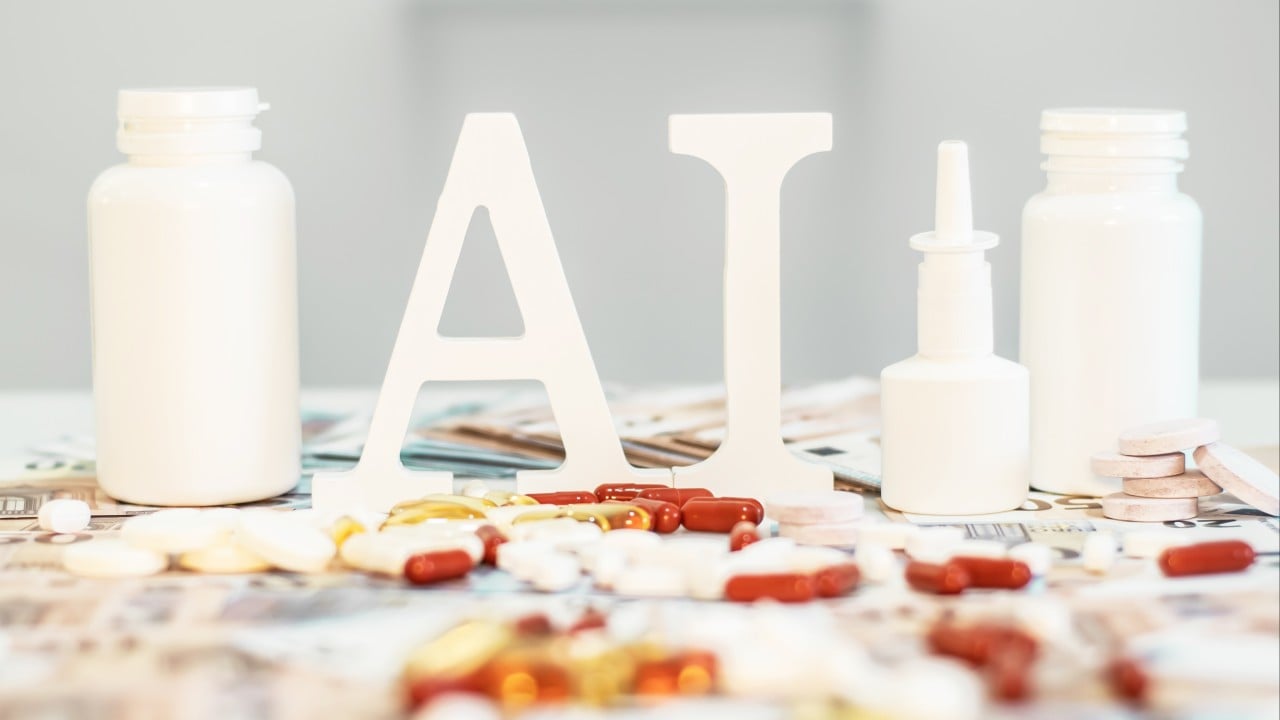
Consider the recent news out of the venture world. A spin-off backed by tech giant ByteDance, known as Anew Labs, just secured two hundred ninety million dollars in funding. This is not an isolated tremor. Across the industry, artificial intelligence drug developers are riding a historic fundraising wave. Investors are pouring fortunes into algorithms that map molecular interactions. They are betting that silicon can solve what carbon has struggled with for centuries.
To understand why this matters, step back into the traditional laboratory. Traditional drug development is a game of trial and error played on a microscopic scale. Chemists synthesize a molecule, test it against a biological target, and watch it fail. They try again. And again. The average timeline to bring a single prescription drug to a pharmacy shelf stretches past a decade. The cost regularly crosses the billion-dollar mark. Most candidates die quietly in clinical trials, unable to prove their worth in the complex environment of the human body.
Now, look at what algorithms do differently. Instead of physically building and testing millions of chemical variations, software simulates them. Machine learning models predict how a novel compound will fold, how it will react, and whether it will toxicly bind to healthy tissue before it ever touches a test tube. It is a filter of pure mathematics.
When a company like Anew Labs pulls in nearly three hundred million dollars in a single round, it signals a deeper transformation. The technology has matured from an academic curiosity into a heavy industrial tool. Venture capitalists do not hand over nine-figure checks for theoretical elegance. They fund survival. They fund speed.
Yet, speed brings its own anxieties. When we accelerate the creation of molecular compounds, we inherit new responsibilities. A computer can propose a structure in seconds, but biology is notoriously stubborn. A molecule that looks pristine on a screen can behave unpredictably inside a living cell. The software is only as wise as the data feeding it. If the historical datasets are biased or incomplete, the algorithm learns mistakes at lightning speed.
This tension between computational speed and biological reality defines our current era. We are standing on the edge of a new medical frontier. The old ways were painfully slow, but they were forged through decades of hard-earned intuition. The new ways offer breathtaking velocity, but they demand rigorous verification.
Behind every funding round, behind every press release about nine-figure valuations, real lives hang in the balance. Someone sitting in a hospital waiting room today is hoping for a cure that currently takes too long to arrive. They do not care about silicon chips or neural networks. They care about relief.
The money moving into this space is a vote of confidence that technology can bridge the gap between human suffering and chemical innovation. As these laboratories scale up their computing power and expand their pipelines, the gap narrows. The race is no longer just about who can build the fastest computer. It is about who can translate digital probability into physical healing.
The molecules are waiting. The code is running. And the clock ticks forward, faster than ever before.