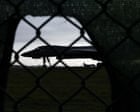
Vehicles zipping across British roads carrying suspected explosive threats sound like a cinematic thriller, but that exact nightmare scenario gripped the Cotswolds. When police declared a major incident near RAF Fairford, a base heavily utilized by the United States Air Force, panic spread faster than official statements could clear up the confusion.
Initially, media reports painted a picture of a massive, imminent bomb plot ready to level a vital military installation. But peel back the frantic initial headlines, and a far more complex picture emerges—one involving international intelligence proxies, hurried arrests, and a swift operational withdrawal by the US military. If you look past the noise, this incident exposes how fragile high-security installations really are when facing decentralized, foreign-directed threats. Recently making waves lately: Inside the Bureaucratic Trap Where Indian Churchgoers Must Sign Declarations Just to Pray.
Untangling the Chaos at the Perimeter
The timeline of that Sunday morning in late September caught everyone off guard. British authorities swooped in, arresting several men in their twenties from London on suspicion of terrorism and explosives offenses. Roughly eighty-five households near the Gloucestershire base faced sudden evacuation while bomb disposal units combed the area.
Yet, a glaring detail quickly surfaced: subsequent police checks revealed no actual explosives inside the intercepted vans. That discovery led to immediate public confusion. How could a major incident trigger evacuations, controlled detonations, and high-level COBRA meetings if the physical vans didn't contain active bombs? More details regarding the matter are covered by The Washington Post.
The answer lies in how modern counter-terrorism operates. Security agencies often move in early to disrupt a chain of command before a plot materializes into physical hardware. Waiting until explosives are fully assembled and loaded near a perimeter fence is a massive gamble security forces refuse to take.
The Foreign Actor Connection
While local police dealt with the immediate panic on the ground, intelligence officials started connecting dots that pointed straight toward Tehran. Prime Minister Andy Burnham stated publicly that strong indications pointed to Iranian involvement, a claim swiftly rejected by the Iranian Embassy in London as malicious speculation.
Despite the diplomatic denials, subsequent legal actions painted a sharper picture. Courts heard that the operation was allegedly coordinated by a handler working on behalf of foreign intelligence. Men were later charged under strict national security legislation, shifting the narrative from a domestic scare to a sophisticated state-sponsored proxy attempt.
Experts point out a distinct strategy here. Iran doesn't always choose targets to directly destroy infrastructure; often, the goal is to sow societal division, stretch intelligence resources thin, and distract policymakers. Probing a base like RAF Fairford tests response times and forces allied nations into an expensive defensive posture.
The Ripple Effect on Military Operations
The fallout wasn't confined to British courtrooms or local village disruptions. The security lapse triggered tangible operational changes. Shortly after the arrests, the United States Air Force made the decisive call to withdraw its powerful Rockwell B-1 Lancer bombers from RAF Fairford back to home soil.
Subsequent alerts continued to rattle regional defenses, prompting shifts of aircraft from other British stations like RAF Mildenhall toward continental Europe. When strategic bombers have to relocate because a local security perimeter was probed, hostile actors chalk it up as a psychological win. It proves that low-cost disruptions can successfully alter the deployment patterns of global superpowers.
What This Means Moving Forward
Incidents like the RAF Fairford scare prove that traditional definitions of a terror threat are shifting. You don't need a massive army or a complex, months-long military assault to disrupt operations. Sometimes, utilizing local proxies to scout, probe, and test response mechanisms is enough to rattle international alliances and force a strategic retreat.
Authorities will undoubtedly tighten perimeters and enhance intelligence sharing, but the core vulnerability remains. Modern defense requires looking far beyond the physical fence line to catch digital handlers and proxy networks before they ever recruit local operatives. Pay attention to how intelligence agencies adapt—because the next security test won't look anything like this one.