Diplomacy is currently addicted to the "Great Soul" sedative.
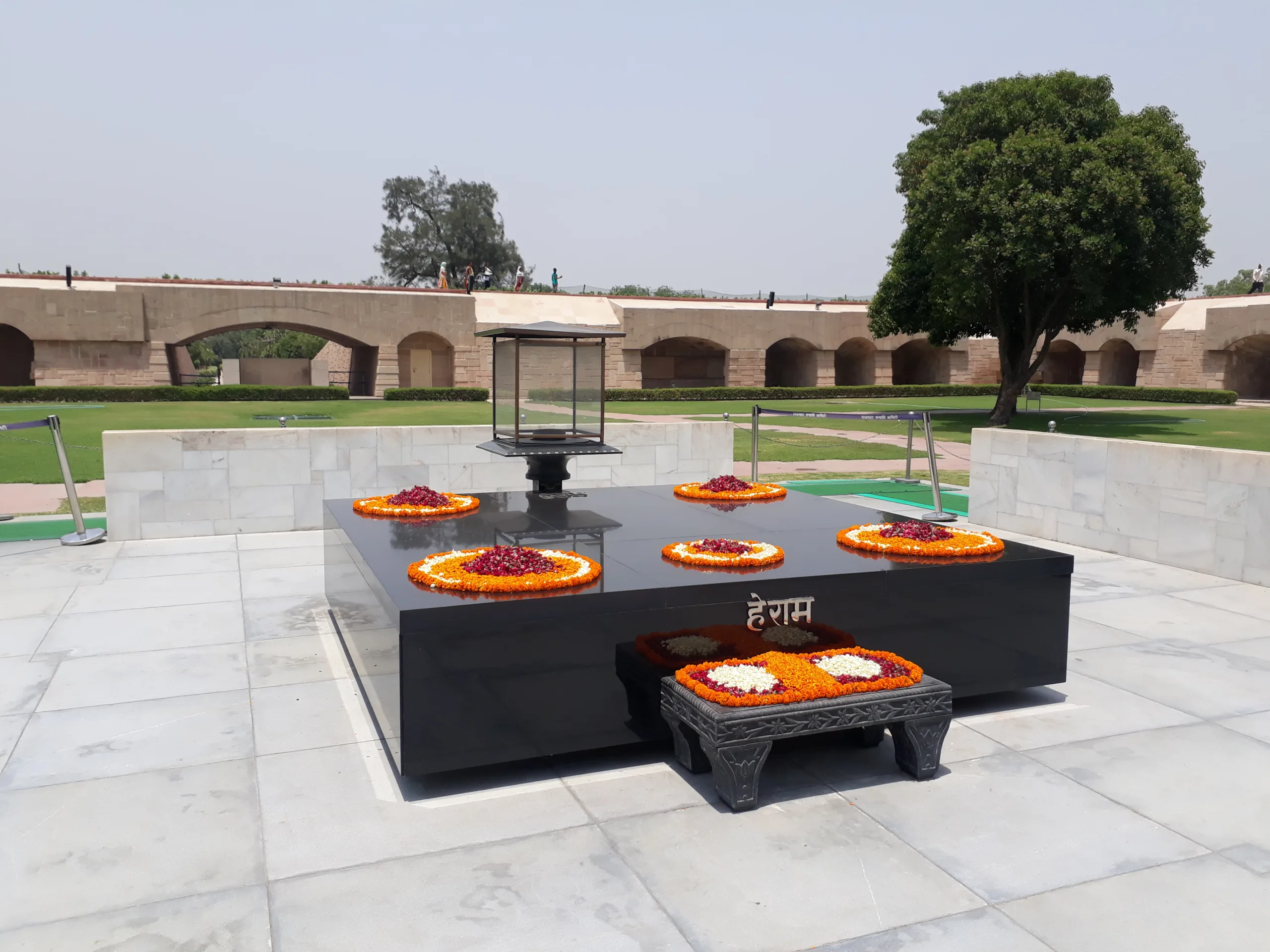
When UNGA President Annalena Baerbock bows her head at Rajghat, the press corps treats it as a profound moment of moral alignment. They call it a "tribute to peace." They frame it as a bridge between the Global North’s liberal values and the Global South’s historical conscience.
They are wrong. This isn't diplomacy. It’s a funeral rite for an international system that no longer knows how to exercise power, so it performs piety instead.
We need to stop pretending that floral wreaths and barefoot walks on hallowed ground are substitutes for functional multilateralism. Baerbock’s visit to the memorial of Mahatma Gandhi isn't an act of statecraft; it is an admission of systemic bankruptcy. While the UN General Assembly stutters through gridlock on every meaningful conflict from Ukraine to the Red Sea, its leadership retreats into the safe, unchallenging embrace of 20th-century symbolism.
The Myth of the Moral Superpower
The "lazy consensus" dictates that these visits build "soft power." The logic suggests that by honoring Gandhi, a Western leader signals respect for Indian sovereignty and non-violent resistance.
But look at the math. In the last decade, the correlation between high-profile Rajghat visits and actual diplomatic concessions is zero. In fact, these visits often precede a tightening of trade barriers or a rejection of security cooperation. Germany, which Baerbock represents as Foreign Minister, remains fundamentally at odds with India’s "strategic autonomy" regarding energy imports and Russian relations.
Visiting Rajghat is the geopolitical equivalent of "thoughts and prayers." It costs nothing. It changes nothing. It offers a convenient aesthetic mask for the reality that the UN is currently a theater of the absurd where the actors have forgotten their lines and started reading poetry to the audience instead.
Gandhi as a Shield for Policy Failures
Gandhi’s legacy is being used as a human shield against hard questions. When a UNGA President visits a site dedicated to non-violence while presiding over a body that is effectively paralyzed in the face of modern warfare, the irony should be deafening.
Instead, the media produces a sanitized narrative. They focus on the hand-spun khadi scarves and the silence of the memorial. They ignore the fact that the United Nations is currently facing a legitimacy crisis that no amount of Gandhian philosophy can fix.
The UNGA is increasingly a platform for "performative multilateralism." Leaders show up, say the right things about peace, pay homage to the right icons, and then return to a Security Council that is structurally incapable of preventing a playground fight, let alone a regional war.
If we actually cared about Gandhi’s principles, we wouldn’t be laying wreaths. We would be dismantling the veto power that allows five nations to hold the rest of the planet hostage. We would be addressing the fact that the "rules-based order" is only applied when it suits the architects of those rules.
The India-Germany Friction Nobody Mentions
Baerbock’s visit is specifically designed to paper over the cracks in the Indo-German relationship. Berlin is desperate for India to be its democratic anchor in Asia, a counterweight to China. New Delhi, however, is not interested in being anyone's "junior partner."
India’s foreign policy is currently dictated by Realpolitik, not the satyagraha that Westerners love to romanticize. Prime Minister Modi’s government has been clear: India will buy oil where it is cheap, maintain weapons systems where they are reliable, and vote in its own national interest.
When Baerbock stands at Rajghat, she is trying to appeal to an India that mostly exists in Western textbooks. She is invoking a version of India that is passive, moralistic, and compliant with Western liberal norms. The real India—the nuclear-armed, fifth-largest economy, infrastructure-building powerhouse—doesn't need a German minister to tell it how to value Gandhi. It needs Germany to open up its technology transfers and stop moralizing about India’s energy choices.
The High Cost of Symbolic Distraction
I have watched diplomatic missions spend six months planning the logistics of a three-minute wreath-laying ceremony. I have seen embassy staff argue over the color of the flowers while ignoring the fact that the host country just signed a massive defense pact with a rival power.
This is the "symbolism trap." It creates the illusion of progress. It allows bureaucrats to check a box labeled "Cultural Engagement" while the actual machinery of peace remains rusted shut.
Consider the carbon footprint and the security theater required to move a UNGA President through Delhi for a photo op. If that same energy were directed into reforming the UN’s development goals or streamlining the delivery of humanitarian aid, we might actually see a shift in global stability. But reform is hard. Reform requires sacrifice. Laying a wreath is easy.
Dismantling the "People Also Ask" Delusions
Does visiting Rajghat improve bilateral ties?
No. It provides a 24-hour news cycle of positive optics. Real ties are built on semiconductors, visa quotas, and intelligence sharing. If you see a leader at Rajghat, assume they are stuck on a trade negotiation and need a distraction.Is it a sign of respect for Indian culture?
It is a sign of respect for a specific, digestible version of Indian history that makes Westerners feel comfortable. It ignores the complex, often messy reality of modern Indian politics.Why do all world leaders go there?
Because the protocol department says so. It’s on the "Standard Operating Procedure" for any state visit to Delhi. It’s the diplomatic version of "The Macarena"—everyone does it because everyone else is doing it, not because it’s a good idea.
The Nuance of the Strategic Gesture
There is a version of this visit that could have mattered. Imagine a scenario where Baerbock stood at Rajghat and announced a radical shift in UN policy—a move toward actual representation for the Global South, or a concrete plan to address the debt distress that Gandhi himself would have railed against.
Instead, we got the standard script.
The danger of these empty gestures is that they devalue the very icons they claim to honor. Gandhi’s radicalism was about disruption. He didn't want to be a stop on a tourist itinerary for visiting dignitaries. He wanted to upend the status quo. By turning Rajghat into a mandatory photo op for the very people who uphold the global status quo, we are effectively neutralizing his message.
Stop Applauding the Bare Minimum
We have become so starved for decency in international relations that we applaud when a politician manages to stand still for sixty seconds without checking their phone. We treat basic etiquette as a breakthrough.
The international community needs to demand more from the UNGA President than a travelogue. The world is on fire. The "peace" Gandhi talked about isn't the absence of noise at a memorial; it’s the presence of justice in the global trade and security architecture.
If the UN continues to prioritize the aesthetic of peace over the labor of justice, it will continue its slide into irrelevance. Baerbock’s homage wasn't a bridge to the future. It was a postcard from a world that is already gone.
The next time a leader heads to Rajghat, don't look at the flowers. Look at what they aren't signing. Look at the policies they aren't changing. Look at the people they are ignoring while they take the perfect selfie with a martyr's ghost.
The flowers will wilt by morning. The gridlock at the UN will remain. That is the only truth that matters.
Western leaders don't go to Rajghat to find Gandhi; they go there to hide from the reality that they have no idea how to lead without him.