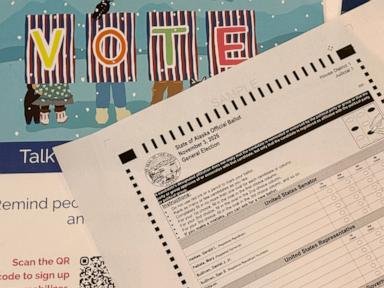
Most Americans walk into a voting booth, fill in a single oval next to one candidate's name, and walk out hoping they didn't just waste their vote on someone who can't win. That entire anxiety is what ranked choice voting tries to kill off.
Instead of picking just one person, you rank the candidates in order of preference. First choice, second choice, third choice, and so on. It sounds simple on paper, yet the moment a state puts it on the ballot—especially in federal congressional races—cable news panels start treating it like advanced calculus.
Maine and Alaska have been using ranked choice voting for federal congressional elections, making them the real-world testing grounds for how Americans actually handle a ranked ballot when seats in the U.S. House and Senate are on the line. Watching how voters in those two states navigate the system strips away a lot of the theoretical nonsense you hear from both die-hard reformers and partisan critics.
How Ranked Choice Voting Actually Works
Strip away the academic jargon and ranked choice voting—often called instant-runoff voting—is basically a series of automated runoff elections baked into a single trip to the polls.
When polls close, election officials count everyone's first-choice votes. If one candidate wins an outright majority, meaning more than 50 percent of those first-choice ballots, the race is over. They win. Just like a standard election.
The magic—or the headache, depending on who you ask—happens when nobody clears that 50 percent bar.
In a traditional plurality election, whoever has the most votes wins, even if they only got 36 percent and two-thirds of the electorate couldn't stand them. Under ranked choice rules, finishing in first place with 36 percent doesn't lock anything down. Instead, the candidate sitting in dead last gets eliminated.
If your first-choice pick gets knocked out, your ballot isn't dead. Election software looks at who you ranked second and transfers your vote to them. Then they recount. If somebody crosses 50 percent now, we have a winner. If not, the next lowest-performing candidate gets cut, and those votes shift to the next active choice on each ballot. This repeats until someone holds a true majority of the remaining active ballots.
Think of it like ordering at a restaurant when they're out of your first pick. You don't just sit there starving. You tell the server what you want instead.
What Maine and Alaska Show Us About Congressional Races
For years, debate around ranked choice voting lived almost entirely in municipal elections—places like San Francisco, Minneapolis, or New York City—or in theoretical political science papers. Maine and Alaska changed that by bringing it straight into federal congressional contests.
Maine became the first state to use ranked choice voting for federal general elections in 2018. In Maine's 2nd Congressional District that year, Republican incumbent Bruce Poliquin actually led Democratic challenger Jared Golden after the first round of counting, pulling in 46.3 percent of first-choice votes to Golden's 45.6 percent. Two independent candidates split the remaining roughly 8 percent.
Under old rules, Poliquin would have kept his seat without a majority. Because Maine used ranked choice voting, those two independent candidates were eliminated, and their voters' second-choice preferences broke heavily for Golden. Golden ended up winning the final tally with 50.6 percent. That single race proved how dramatically second-choice votes can flip an outcome when third-party candidates pull significant numbers.
Alaska took an even bolder swing. Voters there approved Ballot Measure 2 in 2020, ditching traditional partisan primaries altogether. Instead, Alaska runs a nonpartisan top-four primary where every candidate appears on one ballot, regardless of party, and the top four vote-getters advance to the general election. Then, in November, voters rank those four finalists.
In 2022, Alaska used this exact setup for its special and regular U.S. House elections following the death of longtime Rep. Don Young. Democrat Mary Peltola won both times against Republican rivals Sarah Palin and Nick Begich. In the August special election, Begich was eliminated first. Enough of his voters either ranked Peltola second or left their second choice blank that Peltola defeated Palin in the final round.
Those races in Maine and Alaska exposed something crucial. Ranked choice voting doesn't guarantee a win for one specific party, nor does it magically elect moderate centrists every time. It changes the math of coalition building. Candidates can't just fire up their base while trashing everyone else's voters, because they might desperately need those rival voters to rank them second.
The Biggest Myths Voters Believe About Ranking Ballots
Whenever ranked choice voting shows up in the news, the same batch of bad information floods social media. Honestly, most of it comes from people who haven't actually looked at a sample ballot.
Does ranking a second choice hurt your first choice
No. Never. Your second choice isn't even looked at unless your first choice has already been eliminated from the race. Ranking a backup candidate cannot take away support from your favorite candidate, nor does it dilute the weight of your primary vote. You still only get one active vote per round.
Do you have to rank every single candidate
You don't. If there are four candidates on your congressional ballot and you genuinely despise two of them, leave their rows blank. Your ballot remains completely valid. If your top one or two picks get eliminated and you didn't rank anyone else, your ballot simply becomes "exhausted"—meaning it drops out of the remaining runoff rounds.
Does it violate one person one vote
Courts have repeatedly rejected this argument, including federal courts reviewing Maine's system. Every voter gets a single vote counted in each round of tabulation. Transferring a vote when your top candidate loses is no different legally than walking back into a polling place two weeks later for a traditional runoff election.
Where Critics Actually Have a Point
Supporters of ranked choice voting sometimes act like it's a flawless cure for political polarization. It isn't. If you look closely at the data from states and cities using it, legitimate flaws show up.
First, there's ballot exhaustion. When voters only rank one candidate—a practice called bullet voting—or leave later spots blank, their ballots drop out before the final round. In tight races, the winning candidate might hold more than 50 percent of the remaining active ballots, yet still hold less than 50 percent of the total ballots cast in the election. Critics argue that undercuts the whole "true majority" sales pitch.
Second, counting takes longer. Voters love knowing who won before they go to bed on Tuesday night. Because ranked choice tabulation often requires waiting until mail-in and provisional ballots arrive before running elimination rounds, final results can drag out for days or even weeks. In an era where trust in election administration is already fragile, slow rollouts give conspiracy theorists plenty of oxygen.
Third, ballot design can trip people up. If a county prints a confusing grid or forgets to clearly label columns, voters accidentally rank the same candidate twice or fill in two ovals in the same column. Spoiled ballots happen in every election system, sure, but complex grids raise the error rate—especially among older voters or people casting ballots in a second language.
Why Political Parties Fight Over It So Fiercely
Look at who opposes ranked choice voting in any given state and you'll usually spot a clear pattern—whichever party currently holds comfortable control over the state legislature tends to hate it.
In red states like Florida, Tennessee, and Idaho, Republican lawmakers have actively passed bans prohibiting municipalities from using ranked choice voting. Meanwhile, in deep-blue states, Democratic party bosses have sometimes quietly resisted it too, even when progressive activists push for it.
Why the bipartisan resistance from party insiders? Control.
Under standard plurality rules, major parties hold a near-monopoly on viable candidates. If you're a conservative voter frustrated with the GOP nominee, voting Libertarian risks handing the seat to a Democrat. If you're a progressive unhappy with the Democratic nominee, voting Green risks electing a Republican. That "spoiler effect" keeps restless voters locked inside the two-party tent.
Ranked choice voting removes that penalty. Voters can park their first-choice vote with an independent or third-party candidate to send a message, while keeping a major-party candidate in their second slot as insurance. Party leaders lose their favorite talking point—that voting outside the party line is throwing your vote away.
How to Actually Fill Out a Ranked Choice Ballot
If your state or city uses ranked choice voting in an upcoming election, walking in prepared keeps you from making rookie mistakes that void your preferences.
- Rank your honest favorite first. Don't try to game the system by putting a "more electable" candidate in the number one spot. The whole point of instant runoffs is letting you vote your conscience first without fear.
- Keep ranking down the line. Even if you're lukewarm on the remaining candidates, ask yourself who you'd prefer if your top pick loses. Leaving backups blank surrenders your say in the final round.
- Never give two candidates the same rank. Filling in the "1st choice" oval for two different people is an overvote, which usually invalidates that round of your ballot.
- Don't rank the same person multiple times. Giving your favorite candidate the 1st, 2nd, and 3rd spots doesn't give them three votes. If they get eliminated in round one, all three rankings vanish at once, wasting your backup slots.
Check your local county clerk's website for a sample ballot at least a week before Election Day. Seeing the exact grid layout beforehand takes two minutes and guarantees your preferences actually survive the scanner.