Forty-one thousand feet above the earth, the sky stops being blue. It turns the color of a deep bruise, a dark cobalt that hints at the vacuum waiting just beyond the aluminum skin of the fuselage.
Inside the cockpit of a high-altitude business jet, the silence is deceptive. There is no wind rushing past the canopy—only the muted, steady hum of the environmental control system and the faint, rhythmic pulse of avionics cooling fans. If you sit in the left seat long enough, staring out at the curvature of the horizon, it is easy to forget that you are hurtling through near-empty space at nearly five hundred miles an hour, balanced on a mathematical tightrope that grows thinner with every thousand feet you climb.
Aviators have a name for the top of that tightrope. They call it the coffin corner.
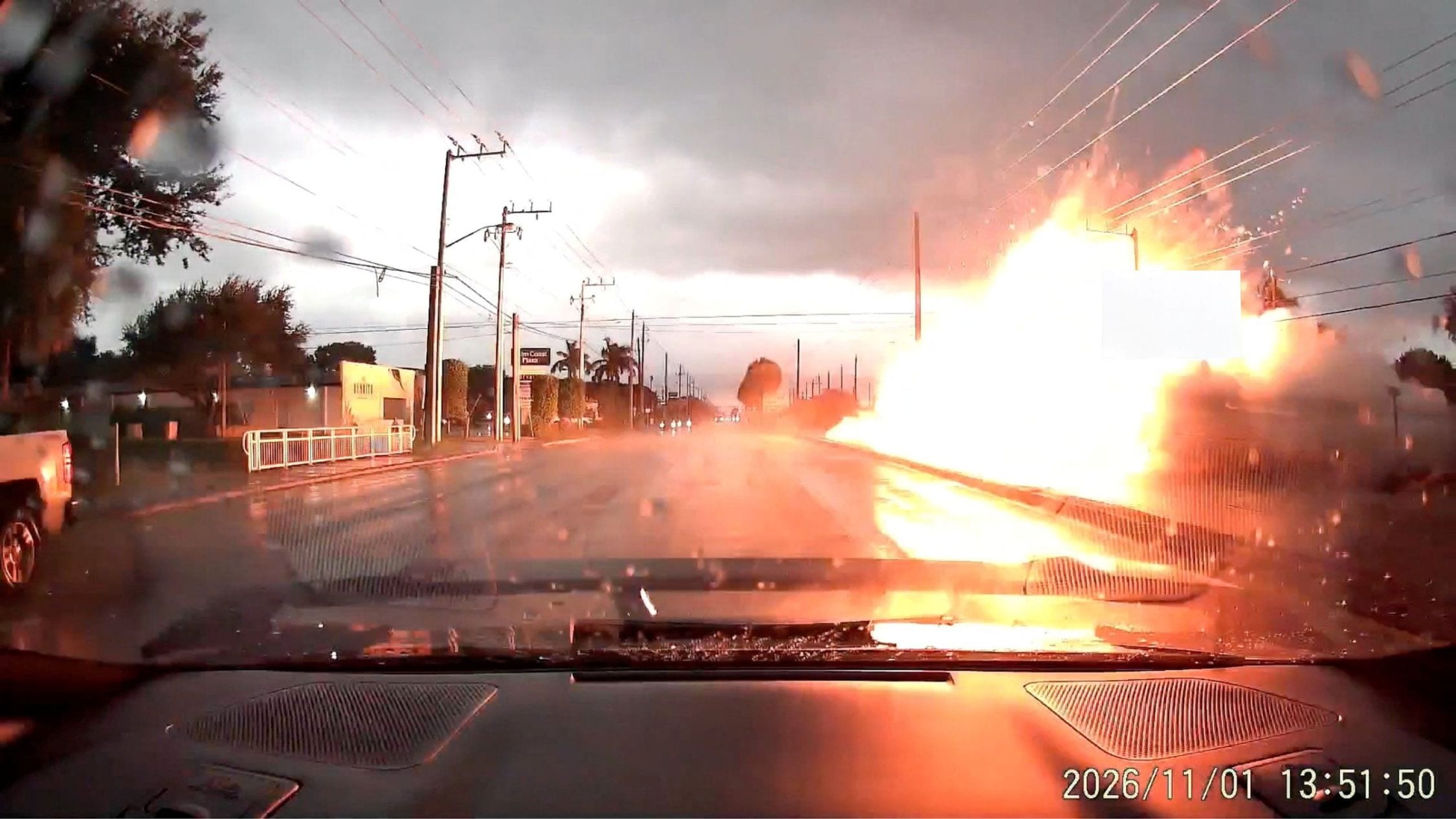
When a Learjet 60 went down in Florida—a catastrophic, high-speed plunge that left investigators sifting through fragmented radar tracks and charred debris—that grim, decades-old phrase immediately resurfaced in pilot lounges and aviation forums across the country. Could an invisible aerodynamic trap have claimed another crew? Or is the truth of what happens when a sleek private jet falls out of the Florida sky far more complicated, and far more human, than a single terrifying buzzword?
To understand what happened in the final minutes of that flight, you first have to understand what it feels like to fly where the air refuses to hold you up.
The Architecture of Thin Air
I remember the first time an instructor took me above forty thousand feet in a swept-wing jet. Up to that point in my flying career, air had always felt tangible, almost thick—like water you could push against with an aileron or a rudder. At sea level, an airplane has wide margins. You can slow down to a crawl before the wings lose their grip, and you can push the throttles forward until the engines scream without worrying about breaking the sound barrier.
Up in the flight levels, those margins evaporate.
Consider a hypothetical flight crew—let us call them Captain Miller and First Officer Vance—climbing out of South Florida on a routine repositioning leg. Their Learjet is light, stripped of passengers and heavy baggage, which makes it climb like a homesick angel. By the time they level off at 41,000 feet, the outside air temperature has plunged to minus fifty-six degrees Celsius. The air density out there is less than a quarter of what it is on the runway in Miami.
Because there are so few air molecules flowing over the wings to generate lift, Captain Miller has to keep the jet moving fast. Very fast. If he lets the airspeed bleed off by even fifteen or twenty knots, the wings will no longer support the weight of the aircraft. The nose will pitch up, the airflow will separate from the upper surface of the wing, and the jet will enter an aerodynamic stall.
Normally, the fix for a stall is simple: push the nose down and add power. At forty-one thousand feet, that instinct can kill you.
Because the air is so freezing cold, the speed of sound is much lower than it is near the ground. Captain Miller is already cruising at Mach 0.78—seventy-eight percent of the speed of sound. If he pushes the nose over to escape a slow-speed stall, the jet accelerates rapidly. Within seconds, the airflow curving over the top of the wing reaches Mach 1.0, creating localized shockwaves that destroy lift just as violently as a stall does. The nose tucks downward uncontrollably—a phenomenon test pilots in the 1940s called Mach tuck—and the controls lock up against the force of the shockwave.
Slow down, and you stall. Speed up, and you hit the sound barrier and lose control.
On a flight envelope chart, the line representing minimum stall speed slopes upward with altitude, while the line representing maximum Mach speed slopes downward. Where those two lines meet at the top of the chart, they form a sharp, narrow triangle. That apex is the coffin corner.
Anatomy of a Florida Descent
When news broke of the Learjet crash in Florida, the public naturally looked for a villain—a broken bolt, a lightning strike, a sudden engine explosion. Aviation accidents rarely offer such clean cinema. Instead, they usually unfold in the quiet, terrifying gap between what a machine is doing and what the humans inside believe it is doing.
Look closely at the profile of the Florida Learjet accident, and a chilling picture begins to emerge. The aircraft was operating at high altitude before entering an abrupt, high-rate descent. Witnesses on the ground described the unmistakable, banshee shriek of jet engines running at high power as the aircraft tore downward through the humid Florida cloud deck.
Did the coffin corner cause it?
Strictly speaking, no modern business jet accidentally wanders into the coffin corner during normal, unaccelerated flight if its systems are working properly. Learjets—particularly the Learjet 60, a direct descendant of Bill Lear’s 1960s fighter-inspired design—are certified to fly up to 51,000 feet. They are equipped with stick shakers that violently rattle the control yoke before a stall, and stick pushers that mechanically force the nose down if the pilots ignore the warning. They also carry overspeed clackers that shriek in the cockpit if the jet approaches its Mach limit.
Yet the coffin corner does not need to be reached by accident to become lethal. It only needs to be triggered by a sudden disturbance.
Imagine our hypothetical crew, Miller and Vance, cruising peacefully above the Gulf Coast. Suddenly, an uncommanded autopilot disconnect chimes through the headsets. Or perhaps they encounter a pocket of clear-air turbulence—an invisible river of wind shear rolling off the top of a distant thunderstorm—that abruptly strips twenty knots of airspeed from the wings. Or worse, a blocked pitot tube freezes over, feeding false airspeed data to the flight computers, tricking the pilots into thinking they are flying too fast when they are actually on the verge of stalling.
At 41,000 feet, a twenty-knot gust isn't a bump. It is a cliff.
If the wing stalls at that altitude, the jet doesn't gently mush forward like a Cessna training plane. Swept-wing jets drop a wing violently. Within two heartbeats, the aircraft can roll ninety degrees onto its side, the nose slicing downward toward the Atlantic or the Everglades.
The Trap of the Dive
Once a high-altitude jet rolls inverted and points straight down, the coffin corner snaps shut behind it.
In the plummet, gravity takes over. Within ten seconds, a jet that stalled for lack of speed is screaming downward past Mach 0.85, well beyond its structural design limits. The air thickens rapidly as the altitude unwinds—35,000 feet, 25,000 feet, 15,000 feet—battering the airframe with immense aerodynamic loads.
Inside that cockpit, sensory overload is absolute. The overspeed clacker is firing nonstop. The altitude alerter is blaring. G-forces press the pilots deep into their seats, making every movement of an arm feel like lifting lead. If the pilots pull back too hard on the yoke to arrest the dive, they risk snapping the wings right off the fuselage—or inducing a secondary, high-speed accelerated stall that sends the jet spinning flatly toward the earth.
History is littered with crews who flew perfectly healthy airplanes into the ground because the high-altitude environment turned a minor upset into an unrecoverable dive. In 2004, Pinnacle Airlines Flight 3701—a Bombardier CRJ200 regional jet, which shares its aerodynamic DNA with the Challenger and Learjet families—climbed to 41,000 feet on a repositioning flight with no passengers aboard. The pilots pushed the aircraft to its absolute ceiling, let the airspeed decay into the coffin corner, and stalled. Both engines flamed out in the thin air. Without thrust, and having mishandled the recovery in the disorienting darkness, the crew crashed in Missouri.
Five years later, Air France Flight 447 entered the coffin corner over the mid-Atlantic at 38,000 feet after ice crystals blocked its airspeed sensors. Confused by contradictory alarms and flying in pitch-black turbulence, the pilot flying pulled back on the side-stick—the exact opposite of what was required—holding the aircraft in a deep aerodynamic stall all the way down to the ocean surface.
Why Business Jets Are Uniquely Vulnerable
There is an uncomfortable truth in aviation that rarely makes it into glossy private-jet brochures: high-performance business jets often demand more precision from their pilots than commercial airliners do, yet they frequently operate with far thinner safety nets.
An airline captain flying a Boeing 777 across the ocean is backed by a massive dispatch center monitoring weather and fuel burn in real time, a standardized crew pairing system, and aircraft flight-control computers that literally refuse to let a pilot stall the plane or exceed its Mach limit.
A Part 91 or Part 135 charter crew flying a Learjet in Florida operates in a much leaner world. Learjets are legendary among pilots for being "pilot's airplanes"—fast, nimble, responsive, and unforgiving of sloppy energy management. They do not have fly-by-wire computers standing between the pilot's hands and the control surfaces. When you move the yoke in a Learjet, cables and pushrods move the elevators directly.
That direct mechanical connection is exhilarating when things go right. When things go wrong at forty thousand feet, there is no digital guardian angel to catch you.
Investigators looking into the Florida crash had to piece together a puzzle without the luxury of a Hollywood black-box confession. Unlike massive commercial airliners, many light and mid-size business jets operate without comprehensive flight data recorders, leaving National Transportation Safety Board (NTSB) investigators to rely on cockpit voice recorders, maintenance logs, radar returns, and the brutal forensics of twisted metal.
When they examine a high-speed, vertical impact, they look at the angle of the horizontal stabilizer trim—the small movable tailplane that balances the aircraft in flight. If the trim is found wound all the way to the nose-down position, it tells a story of a runaway trim motor or a crew desperately fighting Mach tuck. If the engines show signs of high rotational speed at impact, it proves the engines didn't fail; they were screaming at full power all the way down.
The Thin Line Between Mastery and Gravity
Whether the official NTSB docket ultimately points to an aerodynamic stall at the edge of the flight envelope, a runaway trim actuator, spatial disorientation in the clouds, or a mechanical failure in the tail, the underlying lesson remains the same.
Human beings were not built to live at forty thousand feet. Every time a sleek white jet lifts off from a sunlit Florida tarmac and climbs into the stratosphere, it is borrowing space from an environment that is actively hostile to life and flight.
We trust the titanium blades spinning inside the nacelles. We trust the aluminum spars riveted inside the wings. Most of all, we trust the two human beings sitting behind the windshields, reading tiny glowing numbers on glass screens, constantly calculating the invisible distance between too slow and too fast.
Up there in the dark cobalt sky, the margin for error isn't measured in miles or minutes. It is measured in knots—just a handful of invisible air molecules separating effortless flight from a fall that no one can stop.