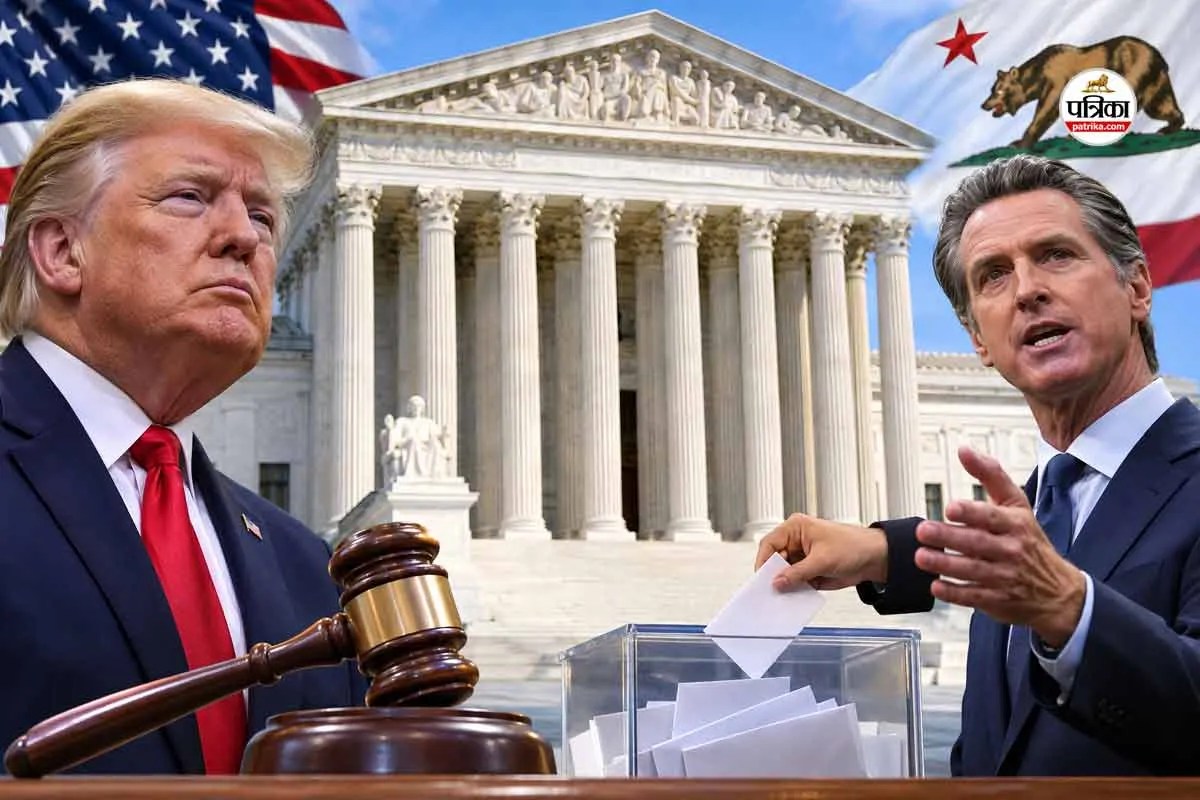
The 2026 midterm elections are not merely a routine referendum on the White House. They represent a structural stress test for the American legislative system that will determine whether the federal government remains capable of passing basic funding bills or descends into two years of total institutional gridlock. Because the current House and Senate margins sit on a razor's edge, a swing of fewer than ten districts across the country will strip the executive branch of its legislative engine, trigger immediate subpoena warfare, and stall judicial confirmations until 2029.
Standard political coverage treats midterm cycles like a sporting event. Pundits obsess over horse-race polling, generic ballot averages, and personalities. That framing misses the mechanical reality of how power actually operates on Capitol Hill. When a sitting president loses even one chamber of Congress in year two, the nature of the presidency changes overnight from legislative execution to defensive crisis management. In other news, take a look at: Inside the Learjet Crash Nobody Is Talking About.
The Mathematics of a Razor-Thin Majority
Modern congressional majorities have shrunk to historic lows. Over the last decade, geographic sorting and aggressive redistricting have eliminated the vast majority of true swing districts. Out of 435 seats in the House of Representatives, fewer than thirty are genuinely competitive in any given cycle.
This compression means national wave elections no longer sweep fifty or sixty seats at a time. Instead, control of the lower chamber hinges on a handful of suburban districts in states like California, New York, Pennsylvania, and Michigan. A turnout shift of two percent among independent voters in Orange County or the Philadelphia collar counties is enough to flip the speaker's gavel. NBC News has provided coverage on this critical topic in extensive detail.
The Senate map presents a completely different set of structural constraints. Because only one-third of the chamber faces voters every two years, the 2026 map locks in specific geographic battlegrounds regardless of the national mood. Defending incumbents in states that lean toward the opposite party requires massive financial outlays just to stay competitive, draining resources from offensive targets.
When margins drop below five seats in the House or two votes in the Senate, leadership loses the ability to discipline its own caucus. Every single member effectively holds a veto over major legislation. Passing a budget reconciliation bill or raising the debt ceiling requires unanimous buy-in from ideological extremes that have zero incentive to compromise.
How Subpoena Power Replaces Lawmaking
If the opposition party captures the House of Representatives, the legislative calendar effectively dies on January 3, 2027. Bills passed by a divided Congress rarely reach the president's desk unless they are attached to must-pass spending packages or defense authorizations.
In place of lawmaking, the majority party deploys its primary constitutional weapon—oversight. Committee chairs gain unilateral authority to issue subpoenas, compel testimony from cabinet officials, and demand internal White House communications.
History shows how quickly this consumes an administration. Following the 2018 midterms, House committees launched dozens of parallel investigations into executive branch operations, tax records, and foreign policy decisions. The White House was forced to build an entire internal legal apparatus just to respond to document requests and litigate executive privilege claims in federal court.
The same dynamic played out in reverse after the 2022 cycle. Investigative committees became the primary vehicle for messaging, dominating cable news cycles and forcing agency heads to spend hundreds of hours preparing for televised hearings rather than managing federal departments.
A flip in either chamber during the 2026 midterms guarantees an immediate pivot to this investigative posture. For the administration, every policy initiative becomes secondary to legal defense. For voters, the practical result is a federal government that spends billions of dollars on administrative overhead while failing to update outdated laws governing artificial intelligence, healthcare costs, or border security.
The Silent Collapse of Judicial Confirmations
While cable news focuses on House floor fights, the real long-term stakes of the 2026 midterms reside in the Senate Judiciary Committee. The ability to reshape the federal judiciary is the most durable power a president possesses, outlasting executive orders by decades.
Confirming federal district and appellate judges requires a simple majority vote in the Senate. As long as the president's party holds that majority, the administration can steadily fill vacancies across the country, locking in ideological interpretations of statutory and constitutional law.
Lose the Senate, and that pipeline shuts down instantly.
Under an opposition-controlled Senate, the Judiciary Committee chair simply refuses to schedule hearings for nominees deemed too ideological. Even moderate nominees face months of procedural delays. During the final two years of Barack Obama's presidency, a Republican Senate reduced judicial confirmations to a trickle, culminating in the blockade of a Supreme Court nominee for nearly a year.
If the Senate flips in 2026, the administration will lose its ability to appoint judges to federal circuit courts—the courts that serve as the final word on over ninety-nine percent of federal appeals. Any unexpected vacancy on the Supreme Court would trigger a constitutional standoff that would likely leave the seat empty until after the 2028 presidential election.
Why Executive Orders Are a Trap
When Congress locks up, presidents inevitably turn to executive actions to bypass legislative gridlock. Supporters cheer these moves as decisive leadership. In practice, governing by executive order is a sign of institutional weakness that creates massive instability for the American economy.
Executive actions do not carry the permanence of statutory law. What one president signs with a pen on Tuesday can be revoked by the next president on Wednesday. Furthermore, any major regulatory shift enacted without explicit congressional authorization faces immediate legal challenges.
Following the Supreme Court's decision to overturn the Chevron doctrine—which previously required federal courts to defer to agency interpretations of ambiguous statutes—executive agencies have far less room to maneuver. Federal judges now exercise independent judgment when evaluating whether an agency has overstepped its statutory mandate.
Consider a hypothetical example involving energy regulation. Suppose the administration attempts to rewrite emissions standards for power plants through the Environmental Protection Agency because Congress refuses to pass an energy bill. Under current legal standards, industry groups can sue immediately, and federal judges are far more likely to strike down the rule as an unauthorized expansion of agency power. Businesses caught in the middle freeze capital investments because they cannot predict what the regulatory environment will look like in twenty-four months.
The Fiscal Cliff Nobody Wants to Discuss
The most dangerous consequence of a divided government after the 2026 midterms involves basic fiscal maintenance. Over the last fifteen years, Congress has largely abandoned the traditional appropriations process, relying instead on massive year-end omnibus bills and short-term continuing resolutions to keep the government open.
This broken process collides directly with the statutory debt limit and expiring tax provisions. When different parties control the House, the Senate, and the White House, neither side has an incentive to take the political blame for painful fiscal compromises.
A narrow opposition majority in the House often empowers a small faction of hardliners who view government shutdowns or debt ceiling standoffs as acceptable leverage. Leadership is caught between passing bipartisan bills—which risks a motion to vacate the speaker's chair—and catering to demands that the Senate and White House will reject out of hand.
Bond markets and credit rating agencies watch these dynamics closely. Repeated brinkmanship over sovereign debt obligations erodes confidence in American governance and drives up borrowing costs for everything from corporate debt to thirty-year home mortgages. The 2026 midterms will determine whether Washington has enough functioning majorities to clear basic fiscal hurdles without triggering a self-inflicted economic crisis.
The Structural Vulnerability of Incumbent Parties
To understand why the party in power almost always struggles during midterm elections, you have to look beyond approval ratings and examine the mechanics of voter motivation. Political scientists call it the thermostatic model of public opinion.
Voters rarely get everything they want from a new administration. When a party wins control of Washington, it inevitably overreaches on certain cultural or economic issues to satisfy its core base. Independent and swing voters react to this overreach by pulling back, using the midterm ballot as a brake to restore balance.
At the same time, anger is a far stronger motivator than satisfaction. Voters whose preferred candidate lost the previous presidential election remain highly engaged and eager to register their frustration at the ballot box. Voters whose candidate won often become complacent, assuming the job is done until the next presidential race.
This enthusiasm gap consistently depresses turnout among the president's base during off-year elections. Since World War II, the president's party has lost seats in the House of Representatives in almost every single midterm cycle, with only rare exceptions driven by extraordinary national events like the September 11 attacks.
Economic perception compounds this structural disadvantage. Voters do not evaluate the economy based on macroeconomic spreadsheets, GDP growth rates, or stock market indices. They evaluate it at the grocery store checkout line and when paying their monthly insurance premiums. If household costs remain elevated, voters punish the party holding the White House, regardless of whether global supply chains or monetary policy are actually responsible.
Foreign Policy Whiplash and Global Alliances
Domestic gridlock does not stop at the water's edge. Foreign adversaries and allies alike treat the American midterm elections as a leading indicator of whether Washington can keep its commitments.
Major foreign policy initiatives—from defense treaties to foreign aid packages and trade agreements—require congressional buy-in. A hostile House or Senate can starve international initiatives of funding, block arms sales, or pass resolutions that directly undermine the president's diplomatic messaging.
For European and Asian allies, a sharp swing in Congress signals that American foreign policy is subject to violent reversals every two years. Why sign a long-term trade or security pact with the White House if a new congressional majority might refuse to fund it eighteen months later?
Adversaries exploit this hesitation. Authoritarian regimes operate on ten- and twenty-year timelines, waiting out American election cycles while probing for signs of domestic division. When Washington is consumed by internal investigations, budget standoffs, and partisan warfare, the executive branch has far less bandwidth to manage complex international crises.
The Illusion of the Mandate
Every election cycle produces winners who claim they have received a sweeping mandate from the American people. In reality, modern American elections are decided by tiny margins in a handful of swing states, reflecting deep national division rather than consensus.
The 2026 midterms will not resolve the fundamental ideological fractures running through the country. No single election can fix a broken appropriations process, depoliticize the judiciary, or force polarized lawmakers to compromise on entitlement reform.
What the election will do is establish the rules of engagement for the final two years of the presidential term. A unified government—even with razor-thin majorities—allows the executive branch to pursue an affirmative agenda, confirm judges, and shape federal regulations. A divided government shifts the entire apparatus of the federal state into a defensive crouch, turning Capitol Hill into an arena for investigative theater and fiscal brinkmanship.
When voters step into the booth in November 2026, they are not just choosing a local representative or a senator. They are deciding whether the next two years of American governance will be defined by legislative execution or institutional paralysis.