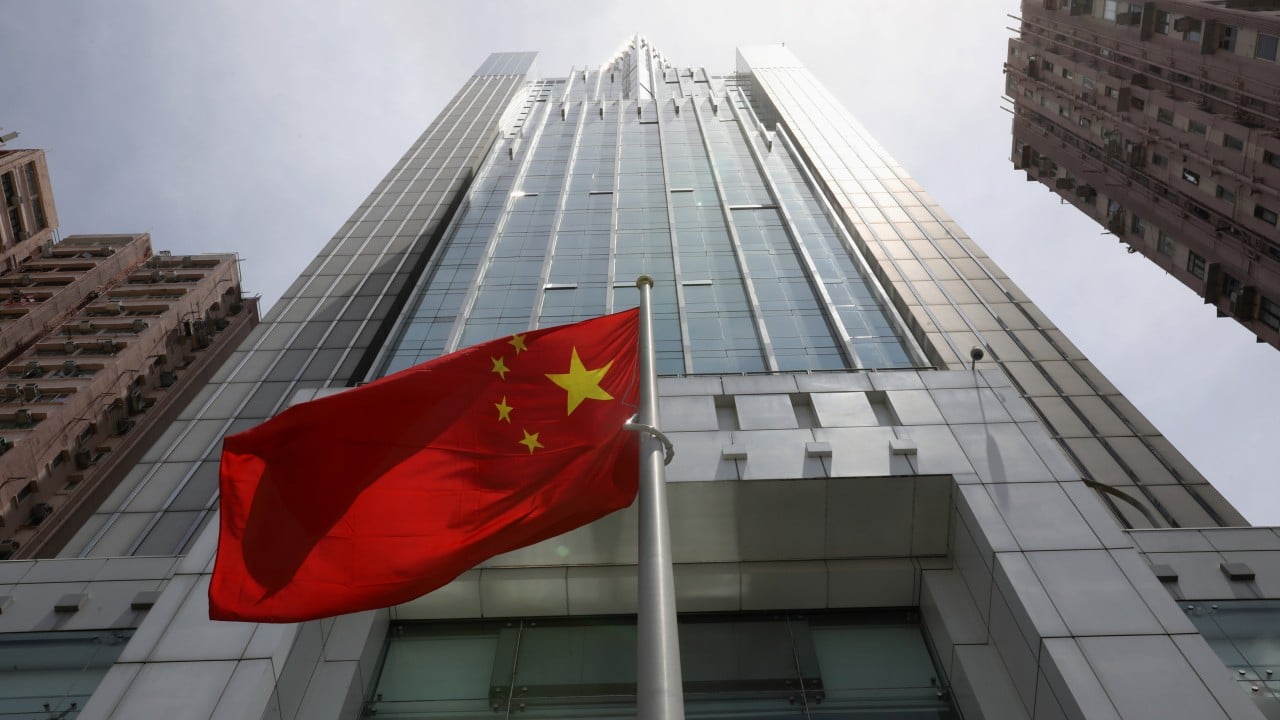
Beijing has quietly engineered a sweeping overhaul of its top representative body in Hong Kong. By restructuring the Liaison Office to concentrate heavily on youth outreach and neighborhood-level administration, the central government is signaling a permanent shift in how it manages the city. The traditional strategy of managing Hong Kong from the top down through billionaire tycoons and political dynasties has run its course. This new operational framework establishes an infrastructure designed to integrate directly with ordinary residents, bypassing traditional local power brokers to secure grassroots control.
For decades, the central government relied on a comfortable alliance with property moguls and established political elites to maintain stability. The structural vulnerabilities of that arrangement became painfully clear during successive waves of social unrest. Wealth concentration worsened, housing costs soared, and an entire generation of young people grew alienated from both the local administration and the mainland. The latest institutional revamp acknowledges that winning over corporate boardrooms did nothing to secure the loyalty of the streets.
The Grassroots Expansion
By embedding its apparatus directly into the districts, Beijing is building an alternative network of influence. This initiative establishes a parallel mechanism for tracking public sentiment and directing social services. The new model places cadres directly into working-class neighborhoods where economic desperation historically fueled political dissent.
This is not a temporary public relations campaign. It represents a permanent expansion of the state apparatus into daily civic life. Traditional district committees, once dominated by localized mutual aid groups and independent community leaders, are being systematically integrated into a centralized command structure. The objective is to establish an early warning system that can identify and neutralize social friction before it escalates into political resistance.
The operational reality of this restructuring can be seen in the daily schedules of mainland officials. They are no longer just attending high-society galas or corporate ribbon-cuttings. Instead, cadres are walking through subdivided flats, visiting elderly residents in industrial areas, and coordinating with local mutual-aid networks. This direct engagement creates a distinct channel of authority that functions alongside the official Hong Kong civil service, sometimes moving faster than the local bureaucracy to resolve localized grievances.
Targeting the Next Generation
The focus on youth work addresses the most significant vulnerability in the post-handover governance model. Decades of patriotic education initiatives achieved mixed results because they lacked a structural foundation in the daily lives of students and young professionals. The restructured office intends to fix this by taking control of career paths, housing assistance, and social mobility.
Beijing is establishing new institutional pipelines that connect young Hong Kongers directly to opportunities in mainland tech hubs and special economic zones. By positioning itself as the gatekeeper to career advancement, the restructured office creates a tangible material incentive for political compliance. The message to the city's youth is practical. Economic survival and professional growth require active alignment with the national development blueprint.
This strategy deliberately targets the deep-seated anxieties of a generation locked out of one of the world's most expensive property markets. When a young graduate faces the prospect of decades in a subdivided unit while working a stagnant service-job, abstract political promises carry little weight. By offering subsidized housing initiatives, mainland internships, and entrepreneurship grants, the restructured apparatus seeks to replace ideological dissatisfaction with economic dependency.
Bypassing the Elite Tycoons
The restructuring represents a significant downgrade for the political capital of Hong Kong's traditional business dynasties. For years, these elites acted as the indispensable intermediaries between the central government and the local population. They assured Beijing that their economic dominance could guarantee social stability, a claim that shattered during the mass protests of the last decade.
The central government now views these corporate empires as part of the problem rather than the solution. Monopolistic practices in real estate, retail, and utilities created the exact economic stagnation that bred public anger. By dealing directly with the districts, the restructured office cuts out these middlemen. The tycoons are no longer political partners. They are now expected to be obedient executors of policies handed down from above.
This shift reshapes the local political environment. Wealthy donors can no longer dictate terms to political parties or secure policy concessions from the Chief Executive by claiming they represent the sole economic engine of the territory. The new metric of political value is an organization's capacity to mobilize voters at the estate level and manage youth disillusionment. Those who cannot deliver on these fronts are quickly finding themselves marginalized.
Structural Vulnerabilities of the New Model
Despite the clear strategic intent, this institutional pivot faces massive operational hurdles. The most immediate challenge is the cultural and linguistic divide between mainland cadres and the communities they are tasked with managing. Trust cannot be manufactured by an administrative decree or a budget reallocation.
Many neighborhood residents view these sudden grassroots interventions with deep suspicion. When a mainland official visits a low-income family, the interaction often feels performative and rigidly scripted. The structural reality is that decades of political alienation cannot be erased by distributing care packages or offering internships in distant mainland cities. If these efforts are perceived merely as surveillance disguised as social work, they will fail to generate genuine loyalty.
Furthermore, this direct intervention creates friction within the local governance apparatus. The Hong Kong civil service possesses its own established protocols, institutional pride, and regulatory boundaries. When the Liaison Office operates as a parallel administration, it risks hollowed-out local authority. Local bureaucrats can easily become passive, refusing to take initiative on complex social issues out of fear of contradicting the mainland apparatus.
The Institutional Endgame
The reorganization of the Liaison Office is the structural implementation of a governance philosophy that prioritizes total administrative integration over local autonomy. The traditional boundaries that separated mainland political operations from Hong Kong’s domestic administration have dissolved.
This transformation creates a system where social stability is maintained through direct institutional penetration rather than elite consensus. The success of this strategy will not be measured by the corporate profits of the city's conglomerates or the performance of the stock market. It will be judged by Beijing’s ability to prevent future unrest by completely dominating the spaces where young people study, live, and work. The infrastructure for this total integration is now fully operational, and the traditional political hierarchy of Hong Kong has been permanently altered.