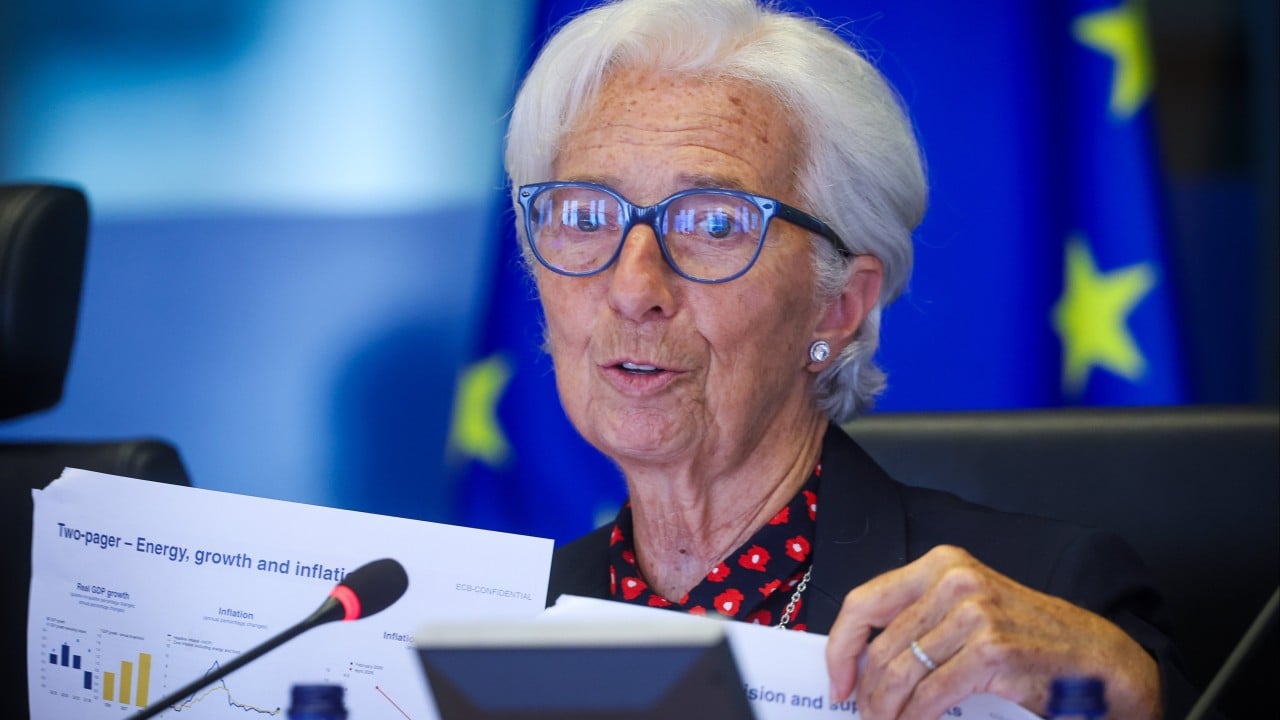
European Central Bank President Christine Lagarde wants to talk about the Chinese yuan, but the reality is that the conversation is already decades too late. On Monday, following a contentious Group of Seven meeting in France, Lagarde urged global leaders to launch multi-lateral discussions to address what International Monetary Fund data indicates is a 15% to 16% undervaluation of the renminbi. While her call to action sounds like an assertion of European leadership, it is actually an admission of absolute desperation.
Europe's industrial core is hollowed out. High-end automobiles, machinery, and renewable technology—sectors the euro area once dominated—are being systematically replaced by cheaper Chinese alternatives. By framing this as a currency valuation mismatch that can be ironed out through diplomatic summits, Frankfurt is chasing a phantom. The brutal truth is that China did not just accidentally end up with a cheap currency; Beijing built an entire domestic economic apparatus designed to export its deflation to the rest of the world, and Europe lacks the political will to stop it.
The Mirage of Global Cooperation
Lagarde’s appeal rests on a flawed premise. She believes that the multilateral trade architecture can still compel a major economic superpower to alter its fundamental domestic policies. It cannot.
When the IMF adjusts exchange rates to account for international inflation differences, the yuan looks artificially depressed. This is a deliberate structural feature, not a temporary bug. For years, the People’s Bank of China has maintained an intricate capital control regime alongside less transparent informal interventions. When capital wants to flee China due to domestic real estate slumps or sluggish growth, the central bank tightly manages the gate, preventing the currency from behaving like a true free-floating asset.
Relying on forums like the G7 or the IMF to negotiate a currency revaluation assumes all parties are playing the same game. They are not. Beijing has repeatedly denied manipulating the yuan, pointing instead to its massive domestic economic pressures. This defense highlights a major gap in global trade rules. The World Trade Organization handles direct subsidies and tariffs. The IMF monitors exchange rates but has zero enforcement teeth. Because China’s currency management blends seamlessly with its internal monetary policies to combat low domestic inflation, it remains entirely immune to international legal challenges.
Moving the Goalposts
While Europe begs for dialogue, other global actors have abandoned diplomacy for raw economic defense. The contrast between Washington and Frankfurt highlights Europe's structural vulnerability.
The United States has spent the last year implementing aggressive defensive measures, including broad tariff updates aimed directly at offsetting trade imbalances. Washington operates under the assumption that the global trading system is fundamentally broken.
Europe, conversely, remains trapped in institutional hesitation. The euro area’s economy is structurally dependent on exports, yet its internal markets are fracturing. A stronger nominal effective exchange rate for the euro has made European exports more expensive globally, while cheap Chinese imports pour in. The result is an economic vice. European automakers cannot compete on price at home, and they are losing market share abroad.
To understand how deep this disadvantage goes, look at the structural mechanics of the trade imbalance.
| Metric | Euro Area | China |
|---|---|---|
| Domestic Demand | Stagnant, suppressed by structural underinvestment | Systematically depressed to prioritize manufacturing output |
| Currency Mechanics | Free-floating euro, vulnerable to sentiment shifts | Managed float, shielded by capital controls and state-directed banks |
| Primary Economic Engine | Fragmented services and high-cost industrial exports | State-subsidized industrial capacity aimed at global markets |
| Policy Response | Appeals to multilateralism and targeted anti-subsidy probes | Unchecked production expansion to export excess domestic capacity |
The Deflation Export Machine
The core problem is not that the yuan is cheap. The problem is what that cheap yuan represents. China is currently suffering from a deep, structural domestic demand crisis, driven by a deflated property sector and low consumer confidence. In a normal market economy, a collapse in domestic demand leads to a sharp contraction in manufacturing. In China, the state response has been to double down on factories, pouring capital into advanced manufacturing to keep the economic engine running.
This creates an immense amount of overcapacity. Since Chinese consumers cannot or will not buy these goods, the products must go somewhere else. A currency that is 15% undervalued acts as a massive turbocharger for these exports, allowing Chinese firms to underbid European rivals even when factoring in shipping and logistics.
When Lagarde cites IMF research about inflation differences, she is pointing to the fact that China is exporting its internal deflation directly to Europe’s shores. It is an industrial liquidation sale disguised as trade. European leaders can launch as many targeted anti-subsidy investigations into electric vehicles as they want, but as long as the underlying currency framework remains heavily skewed, those measures are just band-aids on an open wound.
No Easy Way Out
If the European Central Bank and the European Commission think a plaza-accord-style agreement can fix this, they are dreaming. In 1985, global powers successfully negotiated a depreciation of the US dollar against the Japanese yen and German deutsche mark. But that occurred during the Cold War, among allies who depended on the US security umbrella. China is an independent geopolitical pole with zero incentive to voluntarily hand over its primary economic survival mechanism to protect European manufacturing jobs.
Europe faces an incredibly difficult choice. It can continue to watch its industrial base erode while waiting for global talks that will never happen, or it can follow Washington’s lead and decouple through aggressive, sweeping tariffs. The latter path comes with severe consequences. Higher tariffs mean costlier consumer goods, retaliatory measures from Beijing, and a potential flare-up in eurozone inflation just as the ECB tries to stabilize interest rates around its neutral range.
Frankfurt wants a clean, diplomatic solution to a messy structural conflict. By the time European leaders realize that Beijing has no interest in talking away its manufacturing advantage, there might not be much of an industrial core left to defend.