A commercial airliner is not engineered to fall out of the sky at more than six hundred knots. Yet when flydubai flight FZ1073 suffered a horrific cockpit assault that forced a catastrophic dive from thirty-four thousand to seventeen thousand feet in a matter of seconds, the Boeing 737 MAX 8 airframe stayed together.
The resulting global conversation has largely focused on the incredible human heroism inside the cabin. But beneath the headlines of struggle and survival lies a hard technical reality. The aircraft survived extreme aerodynamic overspeed and massive G-force loads because civil aviation certification standards bake a brutal margin of error into every aluminum and composite rib.
The Engineering Reality Behind Structural Margins
Every modern transport category aircraft must pass rigorous ultimate load testing long before it carries a single fare-paying passenger. Regulatory frameworks require manufacturers to prove that wings and fuselages can withstand one hundred and fifty percent of the highest aerodynamic load expected in normal or extreme operational service. This safety factor is non-negotiable.
When a narrowbody twinjet gets pushed past its maximum operating limit speed—known technically as $V_{MO}$—the physical forces change instantly. Dynamic pressure scales with the square of velocity. As flight FZ1073 plunged toward the Saudi-Jordanian border during the September 2026 incident, the sheer energy hammering the exterior skin skyrocketed.
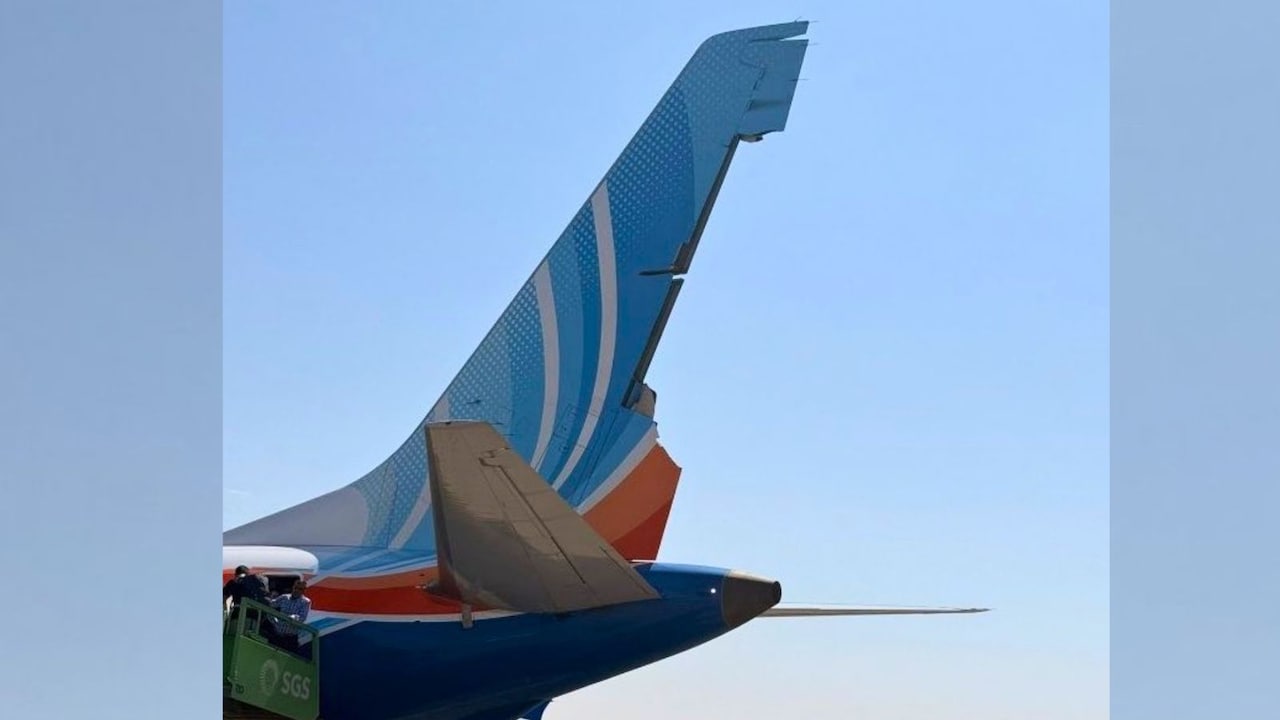
Airflow separation, localized shockwaves, and severe control surface flutter threaten to tear tail assemblies right off the mounting pins. In this specific scenario, the vertical stabilizer and its attached rudder took the brunt of the kinetic abuse. Flight data recorders and post-flight imagery confirmed that a large portion of the rudder structure shredded and detached.
That loss was not a structural failure of the main hull. It was actually the airframe sacrificing a secondary control component to bleed off immense aerodynamic stress. The structural skeleton absorbed the punishment and kept the wings anchored to the fuselage.
Why Conventional Wisdom Misunderstands Overspeed Stress
Public commentary often assumes that crossing the threshold into near-supersonic ground speeds spells immediate structural disintegration. Aerodynamicists know the situation is more nuanced. Ground speed telemetry during a rapid descent includes local wind vectors and jetstream velocity components, meaning True Airspeed and Mach numbers tell the precise engineering story.
While the flydubai jet exceeded its designated Mach limit by a wide margin, airframes possess built-in flutter margins that extend roughly fifteen percent or more beyond design dive speeds. These buffers exist precisely because emergency dives, unexpected wind shears, or catastrophic control inputs happen in the real world.
Think of it as a heavy suspension bridge built to handle a category-five hurricane even though standard weather rarely exceeds a gentle gale. The extra metal thickness, redundant load paths around window cutouts, and heavy-gauge stringers act as structural insurance policies.
The Human Element and Flight Deck Recovery
An overstressed airframe is only half the equation. A resilient machine is useless if the flight controls are completely unresponsive or if nobody is left to fly the jet.
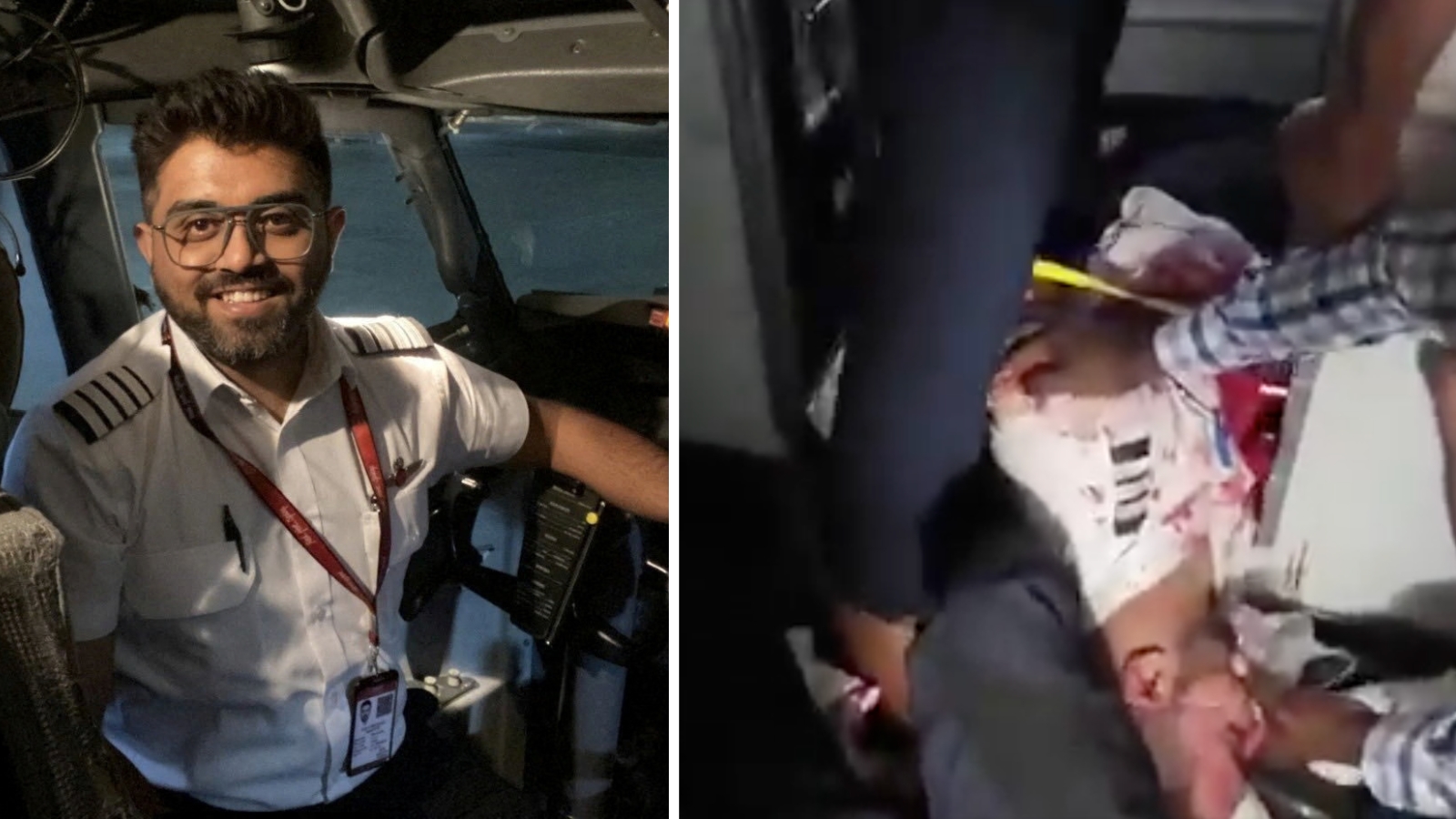
During the FZ1073 emergency, captain Smit Machchhar suffered severe injuries during an initial cockpit altercation initiated by the first officer. The subsequent nosedive introduced disorienting G-forces that complicated every physical movement inside the flight deck. Yet, once passengers and crew intervened to neutralize the threat, deadheading flight crew members stepped forward to take the controls.
They managed an aircraft missing a major portion of its rudder. Modern fly-by-wire and mechanical backup systems on the 737 MAX family allowed the crew to maintain lateral stability using ailerons, spoilers, and residual yaw authority. Diverting safely to Tabuk, Saudi Arabia, required an extraordinary display of airmanship, but that skill relied entirely on the fact that the underlying flight control runs remained intact beneath the torn skin.
The Aftermath For Certification Standards
Investigators from multiple jurisdictions continue to sift through the data recorders of aircraft A6-FKF. The focus has rightly shifted toward aviation security, crew screening protocols, and cockpit door reinforcement.
Yet structural engineers are quietly studying the telemetry logs with intense interest. Incidents where an aircraft is driven deliberately into high-speed structural corners provide empirical data that computer simulations and static rig tests can never fully replicate.
The 737 MAX program has weathered years of intense scrutiny regarding software controls, regulatory oversight, and manufacturing quality. This specific event offers a starkly different data point. When faced with kinetic forces far outside the bounds of normal flight, the physical shell performed precisely as heavy transport engineering demands. It absorbed the energy, sacrificed its extremities to protect the core, and brought one hundred and seventy-four souls back to solid ground.