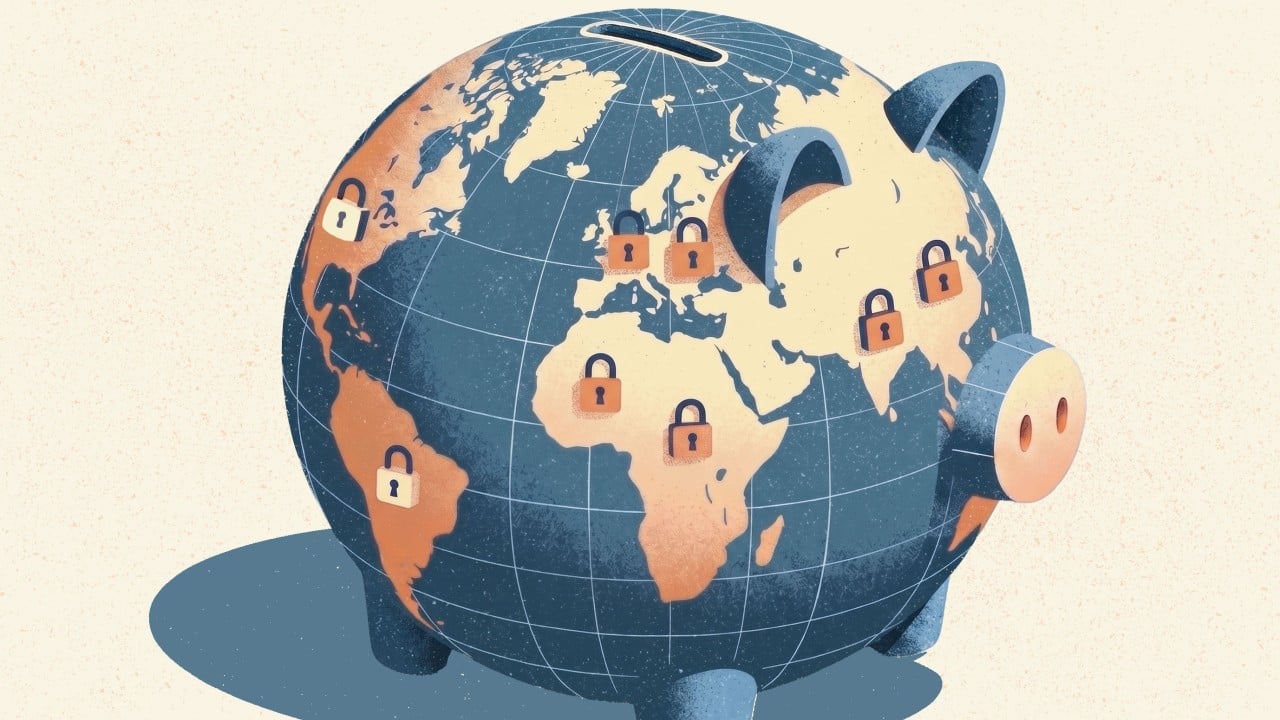
The modern global economy is suffering from a terminal case of strategic paranoia, trading efficient supply chains for a patchwork of defensive fortifications that ultimately make everyone poorer and more vulnerable. Every major capital now treats trade data, semiconductor fabrication lines, and critical mineral processing plants as battlefield positions in an unacknowledged economic war. This fixation on absolute security is strangling cross-border commerce, driving up inflation, and creating an unstable environment where a single diplomatic dispute can halt production lines halfway across the world.
The Anatomy of Commercial Paranoia
Decades of frictionless trade assumed that economic interdependence served as an automatic brake on geopolitical conflict. That assumption died quietly as governments watched supply chains weaponized into tools of state coercion. When critical nodes from rare earth refining to advanced lithography are controlled by rival jurisdictions, the logical reaction for any defensive state is to hoard capacity, subsidize domestic champions, and erect trade barriers.
Consider a hypothetical example involving industrial robotics. A manufacturer in Western Europe requires specialized microcontrollers traditionally sourced from East Asia. Fearing sudden export bans or sudden political blockades, the firm spends billions constructing an internal, localized sourcing network that operates at triple the baseline cost. Multiply this corporate anxiety across ten thousand multinational enterprises, and the aggregate result is a massive destruction of capital.
The market has not become resilient through this process; it has merely become redundant, brittle, and expensive. Capital that should fund research and productivity growth is instead wasted on duplicate manufacturing footprints built solely to satisfy the worst-case scenarios dreamed up by risk assessment consultants.
Why Old Diplomatic Playbooks Are Failing
Governments attempting to manage this transition rely on outdated bilateral tariffs and blunt sanctions that accelerate fragmentation rather than healing it. Traditional trade agreements drafted in the late twentieth century operated under the premise that commercial actors functioned independently of national security apparatuses. That world is gone. Today, finance ministries, intelligence agencies, and corporate boards operate within a fused circle of decision-making.
Applying twentieth-century tariff logic to twenty-first-century security anxieties is like using a compass to navigate a digital network. Tariffs punish consumers while failing to address the core driver of economic fragmentation, which is a total absence of mutual trust regarding state intentions. Without an overarching diplomatic framework designed specifically to separate legitimate national defense from pure protectionism, every retaliatory measure triggers an escalation spiral.
The Case for a Commercial Detente
History offers a precedent for managing intense systemic distrust without sliding into total catastrophe. During the darkest phases of the Cold War, rival blocs recognized that unrestricted hostility risked an accidental apocalypse, prompting the creation of the 1975 Helsinki Accords. That diplomatic architecture established behavioral norms, boundary recognition, and continuous monitoring channels that allowed ideological competitors to coexist without firing on one another.
A modern economic equivalent is urgently required to stabilize global commerce. A contemporary framework must establish clear, enforceable boundaries between genuine national security restrictions and predatory mercantilism.
To function effectively, this framework must rest on three practical pillars.
- Transparency mandates requiring states to pre-notify trading partners before implementing emergency export controls on critical industrial inputs.
- Objective definitions separating dual-use technologies that genuinely threaten military security from standard commercial goods used in everyday manufacturing.
- Multilateral dispute channels staffed by neutral economic arbiters capable of evaluating whether a national security justification for a trade restriction is legitimate or merely disguised protectionism.
Critics argue that authoritarian states will simply ignore such rules, rendering any new agreement toothless. That objection misreads the fundamental utility of foundational diplomatic frameworks. The original Helsinki signatories did not trust the Soviet Union to instantly reform its domestic policies; rather, they established a baseline standard of conduct that empowered domestic and international actors to systematically expose violations and build long-term pressure for compliance.
The Cost of Inaction
Remaining on the current trajectory guarantees a permanently degraded global standard of living. As duplication accelerates and technological standards fracture into incompatible regional silos, the efficiency gains that lifted billions out of poverty over the past fifty years will erode entirely. Innovation thrives on scale, and breaking the planetary market into walled gardens starves research-heavy industries of the revenue needed for breakthroughs.
The transition away from reckless hyper-globalization does not require a retreat into isolationist paranoia. It requires an intentional, institutionalized effort to write new rules of engagement for a dangerous era, ensuring that economic exchange remains a tool for mutual survival rather than a weapon of mutual destruction.