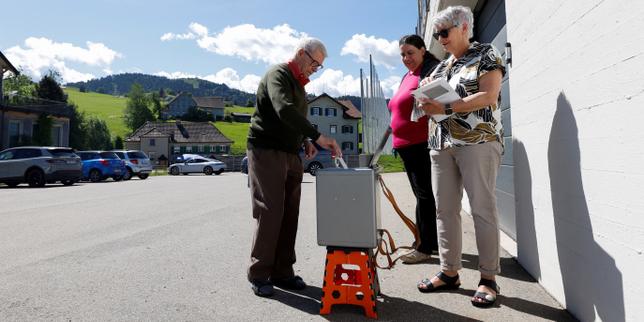
Swiss voters have decisively rejected a controversial referendum proposal to cap the national population at 10 million inhabitants. The initiative, heavily championed by the right-wing Swiss People's Party (SVP/UDC), failed at the ballot box with 54.8% of voters casting a "no" vote.
While the defeat brings immediate relief to multinational corporations and European diplomats, it does not mean the underlying anxieties driving the vote have disappeared. The high voter turnout of nearly 59% reveals a deeply polarized electorate grappling with real infrastructure strain.
By voting down the population cap, Switzerland chose economic integration over isolation. However, the victory for the political establishment masks a deep urban-rural divide and leaves the country’s relationship with Europe on volatile ground.
Anatomy of an Arbitrary Hard Cap
The proposal, officially titled "No to a Switzerland with 10 million inhabitants!", sought to alter the country's constitution. It demanded that the permanent resident population remain strictly below 10 million until the year 2050.
The mechanism behind the initiative was designed to act as an automatic policy brake. If the population crossed 9.5 million, the federal government would be legally required to suspend family reunifications and tighten asylum criteria. Had the population hit the absolute 10 million limit, Bern would have been forced to terminate international treaties that drive population growth.
Chief among those threatened agreements was the free-movement accord with the European Union.
Setting long-term constitutional policy based on a single rigid demographic figure is structurally flawed. Economies do not scale cleanly along a linear path, and population growth is driven by multiple unpredictable variables like global conflict, domestic birth rates, and fluctuating labor shortages. If a Swiss engineering firm cannot hire a specialized technician from Germany because of an arbitrary quota, that firm does not magically become more sustainable. It simply stops growing, or it relocates.
The Fragmented Map
The final vote breakdown exposes a fragmented nation divided by economic reality and geography. The rejection was absolute across French-speaking western Switzerland, with Geneva and Vaud throwing out the initiative by margins exceeding 64%. Basel-City registered a crushing 73.5% "no" vote.
Conversely, rural central Switzerland leaned heavily toward the restriction. The cantons of Schwyz and Appenzell Inner Rhodes approved the cap with more than 60% support, while Ticino narrowly accepted it by 50.7%.
This geography reveals a sharp urban-rural divide. The major cities, which host global banking hubs, pharmaceutical giants, and international organizations, understand that their daily survival depends on foreign talent. They voted overwhelmingly to keep the doors open.
Meanwhile, the countryside, which experiences the environmental encroachment of suburban sprawl without directly reaping the immediate tax windfalls of multinational corporations, voted to pull up the drawbridge.
The Core Grievances of the Borderlands
It is easy for critics to dismiss the 45.2% who voted "yes" as merely reacting to nationalist rhetoric. That analysis misses the broader picture. The concerns raised during the campaign are anchored in visible domestic pressures.
Switzerland’s population sat at roughly 9.1 million at the end of last year, a significant surge from the numbers recorded before the 2002 EU free-movement pact. The rapid influx has exposed cracks in the country's famously efficient public systems.
- The Real Estate Squeeze: Rent prices in Zurich, Geneva, and Lausanne have skyrocketed, leaving middle-class families priced out of urban centers.
- Transit Logjams: Commuter trains are increasingly packed, and main highway arteries experience daily gridlock.
- Infrastructure Strain: Public schools and healthcare networks are facing acute staffing shortages, struggling to match the pace of growth.
The corporate sector has long treated immigration as an endless resource pool without fully factoring in the social costs of housing and integrating those workers. When a nation's infrastructure is built for eight million people and suddenly inherits nine million, things begin to break. The ballot box was used as a pressure valve for voters exhausted by escalating housing costs and crowded train platforms.
The Looming Clash with Brussels
For Switzerland’s major export industries—including luxury timepieces, specialized machinery, and pharmaceuticals—the passage of this initiative would have been disastrous. Last year's introduction of new US tariffs already damaged several export-reliant sectors. Losing the free-movement agreement with the EU would have triggered the "guillotine clause," instantly collapsing a whole series of bilateral trade deals with the country's largest trading partner.
Yet, avoiding a "Swiss Brexit" today does not solve the long-term diplomatic headache. Bern is currently locked in delicate negotiations with Brussels to stabilize its complex network of access treaties. The fact that nearly half of the Swiss population voted for a measure that would explicitly destroy these agreements hands the Swiss government a weak mandate.
European negotiators now know that a massive portion of the Swiss electorate is deeply skeptical of further integration. Any compromise that appears to cede more sovereign control over immigration will likely face a swift defeat in future referendums.
Looking Beyond Quotas
The rejection of a population cap preserves the status quo, but the status quo is untenable without real domestic policy shifts. Switzerland cannot rely on immigration to power its GDP while ignoring the physical limits of its territory.
If the government wishes to prevent another right-wing immigration initiative from succeeding in the future, it must aggressively fund affordable housing, expand regional transit networks, and reform infrastructure planning.
Placing a hard ceiling on population figures is an artificial solution to a structural management failure. The real challenge for Switzerland is not stopping growth entirely, but building the infrastructure necessary to sustain it.