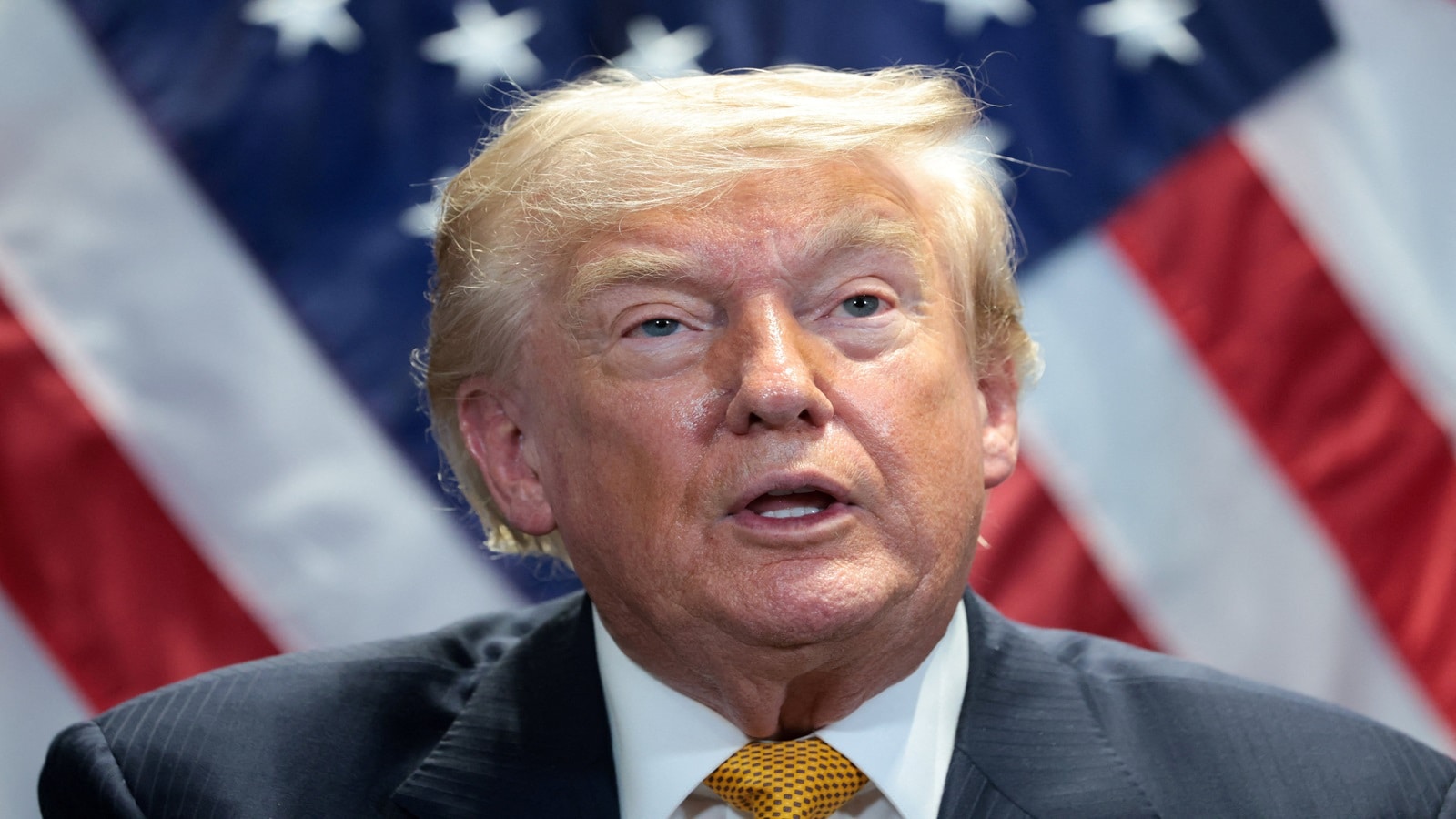
White House officials confirmed that President Donald Trump will deliver a primetime national address this Thursday to reveal what the administration claims are severe, newly declassified vulnerabilities in American voting machines. The speech aims to lay the groundwork for an unprecedented federal intervention in local election infrastructure ahead of the November midterm contests. By focusing public attention on technical flaws, the administration hopes to justify a sweeping executive and legislative push to nationalize election oversight.
Yet the real crisis facing the American electoral system is not a sudden vulnerability in hardware. It is a coordinated, multi-agency campaign designed to strip states of their constitutional authority to run elections. Behind the scenes, the administration has systematically weakened federal oversight bodies, deployed law enforcement to seize local election equipment, and delayed official intelligence reports that complicate their narrative. The upcoming Thursday address is not an alarm bell; it is a tactical deployment.
The Threat Inflation Strategy
The White House strategy depends on taking genuine, well-documented technical realities and distorting them for political advantage. Cybersecurity researchers have known for decades that electronic voting systems are not flawless. They run on software that requires updates, they rely on complex supply chains, and if misconfigured, they can present theoretical security gaps.
The administration’s new weapon is an upcoming report from the Office of the Director of National Intelligence (ODNI). White House officials have intentionally delayed the release of this security study to maximize the impact of the President's speech. Sources familiar with the document state that it identifies routine vulnerabilities, such as outdated operating systems and improper configuration protocols that could theoretically allow unauthorized access if a machine were left completely unattended.
However, the intelligence does not show that any votes have been altered in past elections. It does not prove that foreign adversaries successfully breached a single tabulation machine to manipulate a tally. State and local election officials mitigate these risks through physical security, strict chain-of-custody logs, and independent paper trails. The administration plans to skip past those defenses in its public rhetoric. By treating theoretical vulnerabilities as active catastrophes, the White House intends to create a sense of emergency that demands immediate federal action.
Dismantling the Defensive Wall
While the administration sounds the alarm on foreign threats, its practical policy decisions have actively degraded the nation's election defenses. Over the past several months, the White House has systematically defunded and sidelined the very agencies tasked with protecting voting infrastructure.
The Cybersecurity and Infrastructure Security Agency (CISA) has seen its funding slashed and its specialized election security personnel reassigned. Specialized offices within the intelligence community that were built to track foreign malign influence have been completely shuttered. Local election directors across the country now find themselves cut off from the federal intelligence sharing networks they relied upon to defend against actual cyber attacks from foreign adversaries.
Simultaneously, the administration neutralized the Election Assistance Commission (EAC). By removing key federal commissioners, the White House left the independent agency without the quorum required to update voting system guidelines or hear appeals on certification disputes.
Federal Election Oversight Changes (2025–2026)
+-----------------------------------+-----------------------------------+
| Agency / Office                   | Action Taken by Administration    |
+-----------------------------------+-----------------------------------+
| Election Assistance Commission    | Commissioners removed, destroying |
| (EAC)                             | the quorum needed for policy      |
|                                   | changes and appeals.       |
+-----------------------------------+-----------------------------------+
| Cyber & Infrastructure Security   | Budget cut significantly; expert  |
| Agency (CISA)                     | staff reduced.                    |
+-----------------------------------+-----------------------------------+
| ODNI Foreign Influence Tracking   | Offices completely closed; direct |
| Units                             | support to states eliminated.     |
+-----------------------------------+-----------------------------------+
This deliberate reduction of federal support leaves local election offices isolated. It creates a self-fulfilling prophecy. By weakening the institutions that certify and secure voting systems, the administration makes it easier to argue that local election administration is fundamentally broken and requires a top-down takeover.
Weaponizing Federal Law Enforcement
The push to nationalize elections has already moved from policy memos into physical reality. Last month, the Federal Bureau of Investigation conducted a highly unusual raid on a local election center in Fulton County, Georgia.
The operation was conducted under the direct supervision of top administration figures. Investigators seized tabulation equipment and data drives, citing unverified theories regarding outside manipulation. Former Director of National Intelligence Tulsi Gabbard was personally present at the site of the raid, despite her office having no legal jurisdiction over state election operations.
The legal paperwork justifying the search remains sealed under strict confidentiality orders. A federal judge recently ordered the release of these underlying documents, but the administration has resisted, citing ongoing national security concerns. Outside researchers and legal experts warn that the true purpose of the raid was not to uncover an active hack, but to signal to election administrators across the United States that non-compliance with federal narratives carries immediate legal consequences.
Following her involvement in the Georgia operations, Gabbard resigned her post. The President quickly installed Bill Pulte, the director of the federal mortgage regulator, as her interim replacement. Pulte was immediately granted explicit, fast-track authority to declassify highly selective portions of intelligence files concerning the 2020 and 2024 cycles. This hand-picked intelligence will form the spine of Thursday’s address.
The White House Task Force and the Dissenting Views
To prepare for this public offensive, the administration established a specialized White House task force dedicated to re-examining past election data. The group operates outside normal bureaucratic channels and includes controversial figures such as John Solomon, a conservative commentator known for promoting alternative election theories.
Solomon and other task force members have focused their efforts on a specific, internal intelligence analysis from 2021. That original analysis dissented from the broader consensus of the National Intelligence Council, the CIA, and the NSA, which had concluded that no foreign actor altered technical aspects of the vote. By pulling this lone dissenting viewpoint into the spotlight and declassifying it, the White House can present a minority report as definitive proof of a cover-up.
This approach ignores a critical distinction. A vulnerability is not an exploit. Software can contain bugs, but converting those bugs into a modified vote count requires physical access, sophisticated malware tailored to a specific county's ballot layout, and a total failure of the physical audit trails that match paper ballots to electronic tallies. The administration's task force has consistently refused to address how an attacker would bypass the physical paper ballots that the vast majority of Americans use to verify their electronic selections.
The Legislative Pincer Movement
The rhetorical attacks from the podium on Thursday are designed to provide political momentum for a stalled legislative agenda in Congress. For months, the administration has championed the SAVE Act, a bill that would fundamentally reshape voter registration requirements across the nation.
The legislation would mandate that all individuals produce definitive proof of citizenship, such as a passport or a birth certificate, at the moment of registration. Civil rights organizations and election researchers note that roughly 21 million American citizens lack immediate, ready access to these specific documents. The bill has cleared the House Rules Committee and is headed for a full floor vote, backed by a massive public relations campaign funded by prominent tech executives.
"The federal government should get involved. These are agents of the federal government to count the vote."
— President Donald Trump
This statement reveals the true objective. By legally defining local election workers as de facto agents of the federal government, the executive branch could claim the constitutional authority to deploy federal law enforcement, military personnel, or specialized federal monitors to polling places and counting centers during active voting periods.
Constitutional Conflict and the Midterm Stakes
The administration's efforts run directly into the text of the United States Constitution. Article I, Section 4 explicitly leaves the times, places, and manner of holding elections to the individual states. A centralized takeover of ballot administration represents a direct challenge to the federalist structure that has governed American voting since the founding of the republic.
Senate Democrats, led by Chuck Schumer and Alex Padilla, have launched a formal effort to counter the administration's strategy. They issued a sweeping directive to all executive agency heads—including Secretary of Homeland Security Markwayne Mullin and Acting Attorney General Todd Blanche—demanding the strict preservation of all internal communications, records, and memos related to election intervention.
The political calculus for November is straightforward. If the administration convinces the public that the voting infrastructure is riddled with unaddressed foreign vulnerabilities, any electoral losses suffered by the president's party can be immediately blamed on systemic security failures. If they win, the victory will be credited to their aggressive federal interventions.
Local election officials are left caught in the crossfire. They must simultaneously defend their offices against theoretical cyber threats with diminished federal funding, while managing unprecedented scrutiny and intimidation from the federal government itself. The address on Thursday night is a calculated step toward shifting the control of American elections away from local communities and into the hands of the executive branch.