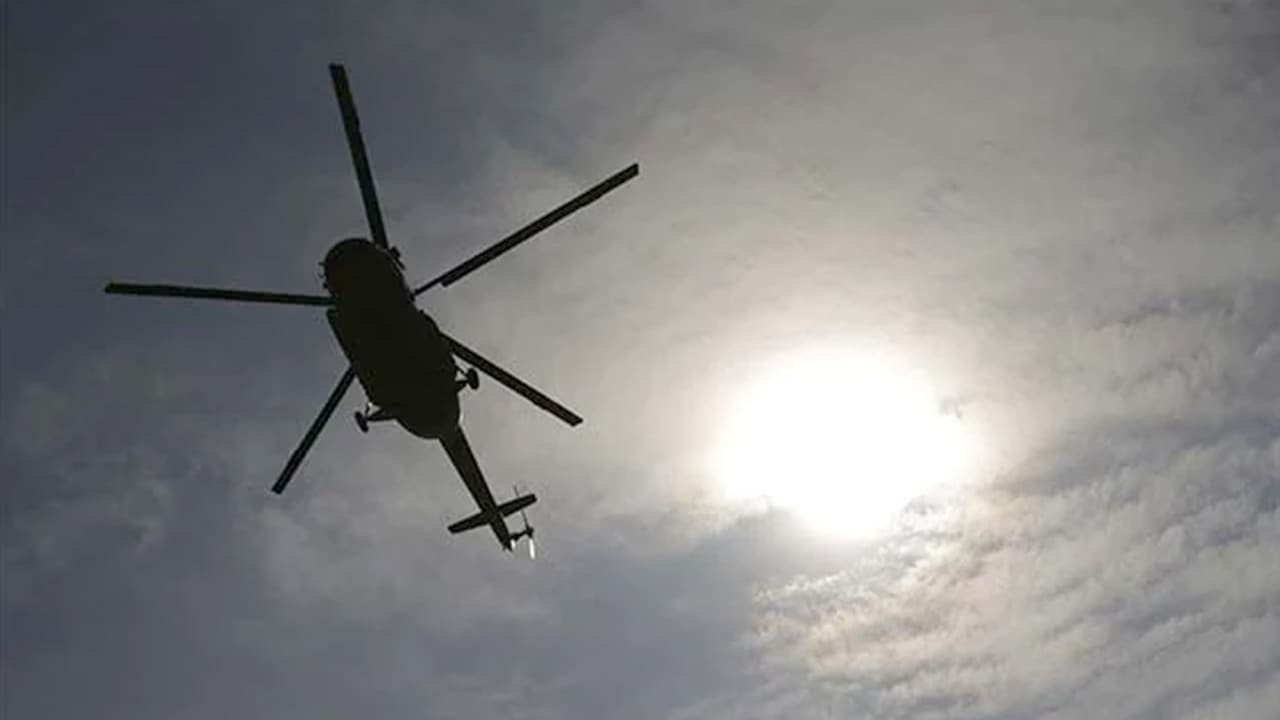
When a helicopter crashes near the Yemen border after a reported technical fault and two pilots lose their lives, the public usually gets a tidy headline and a waiting game. A single mechanical failure rarely kills experienced aircrew on its own. Usually, a routine warning light or a stubborn subsystem collides with rugged terrain, heat, thin margin for error, and a split-second decision made under extreme stress.
That pattern shows up repeatedly in border aviation around the Arabian Peninsula. The frontier stretching between Saudi Arabia and Yemen is unforgiving country. High-altitude ridges, steep wadis, blowing dust, and intense daytime heat strip away performance margins that pilots take for granted at sea level or over flat coastal plains. When a helicopter experiences a technical fault in that environment, the aircraft is already working harder just to stay aloft.
Why Technical Faults Turn Fatal in Border Terrain
A technical fault sounds clinical on paper. In a cockpit over rough mountains or desert scrub, it is a race against physics.
Helicopters depend on continuous, synchronized motion across engines, transmissions, rotor heads, and flight control linkages. Unlike a fixed-wing airplane, which can glide over long distances if thrust disappears, a helicopter relies on rotor RPM and lift management with far less forgiving recovery options at low altitude or in confined terrain. Even a partial power loss, a gearbox pressure drop, a hydraulic leak, or a flight control anomaly shrinks the time a crew has to diagnose, reconfigure, and land safely.
Border zones add layers that civilian commuter routes never face. Crews often fly low to avoid exposure, use unimproved landing sites, or operate far from major maintenance hubs and immediate search-and-rescue staging points. If a warning horn sounds at low altitude over jagged rock, there is no long runway ahead and very little altitude to trade for airspeed.
Mechanical Failure Versus Environmental Trap
Investigators who have spent decades reading accident dossiers know that maintenance logs rarely tell the whole story by themselves. A fault might start with a worn bearing, an electrical short, or a fuel system hiccup. The crash happens when that fault meets density altitude.
High temperatures and elevation reduce air density. Thinner air means the main rotor blades bite less air for the same pitch setting, requiring more power just to hover or climb. Add dust or sand, and visibility can vanish at the worst possible moment—right when a pilot is trying to spot a level patch of ground for an emergency landing.
Consider a hypothetical example to see how quickly margins evaporate. Imagine two seasoned pilots flying a twin-engine utility helicopter along a mountainous border corridor at midday when an engine chip detector or transmission caution light triggers. Before they even finish scanning the checklist, a downdraft hits the ridge, temperature spikes above forty degrees Celsius, and the ground below is a patchwork of boulders and steep slopes. Neither the mechanical issue nor the terrain alone would necessarily be fatal. Together, they leave almost no room for error.
The Myth of the Simple Glitch
Press releases and early reports love clean labels like "technical fault." In aviation, that phrase covers everything from a minor sensor malfunction to a catastrophic structural or drivetrain failure.
Sensors lie or exaggerate sometimes. A faulty pressure transducer or wiring chafing against a frame can send alarming cues to the cockpit while the underlying part is still functioning, or vice versa. Conversely, a real mechanical degradation can develop quietly until a critical threshold is crossed. Pilots have to decide in seconds whether to push through toward better terrain, divert to a known pad, or put the machine down immediately before something seizes or detaches.
Two pilots in the cockpit should double the capacity to share workload and catch mistakes. Under sudden emergency stress, though, task saturation can still bite hard. One pilot flies the aircraft while the other reads emergency procedures, talks to dispatch or command, and tracks fuel, terrain, and system readings. If communication falters or procedures get rushed in cramped airspace, valuable seconds slip away.
The Hidden Pressures of Frontier Flight Operations
Anyone watching border security and logistics along the Yemen frontier sees aircraft doing relentless work. Surveillance, troop movement, supply runs, medical evacuation, and patrol missions keep rotorcraft in the air across demanding schedules.
High operational tempo puts quiet strain on every link in the chain. Parts wear faster in harsh climates. Fine dust works its way into seals, intakes, and avionics bays. Corrosion and thermal cycling test alloys and composites day after day.
Supply Chains and Maintenance Reality
Keep an aircraft flying long enough in a tough theater, and maintenance becomes an exercise in logistics as much as engineering. Spare parts have to be sourced, shipped, inspected, and installed to strict airworthiness standards. Delays in specific components can force workarounds, deferred items within allowable limits, or heavier reliance on remaining airframes.
Even top-tier maintenance teams face human limits. Night shifts in hot hangars, complex troubleshooting on intermittent faults, and tight turnaround windows test technicians just as surely as flight hours test crews. A recurring snag that seemed resolved on the ground can reappear once vibration, heat, and G-loads return in flight.
Some observers argue that modern helicopters—with redundant systems, health and usage monitoring systems, and glass cockpits—should make fatal technical crashes rare. That argument has merit on paper, because redundancy has saved countless crews over the past thirty years. Yet redundancy only helps if the backup system is healthy, accessible, and properly understood under pressure, and if the failure did not strike a single point that bypasses redundancy, such as a main rotor assembly or tail rotor drive.
Operational Tempo and Human Bandwidth
Frontier flying rarely happens in a vacuum. Missions often carry urgency, shifting taskings, and heightened alertness. Even when crews are well-trained and disciplined, external pressure shapes risk perception.
Experienced pilots know how subtle that drift can be. You fly the same route dozens of times without incident. The warning signs start to look familiar, or the terrain feels manageable because you have cleared it before. Complacency is a trap, and overconfidence is worse; seasoned aviators tend to respect the margin right up until the moment it disappears.
How Real Accident Investigations Uncover the Truth
When a crash happens near a sensitive border, information moves slowly at first. Security concerns, difficult recovery sites, and overlapping jurisdictions can delay public details for days, weeks, or longer.
That delay frustrates families, lawmakers, and industry watchers alike. Still, rushing to judgment based on early rumors is one of the worst habits in aviation commentary. Early reports often mix up preliminary observations with confirmed causes.
Physical Evidence Over Speculation
Real accident investigators start with wreckage distribution, component examination, maintenance records, and whatever flight data or cockpit voice recorders survive. Where did the aircraft strike first? Were the rotor blades turning under high power at impact, or slowing down? Did a fire start in the air or after ground contact?
Every twisted metal edge and fractured gear tooth carries clues. Metallurgists look for fatigue striations versus sudden overload fractures. Avionics specialists check fault logs and warning states. Powerplant engineers inspect turbine blades, fuel lines, and lubrication paths.
A crash near the Yemen border also presents physical recovery hurdles. Steep slopes, unstable ground, security risks, and heat can slow teams trying to reach the site and haul out heavy components. Until investigators examine the actual hardware, any claim about the exact sequence of events remains provisional.
Systemic Lessons Beyond One Airframe
A thorough investigation rarely stops at naming a broken part. It asks why that part failed, whether fleet-wide inspections are needed, and whether operating procedures or training should change.
If a specific component shows premature wear in desert and mountain operations, manufacturers may issue service bulletins or airworthiness directives. If an emergency checklist proves awkward when a second fault occurs simultaneously, training syllabi get adjusted. If weather or terrain limits were pushed too close to the edge, mission planning rules face scrutiny.
Sometimes the hardest finding is systemic rather than mechanical. Maybe a crew followed every rule and still ran out of altitude and options because the mission profile left zero buffer for an unexpected failure. Acknowledging that reality takes honesty, because fixing a procedure or risk profile costs effort and sometimes slows operations.
Strategic Implications for Border Aviation and Fleet Readiness
Every fatal crash involving a technical fault near a volatile border ripples outward beyond the immediate loss of life. Two pilots dead means experienced flight hours gone from the roster and a shockwave through the unit or operator that flew them.
Fleet readiness is not just a number on a spreadsheet showing how many helicopters can start up on a given morning. True readiness means having airworthy aircraft, well-rested and sharp crews, reliable spare parts pipelines, and realistic safety margins for the environment actually flown.
Balancing Mission Demand With Margin
Border regions along Yemen have long seen security tension, smuggling interdiction, humanitarian and military movements, and cross-border friction. Aircraft are indispensable there because roads are limited, slow, or hazardous.
Yet using helicopters as a default answer for every task carries a price. Every flight hour consumes component life and crew energy. Pushing aircraft hard in extreme conditions accelerates wear, which in turn feeds the very technical faults that threaten crews.
Smart operators treat safety margin as an operational asset, not an obstacle. Planning routes with forced-landing options in mind, accounting honestly for heat and altitude limits, and backing up crews when they call off or divert a flight due to abnormal indications are marks of maturity. Second-guessing a crew for taking a conservative option after a warning light is a fast way to invite tragedy later.
What Watchers Should Look For Next
When official statements or investigative findings emerge after a fatal crash like this one, serious observers read between the lines. Vague references to a "technical fault" are rarely the end of the story.
Key questions include which aircraft type was involved, whether the fault affected propulsion, flight controls, or hydraulics, what the weather and terrain conditions were at the time, and whether similar fleet issues have surfaced previously. Equally important is whether transparent safety lessons follow—not just to satisfy headlines, but to protect the next crew lifting off into unforgiving skies.
In border aviation, there is no such thing as a routine flight over hostile or rugged terrain, and no technical fault is ever truly small when the ground is rushing up at rotor speed.