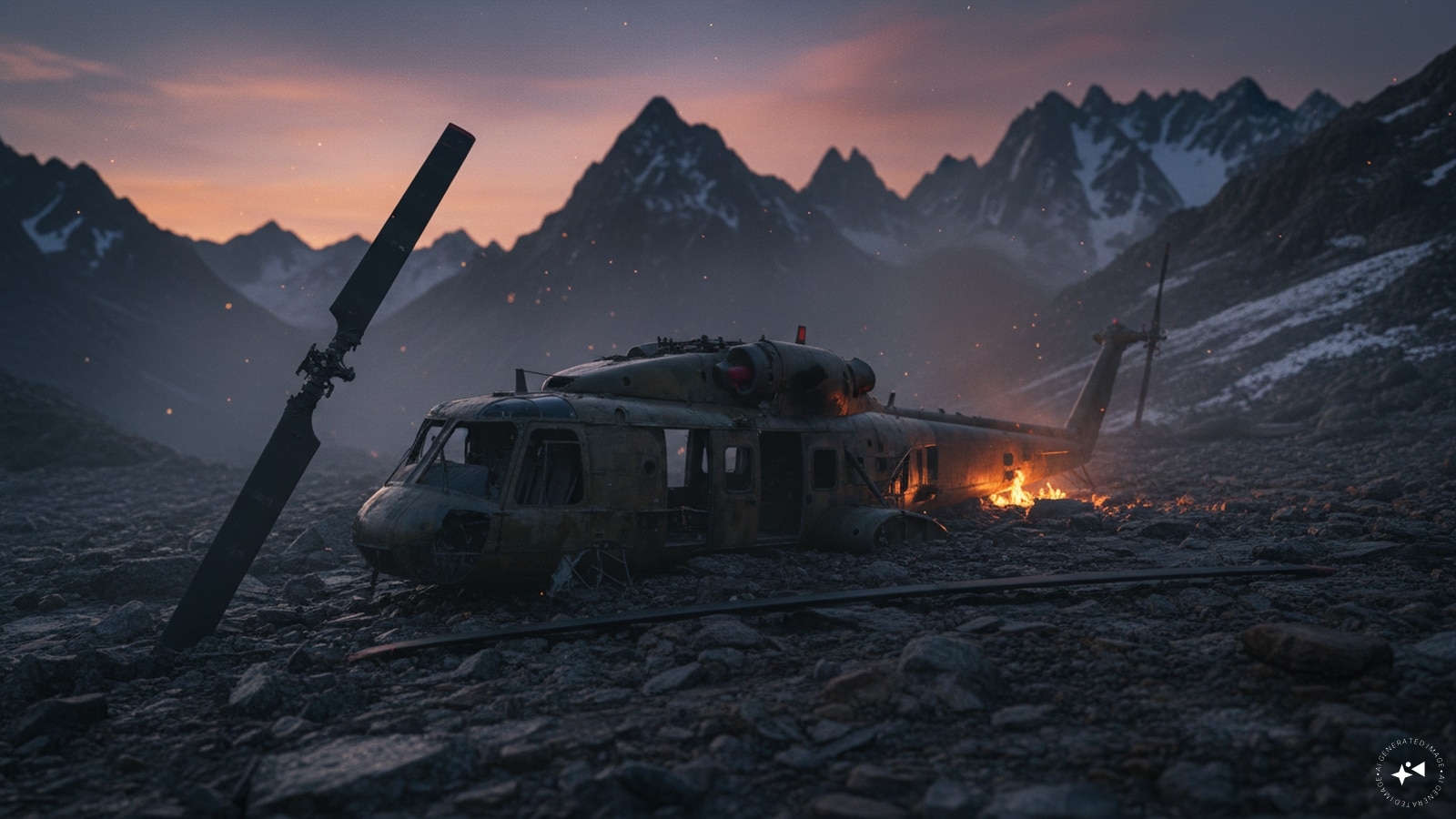
Two Saudi officers died in Najran. That part is settled. Everything after that turns into a tug-of-war over the narrative.
On October 18, 2026, Major General Turki al-Maliki, spokesperson for the Saudi-led coalition, announced that a Saudi Ministry of National Guard reconnaissance helicopter went down in Saudi Arabia's southwestern Najran region, killing both officers aboard. The coalition identified the aircraft as a Boeing AH-6i and blamed a technical malfunction. Yet just a day earlier, Houthi military spokesman Yahya Saree had claimed his forces downed a Saudi Apache helicopter near Najran during border operations, and Houthi media later circulated video purporting to show an AH-6i being struck.
Neither side's version has been independently verified. Honestly, when a small military rotorcraft goes down along an active, volatile border, confusion is the first thing in the air.
Why the Najran Helicopter Crash Sparked Competing Claims
When you read wire briefs, it's easy to treat an official press release as the last word or assume rebel video settles the argument. Real-world conflict reporting doesn't work like that.
First, look at the timing and the aircraft label. Houthi spokesmen initially referred to an "Apache" before footage surfaced that Houthi outlets linked to an AH-6i. Al-Maliki pushed back publicly by sharing a photo of Apache helicopters with a pointed remark about them entering the field soon, signaling that Riyadh saw an error in the initial Houthi claim—though he didn't release a detailed technical accident report or name the fallen officers.
Second, border airspace around Najran is unforgiving. A sudden mechanical failure, a stray shoulder-fired missile, a loitering munition, or ground fire can look messy from afar, especially when combat footage is edited or lacks verified geolocation.
Inside the Boeing AH-6i and National Guard Role
Most casual readers lump all military helicopters together. That's a mistake when looking at what the AH-6i actually does.
Derived from Boeing's Little Bird lineage, the AH-6i is a compact, two-crew light attack and reconnaissance helicopter built for agility, low-level scouting, and precision support rather than heavy transport. Powered by a Rolls-Royce 250-series turboshaft engine, it carries sensors and light armaments—such as rockets, machine guns, or guided missiles depending on mission configuration—while keeping a small footprint in tight terrain.
In Saudi Arabia's defense structure, the Ministry of National Guard operates separately from the Ministry of Defense and maintains its own aviation units. Having a National Guard reconnaissance helicopter operating in the Najran area underscores how border security and internal-security aviation assets overlap during periods of heightened tension.
What makes a light helicopter like the AH-6i valuable in southwestern terrain also makes it vulnerable. Flying low to spot movement or scout ridges puts crews close to ground hazards and leaves very little altitude margin if a critical system fails.
Broader Tensions Along the Saudi Yemeni Frontier
This crash didn't happen in a vacuum. Southwestern Saudi provinces like Najran sit right next to contested Yemeni territory, and fighting in the region escalated sharply in 2026 amid wider regional confrontation involving Iran, the United States, and Houthi forces.
In that environment, every incident carries weight beyond the immediate loss of life. For Riyadh, framing the loss as a technical malfunction limits the appearance of an air-defense breach inside Saudi territory. For the Houthis, claiming a strike projects reach and morale at a moment of intense cross-border pressure.
What's missing from public view is independent on-the-ground verification. Unless an investigation is published or credible third-party analysis confirms the wreckage and strike mechanics, observers have to live with uncertainty.
- Check source alignment: Compare official statements from outlets like Arab News or wire reports carried by Reuters against rebel media claims rather than taking a single social post at face value.
- Watch for aircraft mismatches: Pay close attention to whether early claims mention an Apache or an AH-6i, since misidentifying airframes is common in fast-moving announcements.
- Separate confirmed facts from attribution: Treat the deaths of the two officers and the Najran location as established by the coalition statement, while keeping the exact cause provisional until verified evidence emerges.
Two officers killed in National Guard helicopter crash in Najran offers a brief visual clip summarizing the coalition's announcement on the Najran crash.



