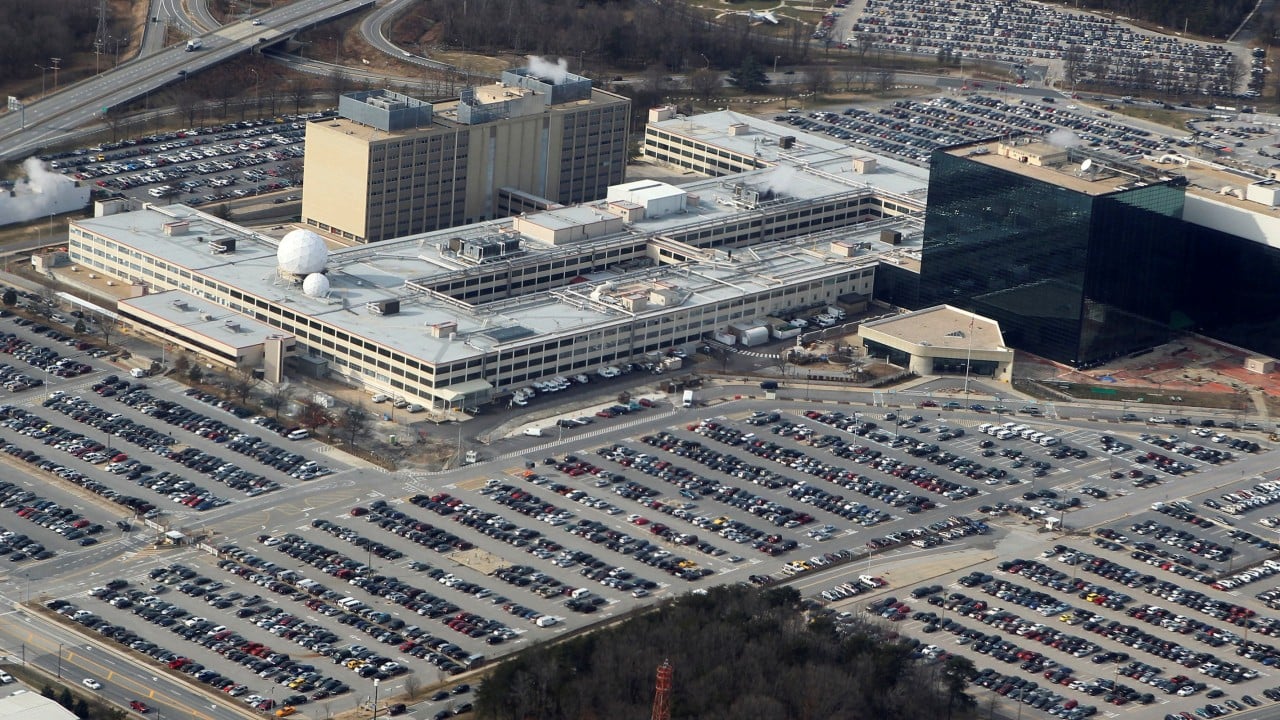
When the U.S. National Security Agency confirms that its internal network suffered a "temporary degradation" during scheduled maintenance, the public usually moves on before finishing the headline. It sounds mundane. It sounds like a routine software patch that took twenty minutes longer than planned at Fort Meade.
That assumption misses the entire operational reality of modern signals intelligence.
When an NSA network experiences an unplanned service interruption, even a brief one triggered by internal engineering work, it exposes the extreme structural fragility of classified intelligence infrastructure. You cannot simply reboot a global surveillance apparatus without risking intelligence blind spots, cascading authentication failures, and internal friction between operational divisions that rely on uninterrupted data streams. Routine maintenance at the world's premier signals intelligence agency is never routine, because the systems being updated were never designed to stop running.
The Architecture of a Network That Cannot Sleep
Most enterprise technology teams operate under a familiar rhythm. They schedule downtime for Sunday at 2:00 AM, push updates to a staging environment, run automated regression tests, and roll changes into production while users sleep.
The National Security Agency does not have a quiet Sunday morning.
Signals intelligence operates on a continuous, global collection cycle. Intercept stations, undersea cable taps, satellite downlinks, and partner agency feeds push raw telemetry into Fort Meade and regional cryptologic centers every millisecond. A maintenance window in Maryland occurs during peak operational hours in Eastern Europe, the Middle East, or the Indo-Pacific. To take a core routing layer or an analytical database offline for upgrades means choosing which intelligence collection pipelines get throttled, buffered, or temporarily severed.
To manage this, agency engineers rely on high-availability clustering and air-gapped multi-level security architectures. Classified environments like JWICS (the Joint Worldwide Intelligence Communications System) and internal NSA networks such as NSANet do not function like commercial cloud platforms. They are partitioned into strict security enclaves separated by cryptographic guards, cross-domain solutions, and hardware-enforced boundary protections.
Updating a single software dependency inside that environment is an architectural ordeal. A patch applied to a directory service or a cryptographic key management server must propagate across thousands of isolated nodes without violating compartmented access rules. If one authentication token fails to sync across a cross-domain boundary during a maintenance window, downstream analysts lose access to critical query tools, even if the underlying network cables remain physically intact.
Why Maintenance Windows Trigger Cascading Failures
In public-facing disclosures, defense and intelligence agencies favor sanitized terminology. "Temporary degradation" is the preferred bureaucratic euphemism for a spectrum of technical failures ranging from high latency and dropped packets to total inability to access mission applications.
Understanding how these degradations happen requires looking at the collision between legacy infrastructure and modern cloud adoption. Over the past decade, the intelligence community aggressively migrated massive workloads into commercial-style private clouds, notably the Commercial Cloud Enterprise (C2E) and its predecessor, C2S. Yet those modern cloud environments still have to talk to decades-old legacy databases, proprietary mainframe systems, and bespoke hardware appliances built specifically for cryptographic processing.
Consider a hypothetical example of how a standard upgrade unravels inside a multi-enclave intelligence network. Suppose infrastructure engineers schedule a firmware update on a core load balancer sitting between an analytical cloud environment and a legacy signals repository. Because the environment is classified and air-gapped from the public internet, engineers cannot rely on real-time external vendor telemetry or automated cloud-native rollback scripts. During the cutover, a subtle timing mismatch emerges between the updated firmware and an older Type 1 encryption appliance handling data in transit. The encryption device interprets the micro-latency as a potential tampering or synchronization fault and drops the session. Suddenly, thousands of automated queries retry simultaneously, creating a self-inflicted denial-of-service storm that chokes internal bandwidth across multiple regional centers.
Nothing was hacked. No foreign adversary breached the perimeter. Yet the operational effect—analysts staring at frozen screens while real-time intercepts pile up in buffer queues—looks identical to an external disruption.
The Buffering Trap and Data Backlogs
When an NSA network degrades, collection rarely stops entirely. Forward-deployed sensors and collection platforms are engineered with local storage buffers specifically designed to survive severed backhaul links.
The real crisis begins when the network comes back online.
Reconnecting a degraded intelligence network is like opening a dam after a heavy storm. Terabytes of queued metadata, voice intercepts, and packet captures surge toward central processing clusters all at once. If the maintenance issue degraded indexing engines or storage arrays, ingest pipelines quickly saturate. Automated triage algorithms fall behind, forcing analysts to manually sift through backlogs hours or days after an event occurred. In fast-moving geopolitical crises—tracking a mobile missile launcher, monitoring an imminent cyberattack on domestic critical infrastructure, or supporting special operations teams on the ground—a four-hour processing lag renders actionable intelligence purely historical.
The Visibility Problem Inside Classified Environments
Commercial tech giants like Google, Amazon, and Cloudflare routinely publish detailed post-mortems when their networks suffer outages. They name the exact BGP routing error, the misconfigured database flag, or the faulty power distribution unit. Transparency is their currency for maintaining enterprise trust.
Intelligence agencies operate under the exact opposite incentive structure.
Publicly admitting that an internal network degraded—even during routine maintenance—is a rare concession, usually forced only when the outage disrupts external Pentagon partners, slows down interagency intelligence sharing, or leaks to defense reporters. Even then, the agency reveals zero technical specifics. Revealing which subsystem degraded tells foreign intelligence services in Beijing, Moscow, or Tehran which collection capabilities might have experienced a temporary blind spot, or which underlying enterprise software stack Fort Meade relies upon.
This operational secrecy creates a distinct analytical challenge for outside observers. Whenever an official statement blames "scheduled maintenance," national security veterans immediately ask two competing questions.
First, was it actually maintenance? Cover stories are a standard tradecraft tool. If an internal anomaly triggers an emergency network isolation—such as an automated containment response to suspected unauthorized lateral movement or an insider threat alert—the immediate external posture is identical to a maintenance outage. Network segments go dark, external gateways stop responding, and official spokespeople cite routine technical work while counterintelligence teams conduct forensic sweeps.
Second, if it truly was maintenance, why did the agency's redundancy fail? A network funded by tens of billions of dollars in annual black-budget appropriations is built on the premise of N+2 redundancy, meaning systems are designed to withstand multiple simultaneous component failures without noticeable performance drops. A maintenance event should never cause visible degradation unless a single point of failure existed where engineers believed none remained, or human error bypassed established change-control protocols.
The Human Element Behind Automated Systems
It is tempting to view national security infrastructure as an infallible monolith of custom silicon and quantum-resistant algorithms. The reality inside Fort Meade and its sister facilities is far more human, and far more constrained by workforce realities.
The NSA competes directly with Silicon Valley and major defense contractors for top-tier network architects and site reliability engineers. Those engineers must pass exhaustive polygraph examinations and wait months or years for Top Secret/Sensitive Compartmented Information (TS/SCI) clearances before they can touch a single keyboard. Once inside, they cannot bring smartphones to their desks, cannot easily look up error codes on public developer forums, and must perform complex system administration inside windowless Sensitive Compartmented Information Facilities (SCIFs).
Burnout and institutional knowledge loss are persistent operational risks. When senior systems architects retire or leave for lucrative private-sector roles, undocumented dependencies remain buried inside millions of lines of custom integration code. A younger engineering team executing a routine maintenance checklist may follow every documented procedure to the letter, unaware that an undocumented script written twelve years ago hard-coded an IP address or a certificate expiration date into a critical routing table.
We saw a version of this dynamic across the broader defense industrial base during the push toward Zero Trust Architecture. Mandated by federal executive orders, Zero Trust requires continuous verification of every user, device, and data flow inside a network, eliminating the old model where everything inside the classified perimeter was implicitly trusted. Implementing Zero Trust inside legacy intelligence networks requires tearing out and replacing core identity and access management plumbing while the plane is mid-flight. Every maintenance window becomes a high-wire act of re-authenticating millions of machine-to-machine connections without breaking mission workflows.
Historical Echoes of Internal Outages
Internal network failures at the NSA are rarely publicized, yet the few incidents that have entered the public record reveal a consistent pattern of complexity outpacing control.
In January 2000, the agency suffered a catastrophic internal network failure that lasted more than three days. Known internally as the "Three-Day Outage," the collapse was triggered by an overload in internal routers and servers struggling to process exploding volumes of global internet traffic following software upgrades. During those seventy-two hours, incoming intelligence piled up unprocessed while analysts could not access core databases. Subsequent congressional inquiries and internal reviews revealed that the agency had underinvested in internal infrastructure modernization while focusing overwhelmingly on front-end collection capabilities.
More recently, in 2018, the NSA disclosed that it had purged hundreds of millions of call detail records collected under Section 215 of the USA PATRIOT Act after discovering "technical irregularities" in how data was ingested and processed from telecommunications providers. While not a physical network blackout, the episode demonstrated how a subtle configuration flaw in automated data-handling pipelines can corrupt intelligence workflows for months before engineers detect the anomaly.
The throughline connecting 2000, 2018, and modern maintenance degradations is structural. Intelligence agencies are brilliant at building exotic, specialized tools to penetrate hardened foreign targets. They historically struggle far more with mundane enterprise IT hygiene—configuration management, dependency tracking, and seamless software lifecycle updates across sprawling, compartmentalized networks.
The Strategic Cost of a Flickering Grid
A temporary degradation during maintenance rarely triggers an immediate national security disaster. The United States does not go deaf and blind because a cluster of servers at Fort Meade slows down for an afternoon. Allied signals intelligence partners—such as the UK's GCHQ, Australia's ASD, Canada's CSE, and New Zealand's GCSB within the Five Eyes alliance—maintain independent collection and processing capabilities that absorb slack when one partner experiences technical friction.
The real cost is cumulative and operational.
Every time a maintenance window degrades performance, operational teams lose trust in the stability of enterprise tools. To protect their specific missions from central IT outages, individual intelligence directorates quietly build shadow infrastructure—standalone servers, localized scripts, and isolated workarounds that bypass central network bottlenecks. Over time, those workarounds create new undocumented dependencies, making the next scheduled maintenance window even harder to execute cleanly.
Modern warfare and espionage depend entirely on speed of decision. When an adversary launches a zero-day exploit against domestic energy grids or moves troops across a disputed border, the value of signals intelligence is measured in minutes. A network that flickers during routine upkeep reminds both Pentagon commanders and foreign adversaries that the digital nervous system of American intelligence is still bound by the unforgiving laws of complex systems engineering.
The next time a terse defense statement dismisses an intelligence network disruption as routine maintenance, look past the reassurance—because inside a system engineered never to fail, even a scheduled stumble means something fundamental broke under the hood.